India-Russia Trade Deficit and Economic Cooperation Prospects
Source:The Hindu ↗
Why It Matters
Understanding the asymmetric nature of India-Russia trade is crucial for analyzing India's foreign trade policy and economic diplomacy. The article connects India's demographic advantage with Russia's demographic decline, illustrating how human capital mobility can serve as a strategic tool in bilateral relations.
Summary
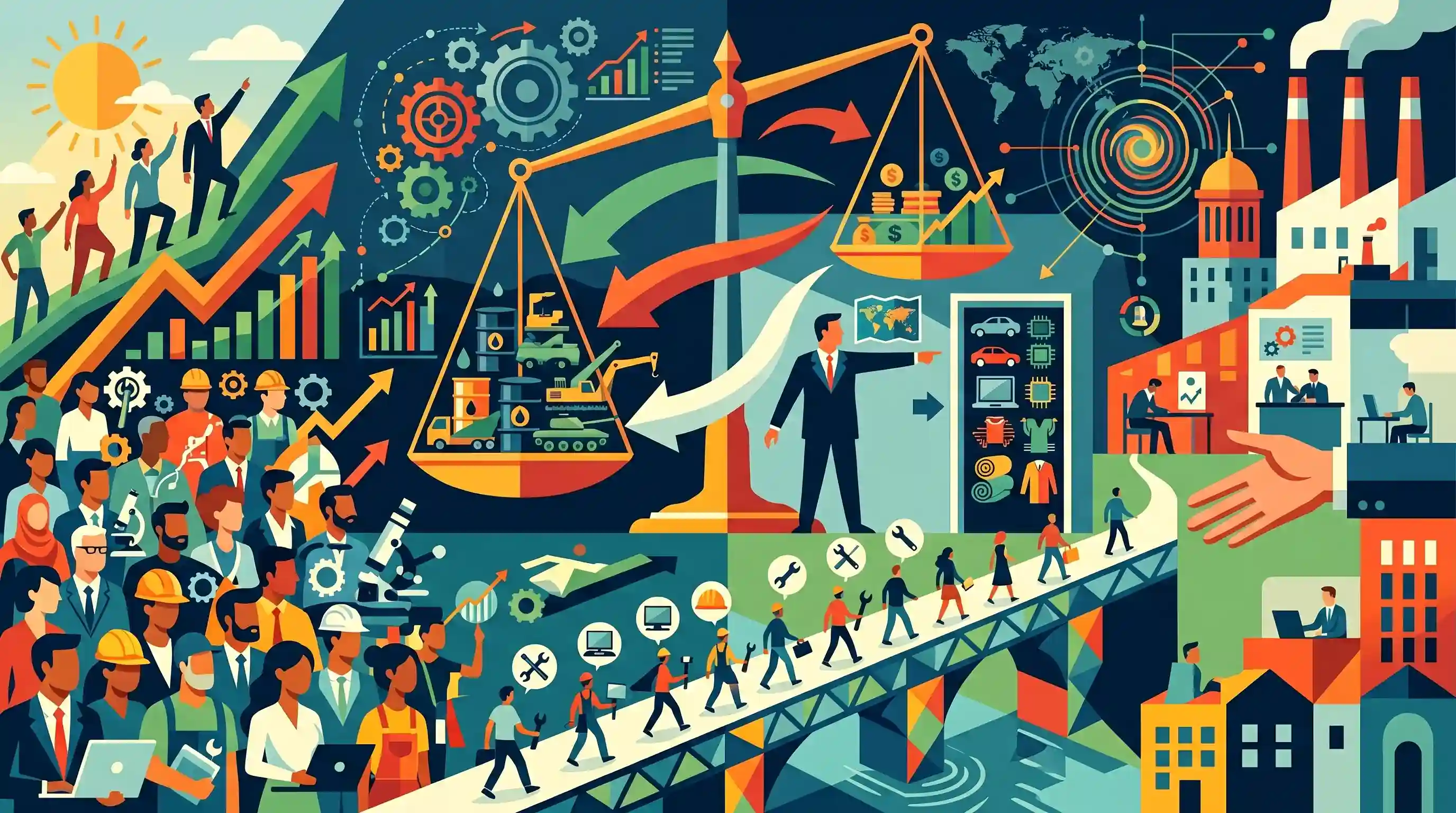
Commerce Minister Piyush Goyal urged Indian businesses to aggressively explore the Russian market to address a massive and widening trade deficit, which reached $58.9 billion in 2024-25. Speaking at the India-Russia Business Forum ahead of Russian President Vladimir Putin's visit, Goyal emphasized that Russia's high demand for industrial and consumer goods—such as automobiles, electronics, and textiles—presents untapped opportunities. Furthermore, he suggested that India's vast and skilled working-age population could be leveraged to bridge Russia's labor shortage of around three million people.
Key Points
- India's trade deficit with Russia grew significantly from $6.6 billion in 2021-22 to $58.9 billion in 2024-25.
- Commerce Minister Piyush Goyal urged Indian enterprises to take a "leap of faith" to boost exports to Russia and balance trade.
- Key sectors with high export potential to Russia include automobiles, electronics, heavy machinery, textiles, and food products.
- Goyal highlighted that India's skilled working-age population could help alleviate Russia's estimated talent shortfall of 3 million people.
Important Terms
Trade Deficit

An economic condition where the value of a country's imports exceeds its exports. India currently faces a ~$59 billion deficit with Russia, largely due to high-volume crude oil imports.
UPSC context
GS Paper III (Economy). Important for understanding Balance of Payments, trade imbalances with major partners, and export-promotion strategies.
Special and Privileged Strategic Partnership
The formal status of India-Russia relations established in 2010, signifying deep cooperation across defense, nuclear energy, space, and technology, beyond a simple buyer-seller relationship.
UPSC context
GS Paper II (International Relations). Tests knowledge of India's major bilateral frameworks and strategic autonomy in a multipolar world.
Demographic Dividend
The economic growth potential resulting from a shift in a population's age structure, specifically when the working-age population (15–64) is larger than the non-working-age share.
UPSC context
GS Paper I (Social Issues) and GS Paper III (Economy). Relevant for human resource development and labor mobility agreements.
India-Russia Business Forum
An institutional platform for government and industry leaders (e.g., FICCI) to dialogue on bilateral economic cooperation, recently focused on rebalancing trade via the 'Sell to Russia' theme.
UPSC context
GS Paper II (International Relations). Represents the institutional mechanisms used to conduct economic diplomacy and address trade barriers.
Rupee-Rouble Trade Arrangement
An alternative payment mechanism allowing the settlement of bilateral trade in local currencies, designed to bypass the dollar-denominated SWIFT system and navigate Western sanctions.
UPSC context
GS Paper III (Economy). Key for discussions on de-dollarization, internationalization of the Rupee, and trade resilience under sanctions.
Economic Diplomacy
The use of a nation's economic tools—such as trade agreements and investment promotion—to achieve its geopolitical objectives and strengthen international partnerships.
UPSC context
GS Paper II (International Relations). Essential for analyzing how India leverages its market and resources to influence global and regional dynamics.
Prelims Trap
"The recent surge in India-Russia bilateral trade has resulted in a favorable balance of trade (trade surplus) for India."
India actually has a massive and widening trade deficit ($58.9 billion) with Russia, driven entirely by huge imports of discounted Russian crude oil and fertilizers.
Static Concepts Connected
What is a Special Rupee Vostro Account (SRVA)?
- Definition: An account that a domestic bank in India holds on behalf of a foreign bank, denominated in Indian Rupees.
- Purpose: It facilitates cross-border trade settlement in Indian Rupees, reducing reliance on intermediary hard currencies like the US Dollar.
- Sanctions bypass: Allows India to maintain trade relations with nations facing Western financial sanctions (like Russia) by bypassing the SWIFT network.
How does Demographic Dividend contrast with Demographic Winter?
- Demographic Dividend: Economic growth potential driven by a high proportion of working-age population relative to dependents (currently enjoyed by India).
- Demographic Winter: A prolonged demographic phase of sub-replacement fertility and aging populations leading to acute labor shortages (currently faced by Russia).
Cross-Topic Patterns
Bilateral Labor Mobility Pacts
Linking India's demographic dividend to Russia's labor shortage mirrors recent Migration and Mobility Partnership Agreements (MMPAs) India has signed with Germany, Australia, and Israel to formalize skilled workforce exports.
Energy imports widening bilateral deficits
The structural shift in India's crude oil sourcing has drastically altered trade balances, elevating Russia to a top supplier while simultaneously inflating the bilateral trade deficit to historic highs.

Expect a 2026 prelims statement pairing India's trade deficit with Russia against the use of Special Rupee Vostro Accounts for settlement.
Linked PYQs · 3
Linked PYQs · 3
- 2020MainsGS2
What is the significance of Indo-US defence deals over Indo-Russian defence deals? Discuss with reference to stability in the Indo-Pacific region.
- 2017MainsGS3
Account for the failure of manufacturing sector in achieving the goal of labour-intensive exports. Suggest measures for more labour-intensive rather than capital-intensive exports.
- 2024MainsGS1
What is the concept of a 'demographic winter'? Is the world moving towards such a situation? Elaborate.
