कच्चे तेल की कीमतों में उछाल और भारतीय सरकारी बॉन्ड पर प्रभाव
स्रोत:द हिंदू ↗
क्यों मायने रखता है
This article provides a textbook real-world example of how global geopolitical events (oil shocks) transmit to domestic macroeconomic indicators (inflation, interest rates, bond yields). It is highly relevant for Prelims conceptual questions on the inverse relationship between bond prices and yields, and Mains questions on India's energy security vulnerabilities.
सारांश
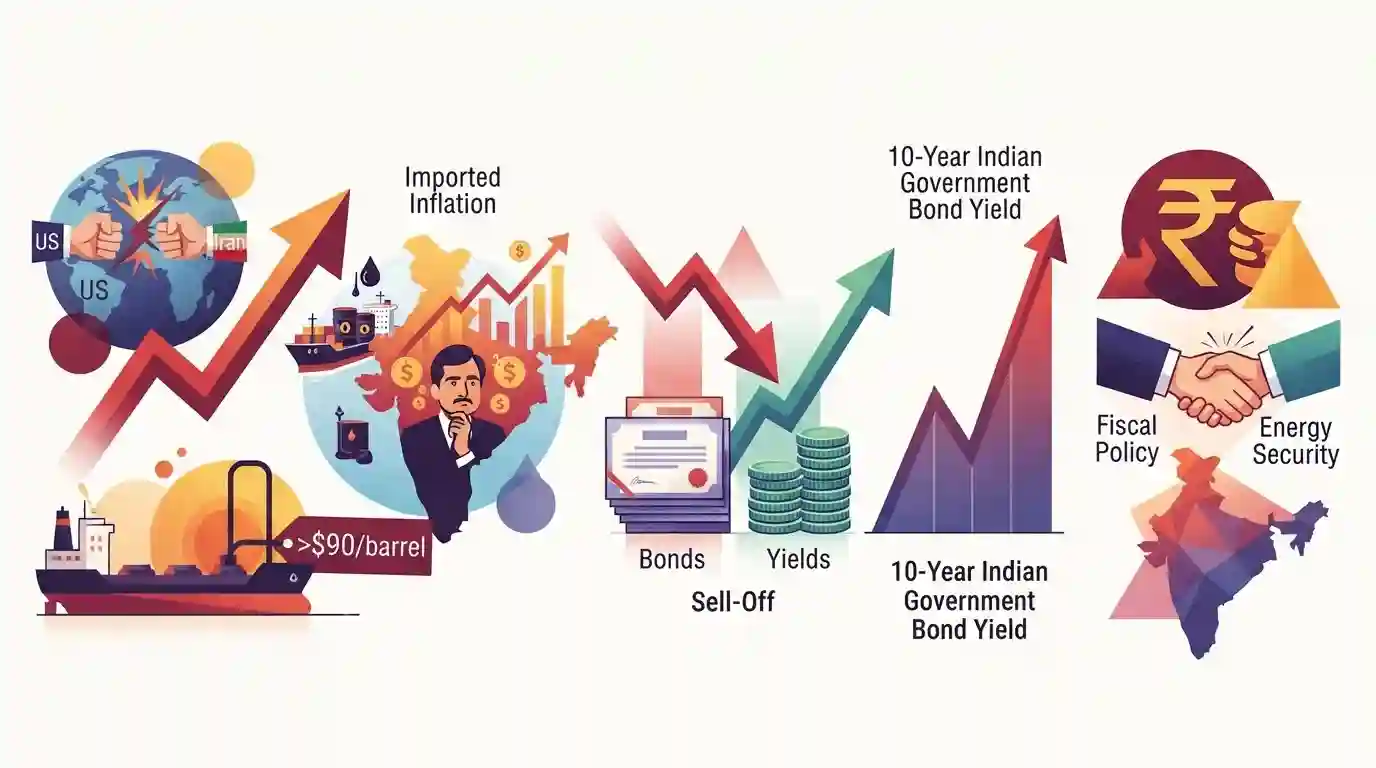
यह लेख अमेरिका और ईरान के बीच भू-राजनीतिक तनाव के कारण कच्चे तेल की बढ़ती कीमतों के भारत की समष्टि आर्थिक (मैक्रोइकॉनॉमिक) स्थिरता पर पड़ने वाले प्रभाव का विश्लेषण करता है, जिसमें विशेष रूप से घरेलू बॉन्ड बाजार पर ध्यान केंद्रित किया गया है। कच्चे तेल की कीमत $90 प्रति बैरल को पार करने के साथ, आयातित मुद्रास्फीति (imported inflation) को लेकर चिंताएं बढ़ गई हैं, क्योंकि भारत अपनी तेल आवश्यकताओं का 80% से अधिक आयात करता है। इस आशंका के बीच कि केंद्रीय बैंक इस मुद्रास्फीति से निपटने के लिए ब्याज दरों को उच्च रख सकते हैं, निवेशकों ने बॉन्ड की बड़े पैमाने पर बिकवाली शुरू कर दी है। यह घटनाक्रम बॉन्ड की कीमतों और यील्ड (yield) के बीच के बुनियादी विपरीत संबंध को दर्शाता है: बिकवाली के दबाव के कारण जैसे ही बॉन्ड की कीमतें गिरती हैं, उनकी यील्ड बढ़ जाती है। इसके परिणामस्वरूप, भारत के 10-year बेंचमार्क बॉन्ड पर यील्ड बढ़ गई है। यह स्थिति वैश्विक ऊर्जा झटकों के प्रति भारत की संवेदनशीलता और घरेलू वित्तीय बाजारों तथा राजकोषीय स्थिति पर भू-राजनीतिक जोखिमों के सीधे संचरण (transmission) को रेखांकित करती है।
मुख्य बिंदु
- पश्चिम एशिया में अमेरिका और ईरान के बीच बढ़ती भू-राजनीतिक शत्रुता के कारण कच्चे तेल की कीमतें $90 प्रति बैरल के पार पहुंच गईं।
- तेल की कीमतों में आए झटके ने भारतीय सरकारी बॉन्डों को नकारात्मक रूप से प्रभावित किया, जिससे बिकवाली की स्थिति पैदा हुई जिसके कारण बॉन्ड की कीमतें गिर गईं और यील्ड बढ़ गई (इसके साथ ही 10-वर्षीय बेंचमार्क यील्ड 6.7938% पर स्थिर हुई)।
- यह घटना बॉन्ड की कीमतों और यील्ड के बीच के विपरीत संबंध को प्रदर्शित करती है: उच्च मुद्रास्फीति की आशंका के कारण निवेशक उच्च ब्याज दरों की उम्मीद करने लगते हैं, जिससे वे अपने मौजूदा बॉन्ड बेचने के लिए प्रेरित होते हैं।
- आयातित कच्चे तेल पर भारत की भारी निर्भरता (आवश्यकताओं के 80% से अधिक) इसकी समष्टि आर्थिक स्थिरता, मुद्रास्फीति के लक्ष्यों और राजकोषीय संतुलन को वैश्विक ऊर्जा बाजार के झटकों के प्रति अत्यधिक संवेदनशील बनाती है।
महत्वपूर्ण शब्द
भारतीय रिज़र्व बैंक (RBI)

भारत का केंद्रीय बैंकिंग संस्थान जो RBI अधिनियम, 1934 के तहत स्थापित किया गया है, और मौद्रिक नीति तैयार करने, बैंकिंग प्रणाली को विनियमित करने, विदेशी मुद्रा का प्रबंधन करने तथा मूल्य और वित्तीय स्थिरता बनाए रखने के लिए जिम्मेदार है।
UPSC context
GS पेपर III (भारतीय अर्थव्यवस्था); मौद्रिक नीति, मुद्रास्फीति प्रबंधन और केंद्रीय बैंकिंग कार्यों की मूल अवधारणाओं का परीक्षण करता है।
Bond Yield
The annual rate of return an investor realizes on a debt security, which fluctuates based on coupon payments and market price, moving inversely to the bond's price.
UPSC context
GS Paper III (Financial Markets); tests understanding of government debt dynamics, borrowing costs, and financial transmission.
आयातित मुद्रास्फीति
आयातित कच्चे माल, जैसे कि कच्चे तेल की बढ़ती लागत के कारण, या घरेलू मुद्रा के मूल्यह्रास के कारण घरेलू मूल्य स्तरों में होने वाली वृद्धि।
UPSC context
GS पेपर III (मुद्रास्फीति); मुद्रास्फीति के प्रकारों, अंतर्राष्ट्रीय व्यापार झटकों और बाहरी सुभेद्यताओं की अवधारणाओं का मूल्यांकन करता है।
Current Account Deficit (CAD)
किसी देश के व्यापार का एक ऐसा माप जहाँ आयातित वस्तुओं, सेवाओं और हस्तांतरणों का मूल्य उसके निर्यात के मूल्य से अधिक हो जाता है, जो बाहरी उधार पर निर्भरता को दर्शाता है।
UPSC context
GS Paper III (External Sector); tests balance of payments, trade imbalances, and currency stability.
सरकारी प्रतिभूतियां (G-Secs)
केंद्र या राज्य सरकारों द्वारा धन उधार लेने के लिए जारी किए जाने वाले ऋण साधन, जो RBI द्वारा प्रबंधित और विनियमित होते हैं तथा कम जोखिम वाली बेंचमार्क परिसंपत्तियों के रूप में कार्य करते हैं।
UPSC context
GS Paper III (Government Budgeting); tests mechanisms of fiscal borrowing, open market operations, and liquidity management.
प्रारंभिक ट्रैप
An increase in sovereign bond yields indicates rising market demand and an appreciation in the market price of those bonds.
Yields and prices share an inverse relationship; yields rise when bonds are sold off (depreciating their price) due to inflation concerns.
संबंधित अवधारणाएँ
What is the economic mechanism behind the inverse relationship between bond prices and yields?
- गणितीय व्युत्क्रम: Yield is calculated as coupon payment divided by market price; as price drops, nominal yield mathematically rises.
- Inflation Influence: प्रत्याशित मुद्रास्फीति ब्याज दरों को बढ़ाती है, जिससे पुराने निश्चित-दर वाले बॉन्ड कम आकर्षक हो जाते हैं और इसके कारण होने वाली बिकवाली से उनकी कीमतें गिर जाती हैं।
भारत का रणनीतिक पेट्रोलियम भंडार (SPR) ढांचा क्या है?
- Phase I Reserves: Totaling 5.33 MMT across three underground rock cavern locations: Visakhapatnam, Mangaluru, and Padur.
- Institutional Custodian: पेट्रोलियम मंत्रालय के तहत एक विशेष प्रयोजन वाहन (Special Purpose Vehicle), इंडियन स्ट्रैटेजिक पेट्रोलियम रिजर्व्स लिमिटेड (ISPRL) द्वारा प्रबंधित।
- Strategic Coverage: लगभग 9.5 दिनों का शुद्ध तेल आयात कवरेज प्रदान करता है, जो तेल विपणन कंपनियों के वाणिज्यिक भंडारण से भिन्न है।
अंतर-विषय पैटर्न
Energy imports and Twin Deficit dynamics
कच्चे तेल की कीमतों में उछाल सीधे तौर पर भारत के वस्तु आयात बिल को बढ़ाता है, जिससे CAD बढ़ता है, जबकि बढ़ती बॉन्ड यील्ड सार्वजनिक ऋण सेवा लागत को बढ़ाती है, जिससे राजकोषीय घाटा और बिगड़ जाता है।
पश्चिम एशियाई चोकपॉइंट्स और ऊर्जा सुरक्षा
भारत का 40% से अधिक कच्चा तेल होर्मुज जलडमरूमध्य से होकर गुजरता है, जो पश्चिम एशियाई भू-राजनीतिक संघर्षों को सीधे घरेलू मुद्रास्फीति और मौद्रिक नीतिगत कदमों से जोड़ता है।

UPSC 2026 is highly likely to test the macro transmission of crude shocks: how CAD expansion, currency depreciation, and bond yields interlink.
संबद्ध PYQ · 4
संबद्ध PYQ · 4
- 2021PrelimsGS1
Indian Government Bond Yields are influenced by which of the following? 1. Actions of the United States Federal Reserve 2. Actions of the Reserve Bank of India 3. Inflation and short-term interest rates Select the correct answer using the code given below.
- 2022PrelimsGS1
With reference to the Indian economy, consider the following statements: 1. If the inflation is too high, Reserve Bank of India (RBI) is likely to buy government securities. 2. If the rupee is rapidly depreciating, RBI is likely to sell dollars in the market. 3. If interest rates in the USA or European Union were to fall, that is likely to induce RBI to buy dollars. Which of the statements given above are correct?
- 2017MainsGS2
The question of India's Energy Security constitutes the most important part of India's economic progress. Analyze India's energy policy cooperation with West Asian countries.
- 2025MainsGS2
"Energy security constitutes the dominant kingpin of India's foreign policy, and is linked with India's overarching influence in Middle Eastern countries.” How would you integrate energy security with India's foreign policy trajectories in the coming years?
