India US Trade Relations and Political Shifts
Source:Indian Express ↗
Why It Matters
Important for understanding how domestic political transitions in major partner countries like the US affect bilateral trade agreements and diplomatic engagements with India.
Summary
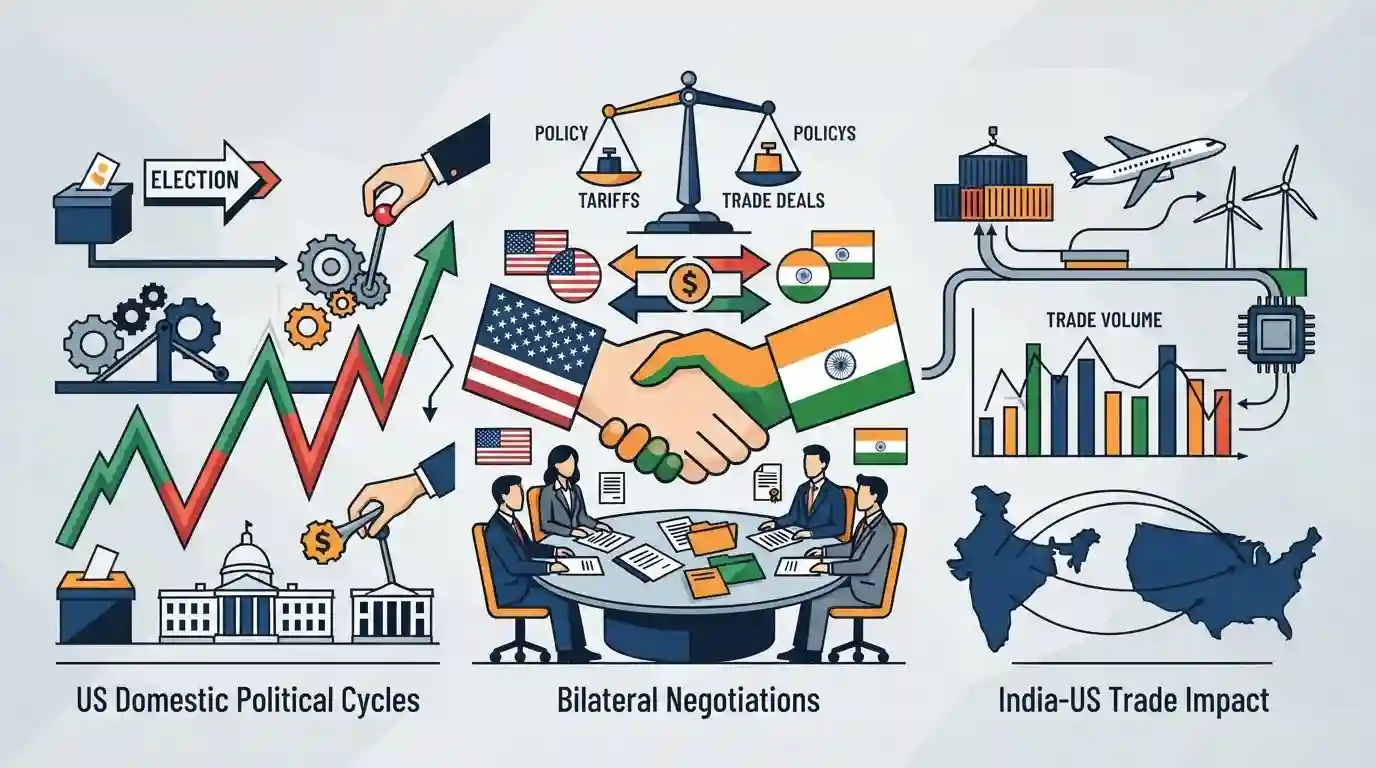
The article examines the dynamics of India-US trade relations and agreements in the context of US political developments, including mid-term elections and leadership shifts under Donald Trump, highlighting how domestic political cycles impact bilateral trade negotiations.
Key Points
- India-US trade negotiations face shifting political landscapes, notably influenced by US midterms and political leadership under Donald Trump.
- Trade agreements between developing economies like India and major powers involve balancing domestic market protections with global strategic alignment.
- Geopolitical priorities frequently intersect with bilateral commercial agreements, causing delays or shifts in trade policy focus.
Important Terms
Section 301

A US trade statute enabling the investigation of unfair foreign trade practices and the imposition of retaliatory measures or tariffs, frequently utilized by the US administration to pressure trading partners like India.
UPSC context
UPSC Prelims/Mains (GS Paper II/III): Tests understanding of international trade laws, protectionism, and India-US bilateral economic disputes and trade probes.
Global Trade Research Initiative (GTRI)
A New Delhi-based economic think tank that provides independent research and analysis on global trade trends, World Trade Organization issues, and the impact of protectionist measures on Indian exports.
UPSC context
UPSC Prelims: Important for questions on economic think tanks, trade policy analysis, and bilateral export-import dynamics.
US Midterm Elections
Elections held midway through a US president's four-year term that determine control of Congress, significantly influencing the executive branch's domestic legislative capacity and foreign trade strategies.
UPSC context
UPSC Mains GS Paper II: Tests knowledge of international relations, US political cycles, and how domestic political shifts impact bilateral agreements with India.
Static Concepts Connected
What is the Generalized System of Preferences (GSP) and what are its key objectives?
- Preferential Tariff: Developed nations provide preferential duty-free or reduced-tariff entry for eligible products exported by developing countries.
- Developmental Goal: The primary objective is to promote economic growth and export diversification in developing economies.
- Market Access: The US GSP program historically required beneficiary countries to provide equitable and reasonable market access for US goods.
Cross-Topic Patterns
Trade Sanctions vs Indo-Pacific Security Partnerships
Bilateral trade disputes frequently test broader security partnerships like the Quad, demonstrating how commercial protectionism intersects with Indo-Pacific strategic alignments.

Expect a statement-based question linking GSP revocation, US domestic electoral cycles, and India's agricultural market protections.
Linked PYQs · 1
Linked PYQs · 1
- 2019MainsGS2
‘What introduces friction into the ties between India and the United States is that Washington is still unable to find for India a position in its global strategy, which would satisfy India's national self-esteem and ambitions.’ Explain with suitable examples.
