India US Bilateral Trade Deal and Strategic Geoeconomics
Source:Indian Express ↗
Why It Matters
Provides critical insight into the intersection of India's geoeconomic strategies and its foreign policy, particularly concerning how changing US trade stances (protectionism, bilateralism) directly impact India's strategic partnership and global positioning.
Summary
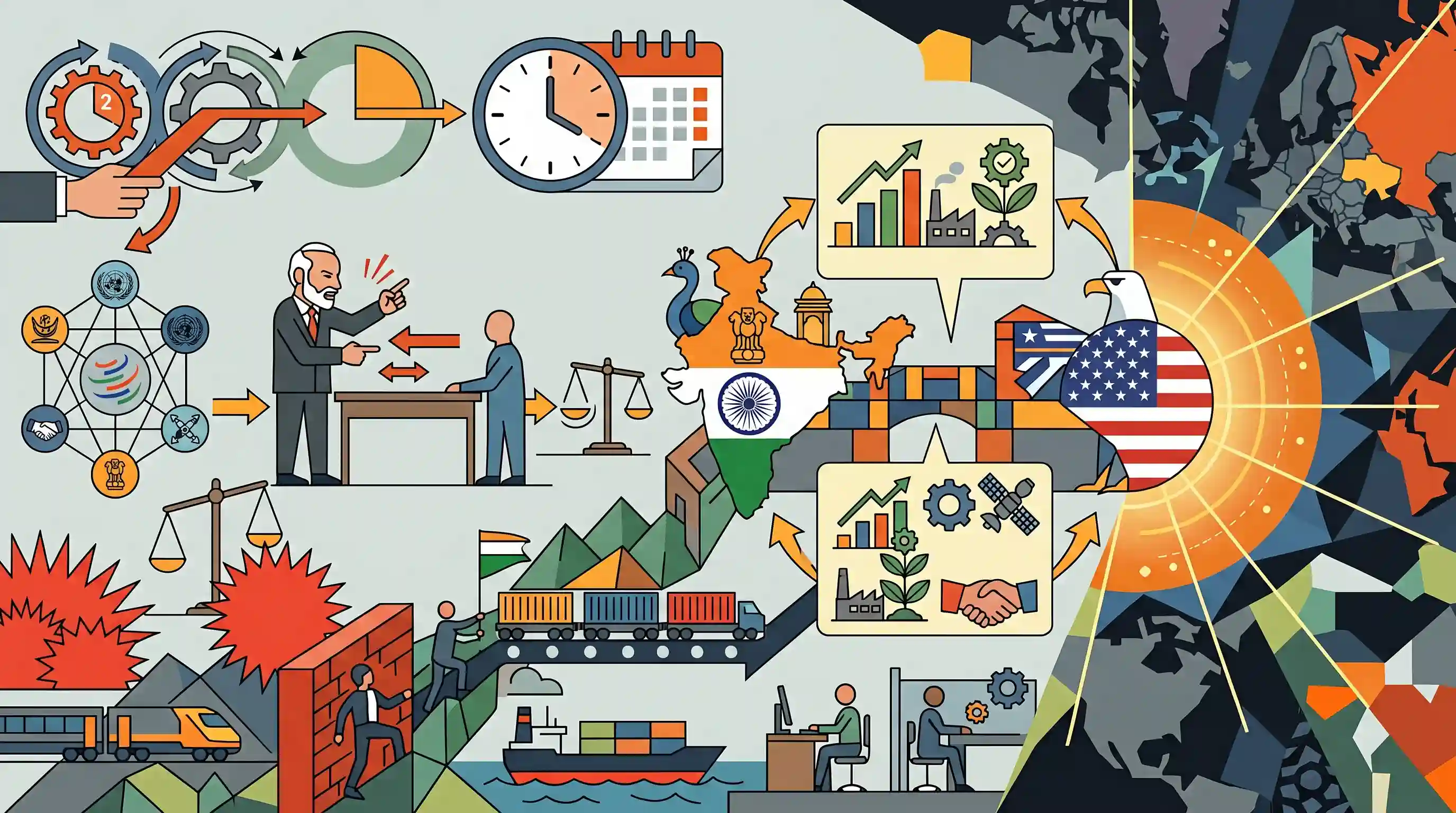
The article argues that while India missed the optimal window—the first 100 days of the incoming Trump administration—to secure a comprehensive bilateral trade deal, prioritizing it now is essential. Under Donald Trump, US trade policy has pivoted away from multilateral institutions like the WTO toward bilateral, transactional agreements aimed at reducing trade deficits. For India, a trade deal is not merely an economic imperative to navigate rising protectionism and tariff frictions, but a crucial step to solidify its broader geopolitical and strategic partnership with Washington. Proactively forging this agreement will help both nations secure their positions and shape an evolving global order characterized by great power competition and a departure from traditional free-trade orthodoxy.
Key Points
- Missed Early Window: The optimal period to secure an India-US trade deal was during the first 100 days of the Trump administration to capitalize on early momentum, but acting now remains critical.
- Shift to Bilateralism: The US under Trump increasingly favors transactional, bilateral trade agreements focused on correcting trade deficits over multilateral frameworks like the WTO.
- Strategic Alignment: An economic agreement is essential to cement the broader Indo-US geopolitical and strategic partnership in the face of great power competition.
- Navigating Protectionism: Proactive negotiations can help India manage the risks of rising American protectionism and tariff threats, ensuring sustained access to US markets.
- Shaping the Global Order: By forging a robust bilateral economic pact, India and the US can better position themselves to navigate and shape a global economic order moving away from traditional free trade.
Important Terms
India-US Trade Deal

A proposed or interim agreement to reduce tariffs and non-tariff barriers, enhancing market access between India and its largest trading partner to resolve long-standing trade frictions.
UPSC context
GS Paper II (International Relations) & III (Economy); tests understanding of bilateral ties, trade diplomacy, and economic hurdles like agricultural duties.
WTO (World Trade Organization)
The only global international organization dealing with the rules of trade between nations, currently facing challenges from a shift toward bilateral and regional agreements.
UPSC context
GS Paper II & III; crucial for understanding the rules-based global trade order and the decline of multilateralism.
Transactional Diplomacy
A pragmatic, 'quid pro quo' approach to foreign policy where agreements are based on immediate, tangible mutual gains rather than long-term shared values or rules-based systems.
UPSC context
GS Paper II; key for analyzing shifting US foreign policy under different administrations and its impact on India.
Protectionism
Government policies, such as tariffs and quotas, aimed at restricting imports to shield domestic industries and workers from foreign competition.
UPSC context
GS Paper III; relevant for discussing global economic trends and challenges to India’s export-led growth.
Trade Deficit
The amount by which the cost of a country's imports exceeds the value of its exports; a central metric in US trade policy for identifying 'unfair' trade partners.
UPSC context
GS Paper III; tests knowledge of Balance of Payments (BoP) and its influence on trade negotiations.
Bilateralism
An approach to international relations that prioritizes direct negotiations and agreements between two nations over larger multilateral frameworks.
UPSC context
GS Paper II; fundamental concept in understanding India’s preferred mode of securing quick, specialized economic partnerships.
Prelims Trap
India negotiates trade deals with the US to fix its persistent merchandise trade deficit with Washington.
India actually runs a significant merchandise trade surplus with the US (~$45 billion). This surplus makes India a direct target for US deficit-reduction tariffs.
Static Concepts Connected
What is the Generalized System of Preferences (GSP) in international trade?
- Definition: A preferential tariff system allowing developed countries to grant zero or low tariff imports from developing nations.
- Non-reciprocal: Unlike Free Trade Agreements, developing nations receiving GSP benefits are not required to lower their own tariffs in return.
- Enabling Clause: It operates as a legal exception to the WTO's fundamental Most-Favored-Nation (MFN) principle under the "Enabling Clause".
Why is the WTO's Appellate Body currently paralyzed?
- Blocked appointments: The US has persistently blocked the appointment of new judges to the 7-member Appellate Body since 2019.
- Quorum failure: Without the minimum three judges required to operate, the body cannot hear appeals, leaving international trade disputes unresolved.
- Unilateral shift: This institutional vacuum forces member nations to bypass multilateral rules in favor of bilateral dispute mechanisms or unilateral tariffs.
Cross-Topic Patterns
Defense ties vs. Trade friction
While Indo-US strategic initiatives (iCET, Quad) see rapid convergence, trade remains volatile due to India's "Make in India" duties and US reciprocal tariff demands.
Minilateralism bypassing the WTO
The US shift to bilateral, transactional deals accelerates global trade fragmentation, heavily diluting the WTO's Most-Favored-Nation (MFN) principle that traditionally protects developing economies.

Expect a 2026 Mains question analyzing the dichotomy between converging Indo-US strategic ties (iCET/Quad) and diverging trade policies.
Linked PYQs · 2
Linked PYQs · 2
- 2025MainsGS3
What are the challenges before the Indian economy when the world is moving away from free trade and multilateralism to protectionism and bilateralism? How can these challenges be met?
- 2019MainsGS2
‘What introduces friction into the ties between India and the United States is that Washington is still unable to find for India a position in its global strategy, which would satisfy India's national self-esteem and ambitions.’ Explain with suitable examples.
