Limits of Bilateral Trade Negotiations Between India and United States
Source:The Hindu ↗
কেন এটি গুরুত্বপূর্ণ
It provides critical insight into the current state of India-U.S. economic diplomacy, highlighting the constraints of bilateral trade negotiations, protectionist pressures, and the protection of domestic economic interests.
সারসংক্ষেপ
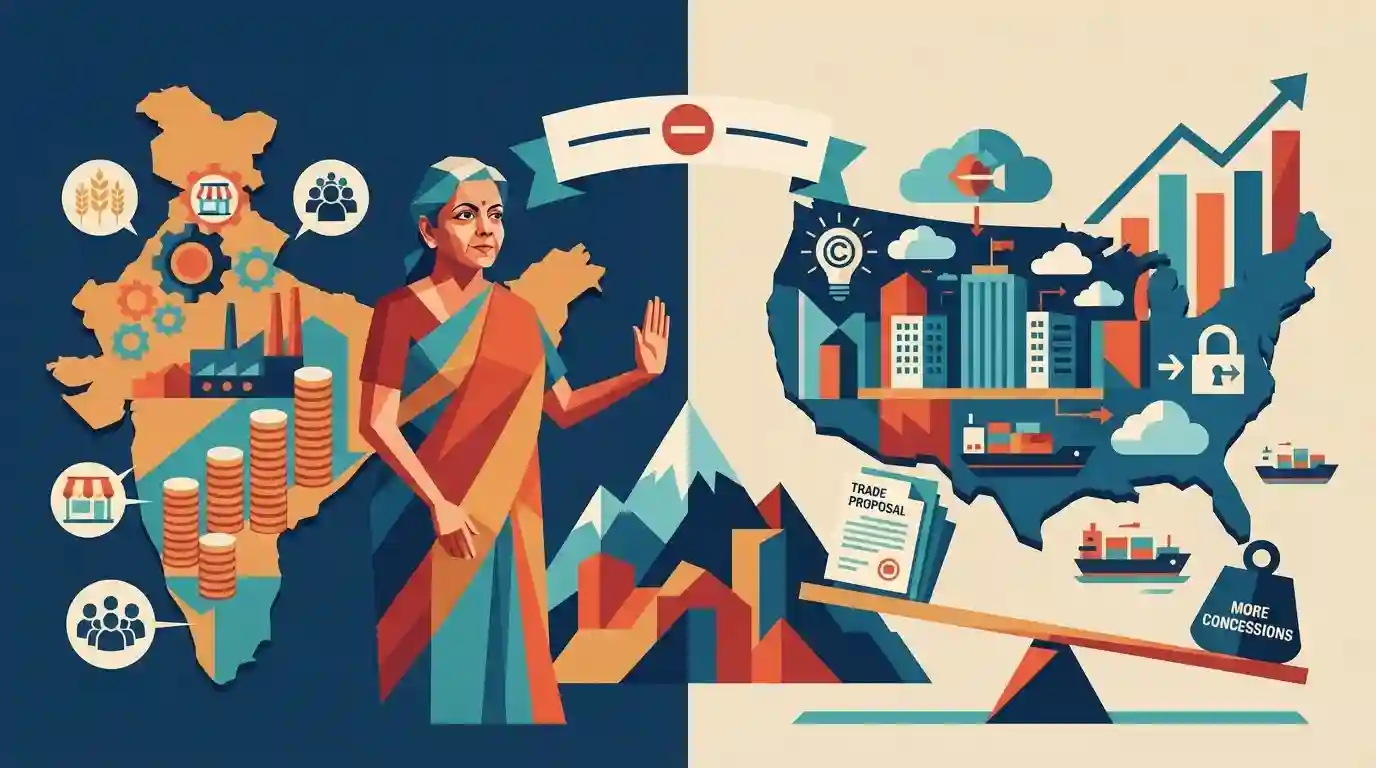
Union Finance Minister Nirmala Sitharaman noted that India-U.S. trade deal talks have reached a plateau, signaling that making further concessions or meeting additional demands from the U.S. side would be exceedingly difficult for India given domestic sensitivities and economic priorities.
মূল বিষয়
- Union Finance Minister Nirmala Sitharaman stated that trade negotiations between India and the U.S. have reached a plateau where further demands and concessions will be very difficult.
- The statement highlights the limits of mutual concessions in bilateral trade talks, especially concerning domestic economic interests, tariffs, and market access.
- Reflects broader global trends where bilateral trade agreements face hurdles due to rising protectionism and differing domestic policy priorities.
গুরুত্বপূর্ণ শব্দ
India-U.S. Trade Deal

A formal economic pact between India and the United States aimed at boosting bilateral trade, investments, and addressing market access and tariff barriers.
UPSC context
UPSC Mains Paper II (International Relations) and Paper III (Economy) - Bilateral relations, trade diplomacy, and protectionism.
Ministry of Finance
The apex executive department of the Indian government responsible for economic policy, public finance, taxation, financial markets, and national budget preparation.
UPSC context
UPSC Mains Paper III (Economy) - Governance, budgetary policies, fiscal management, and economic administration.
Weaponisation of Tariffs
The use of import duties and tariff barriers as political and economic leverage tools to correct perceived bilateral trade deficits or gain unfair negotiating advantages.
UPSC context
UPSC Mains Paper III (Economy) - International trade, protectionism, and global trade dynamics under WTO regulations.
প্রিলিমস ফাঁদ
India and the U.S. have finalized a comprehensive bilateral free trade agreement resolving all tariff and market access disputes.
Aspirants often assume a Comprehensive Economic Partnership Agreement (CEPA) or FTA with the U.S. has been formally concluded, missing that negotiations frequently face structural plateaus over market access and tariffs.
সংযুক্ত স্থির ধারণা
What are the primary instruments of trade protectionism and trade defense recognized globally?
- Countervailing Duties: Duties imposed to counter subsidized foreign exports, restoring level playing fields for domestic producers.
- Anti-Dumping Duties: Tariffs applied on dumped goods sold below domestic market price to protect domestic industries.
- Safeguard Measures: Temporary import restrictions enforced when a surge in imports causes serious injury to domestic industries.
- Non-Tariff Barriers: Mandatory safety, environmental, or technical standards that can act as non-tariff barriers to trade.
আন্তঃবিষয় প্যাটার্ন
Strategic Partnership vs. Bilateral Trade Friction
India's strategic convergence with Washington under the iCET and Quad coexists with persistent tariff frictions and agricultural protectionism in bilateral trade.
WTO Rules vs. Bilateral Free Trade Agreements
WTO rules on market access and domestic support clash with rising global protectionism and bilateral conditionalities, complicating India's FTA roadmap.

India-US trade plateaus + WTO dispute mechanism paralysis will likely feature in a multi-statement Mains/Prelims question.
সংযুক্ত PYQ · 2
সংযুক্ত PYQ · 2
- 2019MainsGS2
‘What introduces friction into the ties between India and the United States is that Washington is still unable to find for India a position in its global strategy, which would satisfy India's national self-esteem and ambitions.’ Explain with suitable examples.
- 2025MainsGS3
What are the challenges before the Indian economy when the world is moving away from free trade and multilateralism to protectionism and bilateralism? How can these challenges be met?
