US Sanctions and Trade Pressures on India Strategic Autonomy
Source:The Hindu ↗
Why It Matters
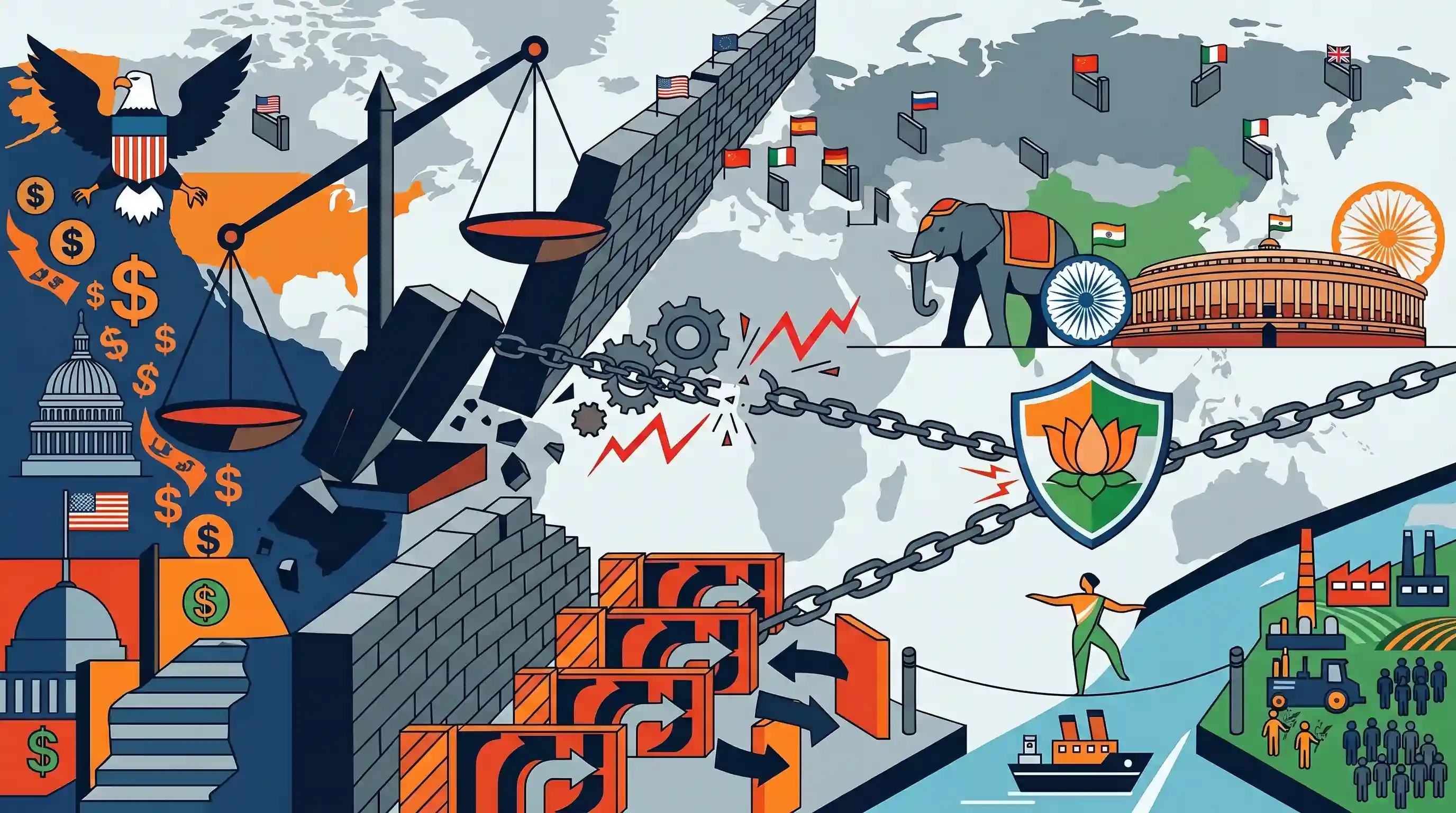
Understanding the nuances of India-U.S. relations is critical for UPSC aspirants. The article highlights the tension between geopolitical alignment and economic divergences, illustrating the challenges India faces in retaining its strategic autonomy amid great power assertiveness and rising global protectionism.
Summary
The article underscores the increasing complexities in India-U.S. bilateral ties, specifically evaluating the friction caused by U.S. sanctions and coercive economic policies. It highlights how these actions test India's strategic autonomy, particularly as Washington leverages its economic weight to push for one-sided bilateral trade deals. This trend reflects the broader global shifts toward sovereign nationalism and protectionism, creating a challenging environment for India as it navigates both its domestic economic imperatives and its geopolitical alignment with the United States.
Key Points
- Recent U.S. sanctions and policy directions pose a direct challenge to India's strategic autonomy and multi-aligned foreign policy.
- Pressure from the United States to negotiate bilateral trade agreements often results in asymmetric conditions or 'one-sided' deals that might compromise India's domestic economic interests.
- The dynamic reflects broader frictions in the India-U.S. strategic partnership, where strategic alignment is offset by tactical divergences in trade and geopolitical positioning.
- The shift towards bilateralism and protectionism by developed nations underscores the need for India to balance its economic security with international trade commitments.
Important Terms
Countering America's Adversaries Through Sanctions Act (CAATSA)

A 2017 U.S. federal law imposing sanctions on countries engaging in "significant transactions" with Russia, Iran, or North Korea, primarily targeting defense and energy sectors.
UPSC context
GS Paper II (International Relations); tests impact of foreign laws on India’s strategic autonomy and defense procurement (e.g., S-400 deal).
Strategic Autonomy
A state's ability to pursue national interests and conduct independent foreign policy without being forced into decisions by other powerful states or alliances.
UPSC context
GS Paper II; central theme in Indian foreign policy, especially regarding non-alignment and multi-alignment in a multipolar world.
Generalized System of Preferences (GSP)
A trade program where developed nations grant non-reciprocal, preferential tariff treatment to developing countries to boost their exports and economic growth.
UPSC context
GS Paper III (Economy) and GS Paper II; relevant for understanding trade friction, as the U.S. withdrew India’s GSP benefits in 2019.
Bilateral Trade Agreements
Formal trade pacts between two nations to reduce or eliminate tariffs and non-tariff barriers, promoting reciprocal market access for goods and services.
UPSC context
GS Paper III (Economy); tests knowledge of trade liberalization, regional vs. bilateral pacts, and their impact on domestic sectors.
World Trade Organization (WTO)
An international body that regulates global trade rules, provides a forum for negotiating trade agreements, and resolves disputes between its 164 member nations.
UPSC context
GS Paper III (Economy/Agriculture); focuses on multilateralism, dispute settlement mechanisms, and challenges like the "Appellate Body" paralysis.
Protectionism
Economic policies, such as tariffs, quotas, and subsidies, designed to restrict imports and protect domestic industries from foreign competition.
UPSC context
GS Paper III; relates to global "deglobalization" trends, "Atmanirbhar Bharat," and the impact of one-sided trade deals on domestic markets.
Prelims Trap
India enjoys a blanket and permanent waiver from CAATSA sanctions due to its Major Defense Partner status.
India received a specific, conditional waiver for the S-400 missile deal under the US NDAA. It is not a permanent or blanket exemption.
Static Concepts Connected
What is the Generalized System of Preferences (GSP)?
- Non-reciprocal access: Developed countries grant duty-free market access to developing nations without expecting reciprocal tariff reductions in return.
- UNCTAD origins: Created under the UNCTAD framework in the 1970s to promote industrialization and economic growth in developing countries.
- US-India friction: The US withdrew India's GSP beneficiary status in 2019, citing a lack of "equitable and reasonable" market access for US goods.
How do WTO rules handle unilateral "national security" tariffs?
- GATT Article XXI: Provides a "security exception" allowing member states to bypass normal trade obligations to protect their essential security interests.
- Panel reviews: Historically considered self-judging, but recent WTO panels have ruled that invoking Article XXI is subject to objective review to ensure it is used in "good faith."
Cross-Topic Patterns
Strategic Quad vs. Economic Protectionism
Geopolitical alignment in the Indo-Pacific frequently collides with geo-economic friction, as unilateral US protectionist tariffs disproportionately target India's export-heavy MSME sectors.
Sanctions & Rupee Internationalization
Extraterritorial US sanctions under CAATSA directly catalyze India's push for Rupee-denominated bilateral trade mechanisms and independent payment settlement architectures to bypass the SWIFT system.

Expect a 2026 Prelims multi-statement question linking US "Section 301" tariffs, CAATSA secondary sanctions, and WTO Article XXI exceptions.
Linked PYQs · 4
Linked PYQs · 4
- 2019MainsGS2
‘What introduces friction into the ties between India and the United States is that Washington is still unable to find for India a position in its global strategy, which would satisfy India's national self-esteem and ambitions.’ Explain with suitable examples.
- 2012MainsGS2
Discuss the likely negative impact of the protectionist measures proposed by the US on India's software industry.
- 2025MainsGS3
What are the challenges before the Indian economy when the world is moving away from free trade and multilateralism to protectionism and bilateralism? How can these challenges be met?
- 2025MainsGS2
"With the waning of globalization, post-Cold War world is becoming a site of sovereign nationalism.” Elucidate.
