India WTO Consultations with US Over Copper Tariffs
Source:The Hindu ↗
Why It Matters
Understanding the WTO dispute settlement mechanism is crucial for UPSC aspirants, as it frequently features in GS-II (International Relations). This issue also touches upon the economic impacts of protectionism on Indian exports and the geopolitics of critical minerals necessary for green energy transitions.
Summary
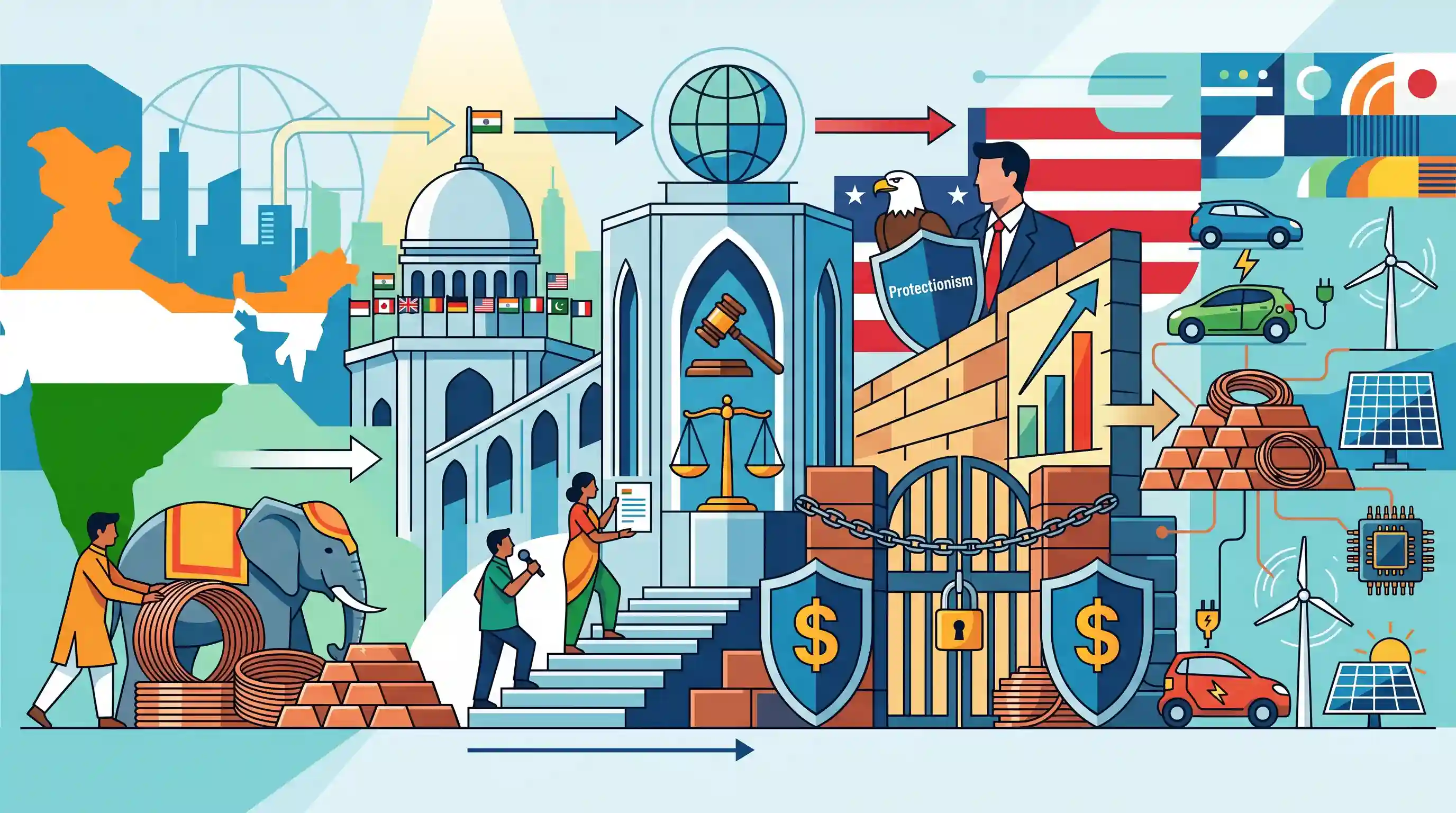
India has approached the World Trade Organisation (WTO) to initiate dispute settlement consultations with the United States regarding a 50% import duty imposed by the US on copper. This move marks the formal beginning of the WTO dispute resolution process, aiming to resolve the trade friction bilaterally before escalating to an adjudication panel. The dispute underscores broader concerns over rising protectionism, the use of high tariffs as trade barriers, and the strategic importance of critical minerals like copper in the global economy.
Key Points
- India has formally sought consultations with the United States at the World Trade Organisation (WTO) over a newly imposed 50% import duty on Indian copper exports.
- The request for consultations is the mandatory first step in the WTO dispute settlement process, allowing both nations to negotiate a mutually acceptable solution before a formal dispute panel is established.
- The steep 50% tariff highlights ongoing trade frictions and rising protectionist tendencies, impacting India's metal export sector and its overall bilateral trade balance with the US.
- Copper is increasingly viewed as a critical mineral for clean energy transitions, making trade disputes over it strategically significant for global supply chains.
Important Terms
WTO Dispute Settlement Mechanism

The WTO's formal system for resolving trade conflicts. It involves consultations, panel adjudications, and an Appellate Body to ensure members adhere to international trade agreements.
UPSC context
GS Paper II (International Relations) and GS Paper III (Economy). Tests understanding of rules-based global order and institutional crises like the Appellate Body logjam.
General Agreement on Tariffs and Trade (GATT)
A 1947 multilateral treaty aimed at reducing trade barriers like tariffs and quotas. It provided the rules for global trade in goods before being succeeded by the WTO in 1995.
UPSC context
GS Paper II (International Relations). Essential for understanding the evolution of global trade governance and India's role as a founding member.
World Trade Organisation (WTO)
The global international organization (est. 1995) that regulates trade between nations. It provides a forum for negotiating agreements and a legal framework for resolving disputes.
UPSC context
GS Paper II & III. A core topic for 'Important International institutions' and 'Issues relating to planning, mobilization of resources, and growth.'
Critical Minerals
Elements like copper, lithium, and cobalt essential for high-tech industries, green energy, and national security. They are characterized by high economic importance and significant supply chain risks.
UPSC context
GS Paper III (Economy/Science & Tech). Relevant to India's National Critical Mineral Mission and strategic autonomy in the energy transition.
Safeguard Measures
Temporary trade barriers, such as duties or quotas, imposed by a country to protect domestic industries from a sudden, injurious surge in specific imports.
UPSC context
GS Paper III (Economy). Tests knowledge of trade policy instruments and India's legal strategies in international trade disputes.
Section 232 (Trade Expansion Act)
A US legal provision allowing the President to impose tariffs or quotas on imports if they are deemed a threat to national security.
UPSC context
GS Paper II (International Relations). Highlighted in India-US bilateral friction and the debate over 'security exceptions' versus 'protectionism' in trade.
Prelims Trap
India and the US resolve WTO appellate disputes through the Multi-Party Interim Appeal Arbitration Arrangement (MPIA).
Neither India nor the US are members of the MPIA. A losing party can indefinitely stall a WTO ruling by filing an "appeal into the void" at the paralyzed Appellate Body.
Static Concepts Connected
What is the structure of the WTO Dispute Settlement Mechanism?
- Consultations: The mandatory 60-day first step where nations attempt to negotiate a mutually acceptable bilateral solution.
- Dispute Panel: If consultations fail, the Dispute Settlement Body (DSB) establishes a panel of experts to adjudicate and issue a binding ruling.
- Appellate Body: Losing parties can appeal panel rulings on points of law. Currently paralyzed because the US blocked judge appointments, eliminating the three-judge quorum.
Why is Copper classified as a Critical Mineral in India?
- Energy Transition: It is indispensable for electric vehicles (EVs), solar panels, and wind turbines due to its high electrical conductivity and efficiency.
- Supply Vulnerability: Included in India's 2023 list of 30 critical minerals due to supply chain vulnerabilities, heavy import reliance, and strategic economic importance.
Cross-Topic Patterns
Trade Barriers vs. Green Commitments
High tariffs on critical minerals like copper contradict global net-zero pledges by drastically inflating the cost of renewable energy infrastructure and electric vehicles.
Bilateralism amid Multilateral Paralysis
With the WTO Appellate Body defunct, the resulting "appeals into the void" force nations to rely on bilateral negotiations or out-of-court FTA mechanisms, fracturing the multilateral trading system.

Expect a 2026 multi-statement question linking India's Critical Minerals list, the MPIA, and the paralyzed WTO Appellate Body mechanism.
Linked PYQs · 4
Linked PYQs · 4
- 2016MainsGS2
The broader aims and objectives of WTO are to manage and promote international trade in the era of globalization. But the Doha round of negotiations seem doomed due to differences between the developed and the developing countries." Discuss in the Indian perspective.
- 2014MainsGS2
WTO is an important international institution where decisions taken affect countries in a profound manner. What is the mandate of WTO and how binding are their decisions ? Critically analyse India's stand on the latest round of talks on Food security.
- 2012MainsGS2
Discuss the likely negative impact of the protectionist measures proposed by the US on India's software industry.
- 2023MainsGS3
What are the direct and indirect subsidies provided to farm sector in India? Discuss the issues raised by the World Trade Organization (WTO) in relation to agricultural subsidies.
