Integrating Social Model of Epilepsy Care in School Health
Source:The Hindu ↗
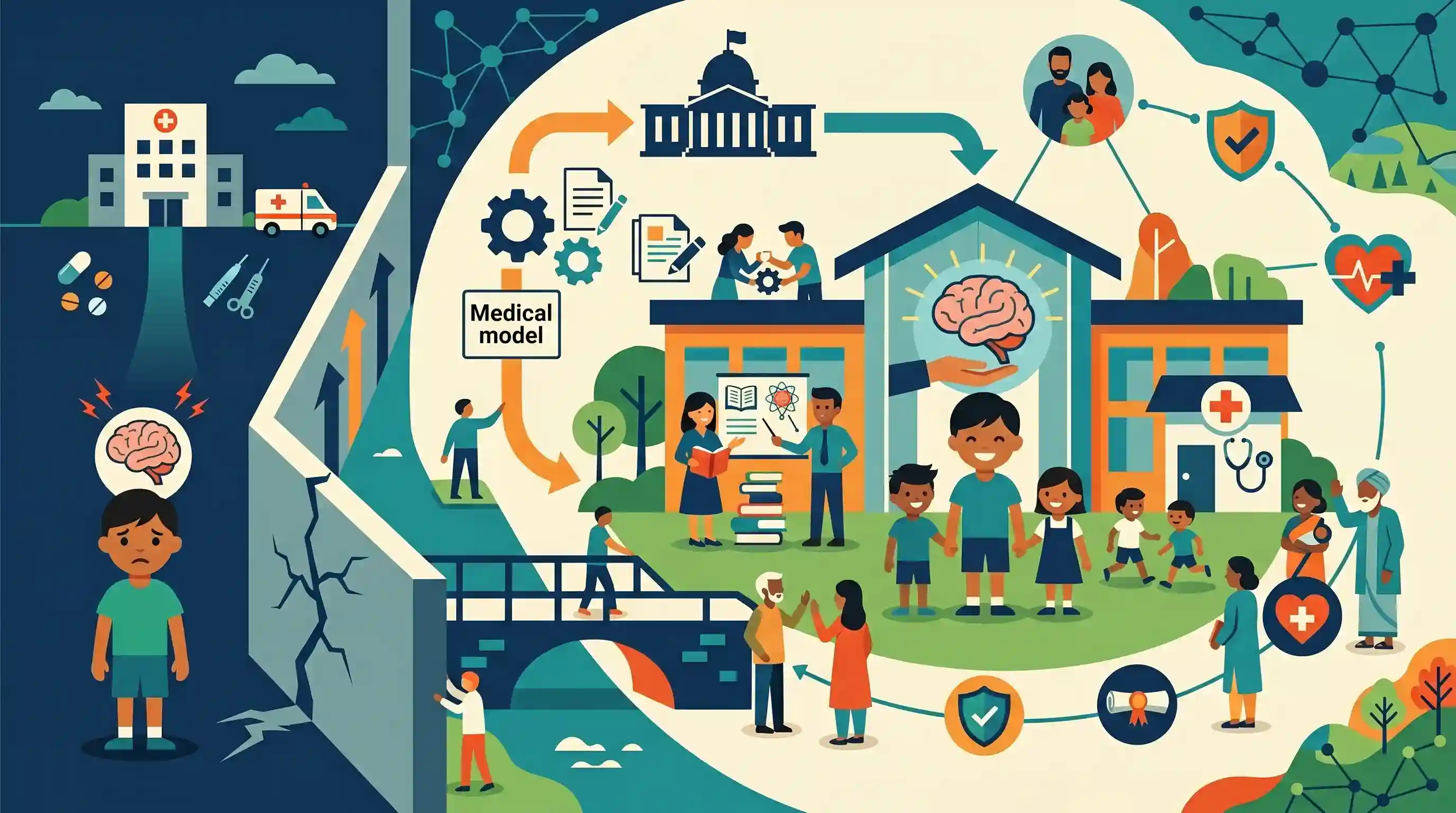
Why It Matters
It highlights a crucial public administration concept: moving from a curative medical approach to a preventive, promotive, and rehabilitative social approach. It bridges the gap between Health and Education (GS2), illustrating how existing grassroots infrastructure like schools can be utilized to address complex disease burdens and societal stigma.
Summary
Health experts in India are emphasizing the need for a 'social model' of epilepsy care, advocating for its integration into national school health programmes. Unlike the traditional medical model that focuses exclusively on clinical and curative treatment, the social model addresses the stigma, socio-economic barriers, and psychological burdens associated with the neurological condition. By embedding epilepsy awareness and early intervention into schools, policymakers can foster an inclusive environment, promote community-based preventive healthcare, and bridge the massive treatment gap driven by myths and a lack of awareness at the grassroots level.
Key Points
- Experts advocate shifting from a purely medical model to a 'social model' of epilepsy care to address stigma, psychological distress, and socio-economic burdens.
- Integrating epilepsy education and care into national school health programmes is essential for early destigmatization and awareness among youth.
- This approach shifts the public health focus toward preventive, promotive, and rehabilitative care, addressing the vast treatment gap caused by societal myths and rural healthcare access issues.
- Such integration builds an inclusive ecosystem that supports vulnerable children while decentralizing disease management to grassroots educational settings.
Important Terms
Ayushman Bharat School Health and Wellness Programme

A joint initiative by the Health and Education ministries (launched 2020) to promote preventive healthcare through weekly classroom sessions led by trained teachers acting as 'Health and Wellness Ambassadors'.
UPSC context
GS Paper 2: Social Sector/Health. Tests knowledge of flagship schemes and inter-ministerial convergence for holistic child development.
Social Model of Health
A healthcare approach that addresses social, economic, and environmental determinants of health (like stigma and education) rather than focusing solely on the biological 'fix' of a disease.
UPSC context
GS Paper 2: Health/Vulnerable Sections. Crucial for discussing inclusive policy-making and the shifting focus from curative to preventive care.
Epilepsy Treatment Gap
The percentage of people with active epilepsy who receive no or inadequate treatment. In India, this gap ranges from 22% in urban areas to over 90% in rural regions.
UPSC context
GS Paper 2: Social Justice. Tests understanding of regional disparities in healthcare access and the burden of non-communicable diseases.
Rashtriya Bal Swasthya Karyakram (RBSK)
A National Health Mission initiative targeting '4Ds' (Defects at birth, Diseases, Deficiencies, Developmental delays) through screening and early intervention for children aged 0-18.
UPSC context
GS Paper 2: Government Schemes. Important for questions on child health, nutrition (Poshan Abhiyaan), and early childhood development.
Health and Wellness Ambassadors (HWA)
Two teachers per school (one male, one female) designated under Ayushman Bharat to facilitate health promotion and disease prevention activities for students once a week.
UPSC context
GS Paper 2: Education/Human Resources. Relevant for discussing school-based health interventions and the role of teachers in community health.
Medical Model of Health
A traditional clinical approach viewing health as the absence of disease and focusing on individual diagnosis, surgical or pharmaceutical treatment, and professional-led interventions.
UPSC context
GS Paper 2: Health Issues. Tests ability to compare healthcare frameworks (curative vs. holistic) in public health essays.
Prelims Trap
"Epilepsy is officially classified as a psychiatric mental illness in India's health framework."
Epilepsy is a neurological disorder, not a psychiatric one. However, it is managed under the District Mental Health Programme (DMHP) for administrative reach, which often confuses aspirants.
Static Concepts Connected
What are the key pillars of the Ayushman Bharat School Health Programme?
- Joint Initiative: Run collaboratively by the Ministry of Health and Family Welfare (MoHFW) and the Ministry of Education.
- Health Ambassadors: Two teachers in every government and government-aided school are designated as 'Health and Wellness Ambassadors'.
- Preventive Focus: Focuses on age-appropriate health education, disease prevention, and promoting healthy behaviors rather than just curative treatments.
How does the 'social model' of health differ from the 'medical model'?
- Medical Model: Views disease or disability purely as an individual clinical deficit requiring targeted medical cure or rehabilitation.
- Social Model: Argues that systemic barriers, negative attitudes, and social exclusion are primary disabling factors, requiring broad societal and institutional reform.
Cross-Topic Patterns
Epilepsy and the RPwD Act 2016
The RPwD Act 2016 recognizes specified neurological conditions. Linking school health models to statutory disability rights shifts the narrative from mere healthcare to enforcing fundamental rights for inclusive education.
Frontline workers bridging the treatment gap
With rural treatment gaps for epilepsy hitting 90%, decentralizing care to teachers and ASHA workers mirrors the successful community-based triage approaches used for TB and maternal health.

Expect a 2026 Mains GS2 question interlinking Ayushman Bharat’s preventive school arms with decentralized neurological/mental health care.
Linked PYQs · 3
Linked PYQs · 3
- 2024MainsGS2
In a crucial domain like the public healthcare system the Indian State should play a vital role to contain the adverse impact of marketisation of the system. Suggest some measures through which the State can enhance the reach of public healthcare at the grassroots level.
- 2023PrelimsGS1
Consider the following statements: Statement-I: India's public sector health care system largely focuses on curative care with limited preventive, promotive and rehabilitative care. Statement-II: Under India's decentralized approach to health care delivery, the States are primarily responsible for organizing health services. Which one of the following is correct in respect of the above statements?
- 2023MainsGS2
The crucial aspect of development process has been the inadequate attention paid to Human Resource Development in India. Suggest measures that can address this inadequacy.
