Rising Cancer Burden and Prevention Strategies in India
Source:The Hindu ↗
Why It Matters
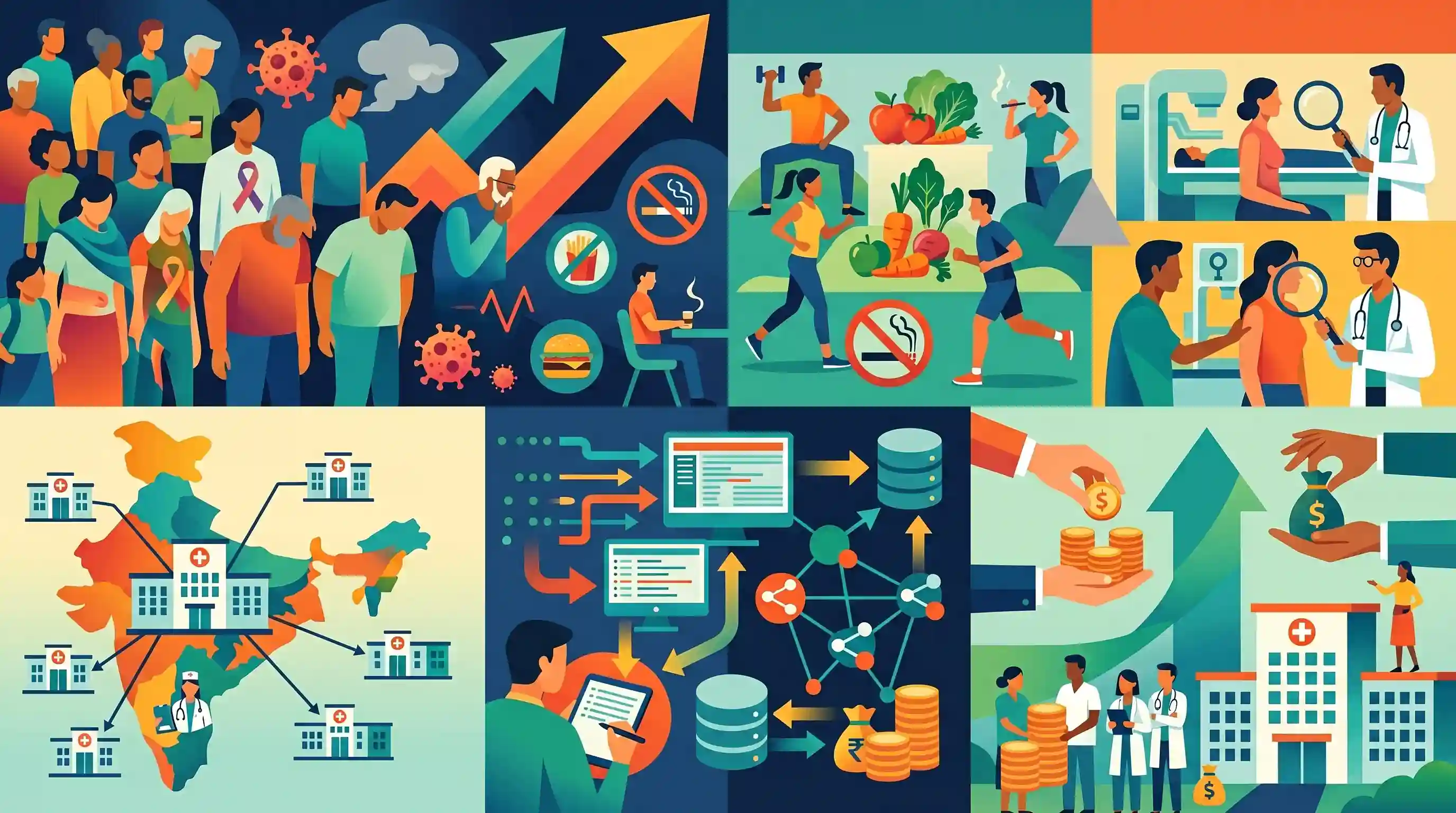
The escalating burden of non-communicable diseases like cancer requires integrated policy responses encompassing grassroots prevention, data-driven surveillance (disease registries), and public-private partnerships (trusts and philanthropy) to make tertiary care accessible.
Summary
India reports approximately 1.5 million new cancer cases each year, necessitating a strategic shift towards prevention and early diagnosis. Speaking at the silver jubilee of the Basavatarakam Indo-American Cancer Hospital, Union Minister Anupriya Patel highlighted the growing burden of lifestyle diseases. In response to this challenge, states like Telangana have declared cancer a notifiable disease, launched dedicated surveillance registries, and are expanding cancer care to district hospitals. The event also underscored the significant role of philanthropic trusts in bridging the gap in tertiary public healthcare delivery and infrastructure.
Key Points
- India is witnessing approximately 15 lakh new cancer cases annually, driven by changing lifestyles and environmental factors.
- Union Minister of State for Health Anupriya Patel emphasized the urgent need to shift focus towards disease prevention and early diagnosis to manage the growing healthcare burden.
- The Telangana State government has proactively declared cancer a notifiable disease and established a state-level cancer registry and portal to improve disease surveillance.
- Telangana is expanding grassroots oncology care by establishing cancer treatment centers in teaching hospitals at the district level.
- Philanthropic initiatives and charitable trusts are playing a critical role in providing accessible tertiary healthcare, acting as vital partners in the nation's health infrastructure.
Important Terms
Notifiable Disease

A disease that healthcare providers are legally required to report to government authorities. This enables real-time monitoring, systematic data collection, and informed public health responses to disease outbreaks or burdens.
UPSC context
GS Paper 2 (Health/Governance); tests knowledge of public health surveillance mechanisms and state-level policy interventions in India.
Tertiary Healthcare
Specialized consultative healthcare, usually provided in large research hospitals on referral from primary or secondary care. It involves advanced medical investigation and treatment for complex conditions like cancer or neurosurgery.
UPSC context
GS Paper 2 (Health Infrastructure); tests understanding of the healthcare hierarchy and the role of specialized centers in public health.
Basavatarakam Indo-American Cancer Hospital and Research Institute
A premier non-profit oncology center in Hyderabad established to provide world-class, affordable cancer care. It serves as a major case study for philanthropic and non-governmental involvement in tertiary healthcare.
UPSC context
GS Paper 2 (Role of NGOs/Trusts); useful as a case study for private-philanthropic partnerships in addressing medical infrastructure gaps.
Nandamuri Basavataraka Ramarao Memorial Cancer Foundation
The philanthropic foundation established by former AP Chief Minister N.T. Rama Rao to manage the Basavatarakam Cancer Hospital. It represents the impact of private trusts in delivering affordable healthcare.
UPSC context
GS Paper 2 (Health/Role of Trusts); tests knowledge of non-state actors contributing to social sector development.
National Cancer Registry Programme (NCRP)
An ICMR initiative launched in 1982 to systematically track cancer incidence and mortality trends. It utilizes Population-Based and Hospital-Based registries to provide data for national health planning and research.
UPSC context
GS Paper 2 (Health Policies); tests understanding of data-driven governance and the function of statutory bodies like ICMR.
Non-Communicable Diseases (NCDs)
Chronic diseases, such as cancer and diabetes, that are not transmissible between persons. They are primarily driven by lifestyle and environmental factors and pose a significant long-term health challenge to India.
UPSC context
GS Paper 2 (Public Health); tests awareness of epidemiological shifts and the need for preventive healthcare strategies.
Prelims Trap
Declaring cancer a notifiable disease invokes central quarantine powers under the Epidemic Diseases Act.
The 'notifiable' tag merely mandates data reporting to government registries for statistical surveillance and policy planning. It does not imply the disease is infectious or subject to quarantine.
Static Concepts Connected
What is the legal framework for declaring a "notifiable disease"?
- State Subject: Public health is a State subject (State List). Declarations are typically made under State Public Health Acts or specific municipal acts.
- Mandatory Reporting: It legally binds all clinical establishments (both private and public) to report diagnosed cases to government authorities.
- Surveillance Goal: The primary objective is to monitor epidemiological trends, build registries, and allocate targeted health infrastructure.
Which cancers are screened under the National Programme for Prevention and Control of NCDs?
- Target Cancers: The programme specifically mandates population-level screening for three high-burden cancers: oral, breast, and cervical.
- Grassroots Implementation: Screening is integrated into primary healthcare and conducted at the grassroots level through Ayushman Arogya Mandirs (Health and Wellness Centres).
- ASHA Role: Frontline workers like ASHAs mobilize local communities and assist in opportunistic screening for early diagnosis.
Cross-Topic Patterns
Federalism in public health surveillance
Because Health is a State subject, disease notification happens at the state level (e.g., Telangana). This creates fragmented national data, requiring central alignment like the National Cancer Registry Programme.
NGOs bridging the tertiary healthcare gap
Trust-run hospitals heavily subsidize expensive tertiary care like oncology, addressing GS-2 themes on the role of NGOs and civil society in bridging state infrastructure deficits and preventing catastrophic out-of-pocket expenditure.
Economic impact of NCDs on demographic dividend
The epidemiological transition towards non-communicable diseases (NCDs) threatens India's working-age population, linking public health infrastructure directly to economic growth and human capital outcomes.

Expect a 2026 Prelims question testing the specific cancers screened under NP-NCD (oral, breast, cervical) and the 'notifiable disease' tag.
Linked PYQs · 3
Linked PYQs · 3
- 2024MainsGS2
In a crucial domain like the public healthcare system the Indian State should play a vital role to contain the adverse impact of marketisation of the system. Suggest some measures through which the State can enhance the reach of public healthcare at the grassroots level.
- 2015MainsGS2
Public health system has limitations in providing universal health coverage. Do you think that the private sector could help in bridging the gap? What other viable alternatives would you suggest?
- 2024MainsGS2
Public charitable trusts have the potential to make India's development more inclusive as they relate to certain vital public issues. Comment.
