Addressing transmission bottlenecks in renewable energy sector
Source:Indian Express ↗
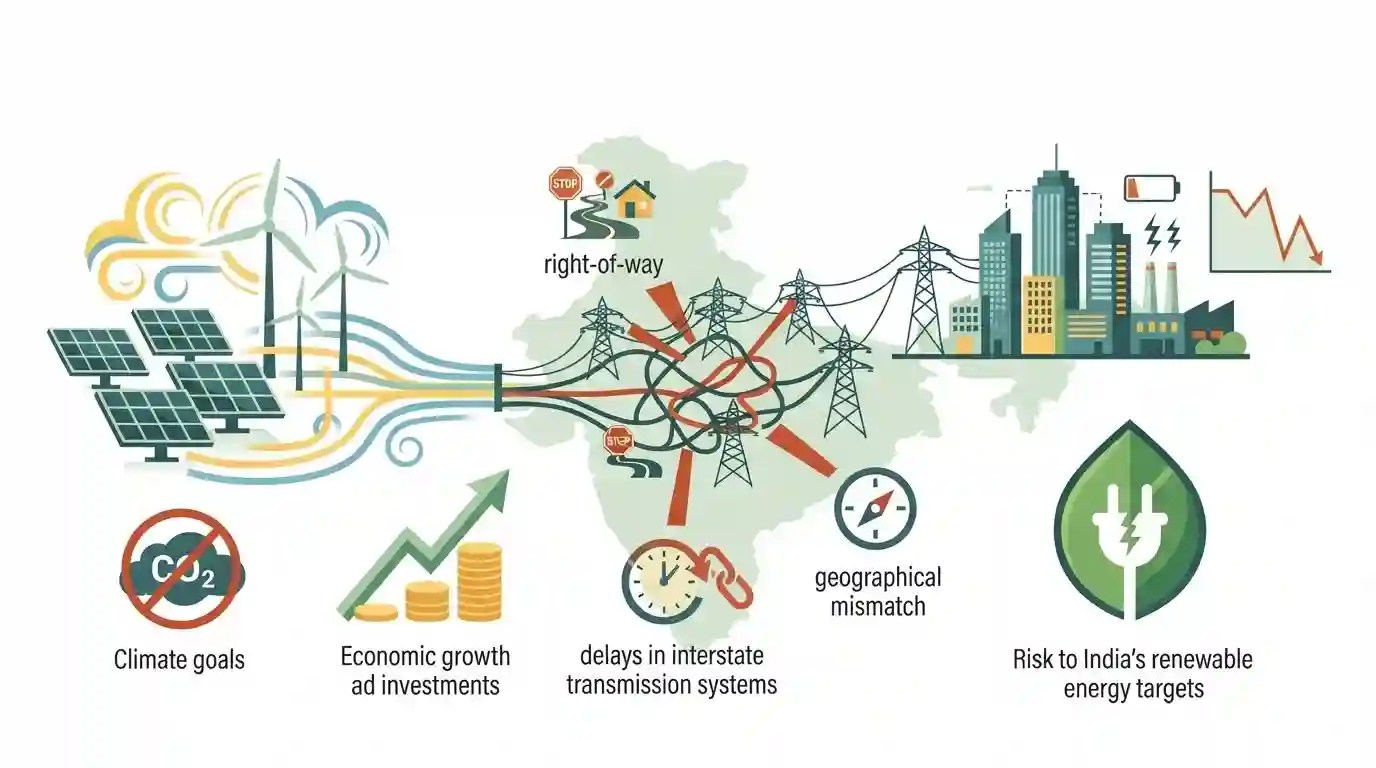
આ શા માટે મહત્વનું છે
Understanding infrastructure bottlenecks in renewable energy transmission is vital for evaluating India's green transition, energy security, and 2030/2070 climate commitments.
સારાંશ
The article examines the transmission bottlenecks threatening India's renewable energy boom. Despite massive capacity additions in solar and wind power, infrastructural and grid integration challenges—such as right-of-way issues, geographical mismatch between generation and demand nodes, and delays in interstate transmission systems—pose risks to India's climate and renewable energy goals.
મુખ્ય મુદ્દા
- India faces severe transmission bottlenecks threatening its ambitious renewable energy expansion and net-zero targets.
- The geographical mismatch between high renewable generation zones (such as western and southern states) and major consumption centers causes grid congestion and curtailment issues.
- Long-term planning, right-of-way challenges, and delays in setting up interstate transmission systems (ISTS) hinder capacity addition.
- Addressing grid integration, battery energy storage systems (BESS), and green energy corridors are crucial for sustaining India's renewable transition.
પ્રિલિમ્સ ટ્રેપ
Interstate transmission systems (ISTS) for renewable energy evacuation are exclusively planned and executed by respective state governments.
Aspirants often assume interstate transmission systems are planned and executed by state electricity boards, whereas ISTS planning falls under central agencies like the Central Electricity Authority (CEA) / PGCIL.
સંલગ્ન સ્થિર ખ્યાલો
What is the Green Energy Corridor (GEC) project in India?
- Core Objective: Primary Objective: Synchronize large-scale renewable energy capacity with conventional power grids through dedicated transmission infrastructure.
- Two Phases: Implementation: Divided into Intra-State Transmission System (Phase I & II) and Inter-State Transmission System (ISTS) components.
- Funding Mix: Funding: Financed through a mix of domestic capital, German development loan (KfW), and Government of India grants.
આંતર-વિષય પેટર્ન
Renewable Infrastructure + Cooperative Federalism
The gestation mismatch between renewable plants (12-18 months) and interstate transmission systems (36-60 months) tests cooperative federalism and land acquisition laws across states.
Energy Storage + Critical Minerals Dependency
Grid integration of variable renewable energy demands massive battery storage deployment, linking critical mineral supply chains directly to domestic power sector stability.

Gestation mismatch between RE generation (12-18m) and ISTS lines (36-60m) is a prime candidate for an assertion-reason question.
સંલગ્ન PYQ · 2
સંલગ્ન PYQ · 2
- 2013MainsGS3
Write a note on India's green energy corridor to alleviate the problem of conventional energy.
- 2022MainsGS3
Do you think India will meet 50 percent of its energy needs from renewable energy by 2030 ? Justify your answer. How will the shift of subsidies from fossil fuels to renewables help achieve the above objective ? Explain.
