India Rejects SCO Joint Statement Over Terrorism Omission
Source:The Hindu ↗
Why It Matters
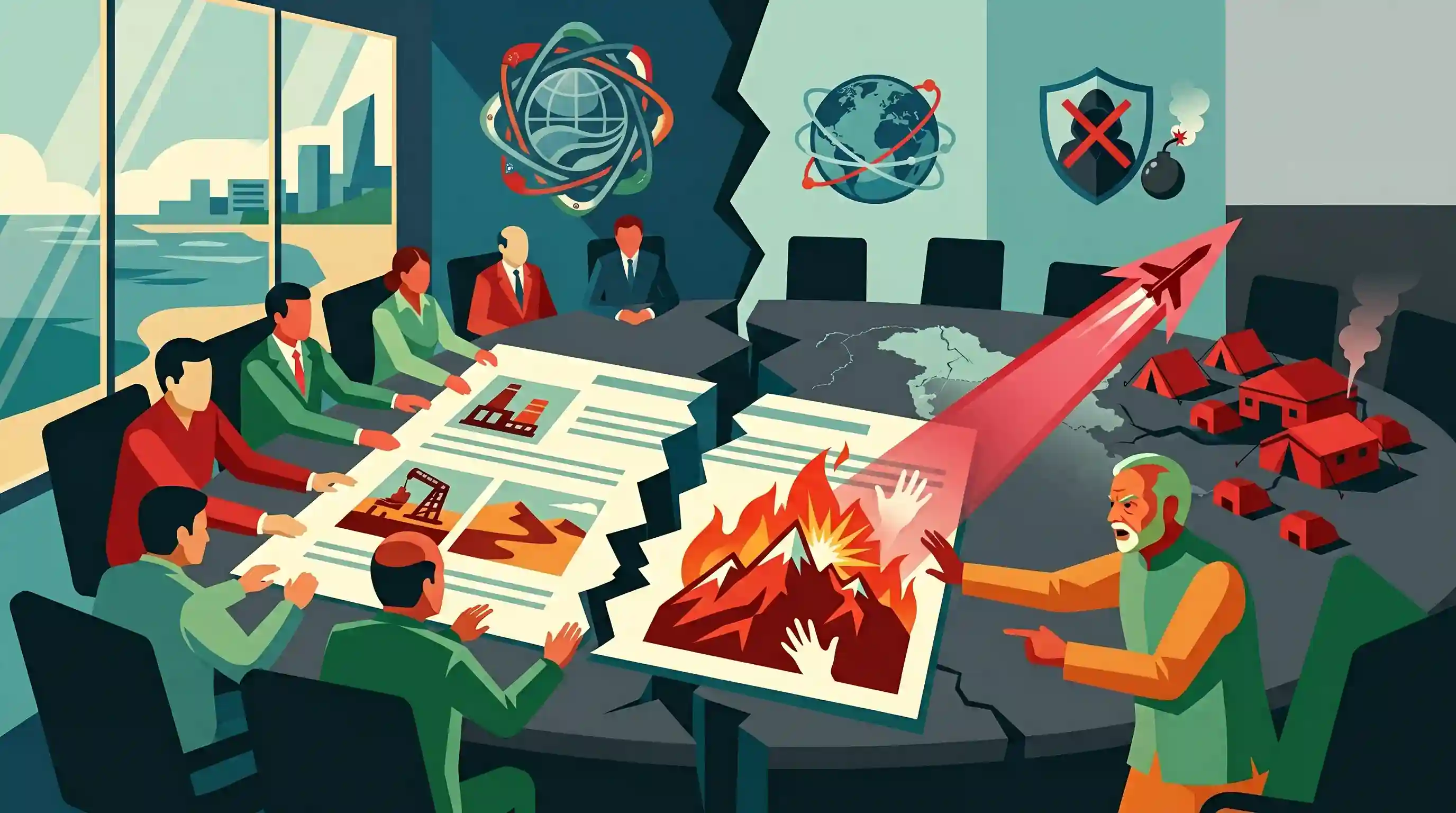
The event is a direct case study of how bilateral tensions (India-Pakistan-China) paralyse regional groupings like the SCO, directly addressing the UPSC theme of the 'virus of conflict' in the SCO. It also introduces 'Operation Sindoor' as a vital contemporary example of India's proactive defense doctrine against cross-border terrorism.
Summary
Defence Minister Rajnath Singh refused to endorse the joint statement at the SCO Defence Ministers' meeting in Qingdao after the document omitted references to the Pahalgam terror attack while highlighting militancy in Balochistan. Viewing this as a diversionary tactic by China and Pakistan, India demanded stronger anti-terror language, reiterating that peace and terrorism cannot coexist. Singh emphasized India's zero-tolerance policy against state-sponsored cross-border terrorism, pointing to 'Operation Sindoor'—a military response launched by India in May 2025 to dismantle terrorist infrastructure in Pakistan following the deadly attack by the LeT-proxy TRF. The impasse highlights deep internal divisions within the SCO regarding regional security.
Key Points
- Defence Minister Rajnath Singh refused to sign the joint statement at the SCO Defence Ministers' meeting in Qingdao, China, citing a lack of consensus on terrorism language.
- The draft statement omitted the April 2025 Pahalgam terror attack by LeT-proxy TRF but included militant activities in Balochistan, which India viewed as a diversionary tactic by Pakistan and China.
- India emphasized a zero-tolerance policy, stating that state sponsors of cross-border terrorism must face consequences and reiterating its right to self-defense.
- In response to the Pahalgam attack, India launched 'Operation Sindoor' in May 2025 to dismantle cross-border terrorist infrastructure in Pakistan.
- Singh highlighted India's civilizational ethos of 'Vasudhaiva Kutumbakam' as a basis for SCO cooperation while firmly rejecting double standards on terrorism.
Important Terms
Operation Sindoor

India’s May 2025 military response involving precision strikes on terrorist infrastructure in Pakistan following the Pahalgam attack. It represents a shift toward a proactive "preventive dominance" doctrine in cross-border security.
UPSC context
GS Paper III (Internal Security); tests India’s military doctrine, deterrence mechanisms, and response strategies to state-sponsored cross-border terrorism.
Shanghai Cooperation Organisation (SCO)
A Eurasian intergovernmental alliance focused on regional security (RATS), political stability, and economic cooperation. It is a critical forum for India to engage Central Asia and manage China-Pakistan dynamics.
UPSC context
GS Paper II (International Relations); tests India’s role in regional groupings, strategic autonomy, and management of multilateral security challenges.
The Resistance Front (TRF)
A Pakistan-backed proxy of Lashkar-e-Taiba (LeT) operating in Jammu and Kashmir. Formed post-2019, it employs an "indigenous" secular facade to evade international scrutiny while conducting targeted civilian attacks.
UPSC context
GS Paper III (Internal Security); tests awareness of hybrid warfare, proxy groups, and the evolving nature of militancy in Kashmir.
Lashkar-e-Taiba (LeT)
A major UN-designated, Pakistan-based terrorist organization responsible for numerous attacks in India. It frequently uses shadow proxies to mask state involvement and circumvent global sanctions.
UPSC context
GS Paper III (Security); tests understanding of regional terror networks and the challenges of state-sponsored cross-border militancy.
Financial Action Task Force (FATF)
The global intergovernmental watchdog for money laundering and terrorist financing. It uses "Grey" and "Black" lists to compel nations to dismantle terror funding networks and comply with international standards.
UPSC context
GS Paper II/III (International Relations/Security); tests knowledge of global financial governance and diplomatic leverage against terror financing.
Prelims Trap
"Decisions and joint statements at SCO Ministerial meetings can be adopted by a two-thirds majority vote."
The SCO operates strictly on a consensus basis. India's refusal to sign blocked the joint statement's unanimous adoption; there is no majority voting system for declarations.
Static Concepts Connected
What is the mandate and structure of SCO-RATS?
- Core Mandate: It is tasked with combating the "Three Evils" of terrorism, separatism, and extremism within member states.
- Headquarters: It is a permanent organ located in Tashkent, Uzbekistan (distinct from the main SCO Secretariat in Beijing).
- Mechanism: Facilitates intelligence sharing, database maintenance, and joint counter-terrorism exercises (like 'Peace Mission') among member nations.
How do proxy terror groups bypass international scrutiny?
- Facade Creation: State sponsors create new outfits (like TRF as a front for LeT) to falsely brand state-sponsored cross-border terrorism as 'indigenous' unrest.
- Asset Masking: Using new names helps parent organizations shield their financial and logistical networks from direct UN sanctions and FATF grey-listing.
Cross-Topic Patterns
Proxy terror & FATF geopolitics
The creation of front organizations like TRF links internal security in J&K directly to India's diplomatic push at the FATF, demonstrating how state sponsors attempt to mask financial networks.
Multilateral paralysis via bilateral disputes
Just as SAARC stagnated due to India-Pakistan tensions, the SCO's consensus-driven model is increasingly paralyzed by the China-Pakistan axis, highlighting the vulnerability of regional groupings to bilateral disputes.

SCO's RATS mechanism + FATF proxy-evasion tactics (TRF) are highly likely to feature as a blended multi-statement Prelims question.
Linked PYQs · 5
Linked PYQs · 5
- 2021MainsGS2
Critically examine the aims and objectives of SCO. What importance does it hold for India?
- 2023MainsGS2
‘Virus of Conflict is affecting the functioning of the SCO’ In the light of the above statement point out the role of India in mitigating the problems.
- 2021MainsGS3
Analyse the multidimensional challenges posed by external state and non-state actors, to the internal security of India. Also discuss measures required to be taken to combat these threats.
- 2021MainsGS3
Analyse the complexity and intensity of terrorism, its causes, linkages and obnoxious nexus. Also suggest measures required to be taken to eradicate the menace of terrorism.
- 2023MainsGS3
Give out the major sources of terror funding in India and the efforts being made to curtail these sources. In the light of this, also discuss the aim and objective of the 'No Money for Terror (NMFT)' Conference recently held at New Delhi in November 2022.
