Legally binding IT Ministry advisories for tech intermediaries
Source:The Hindu ↗
Why It Matters
The transition of government advisories from guiding principles to legally binding mandates marks a crucial shift in India's digital governance. It impacts intermediary liability, platform accountability, and the broader debate around free speech, digital censorship, and state control over digital platforms.
Summary
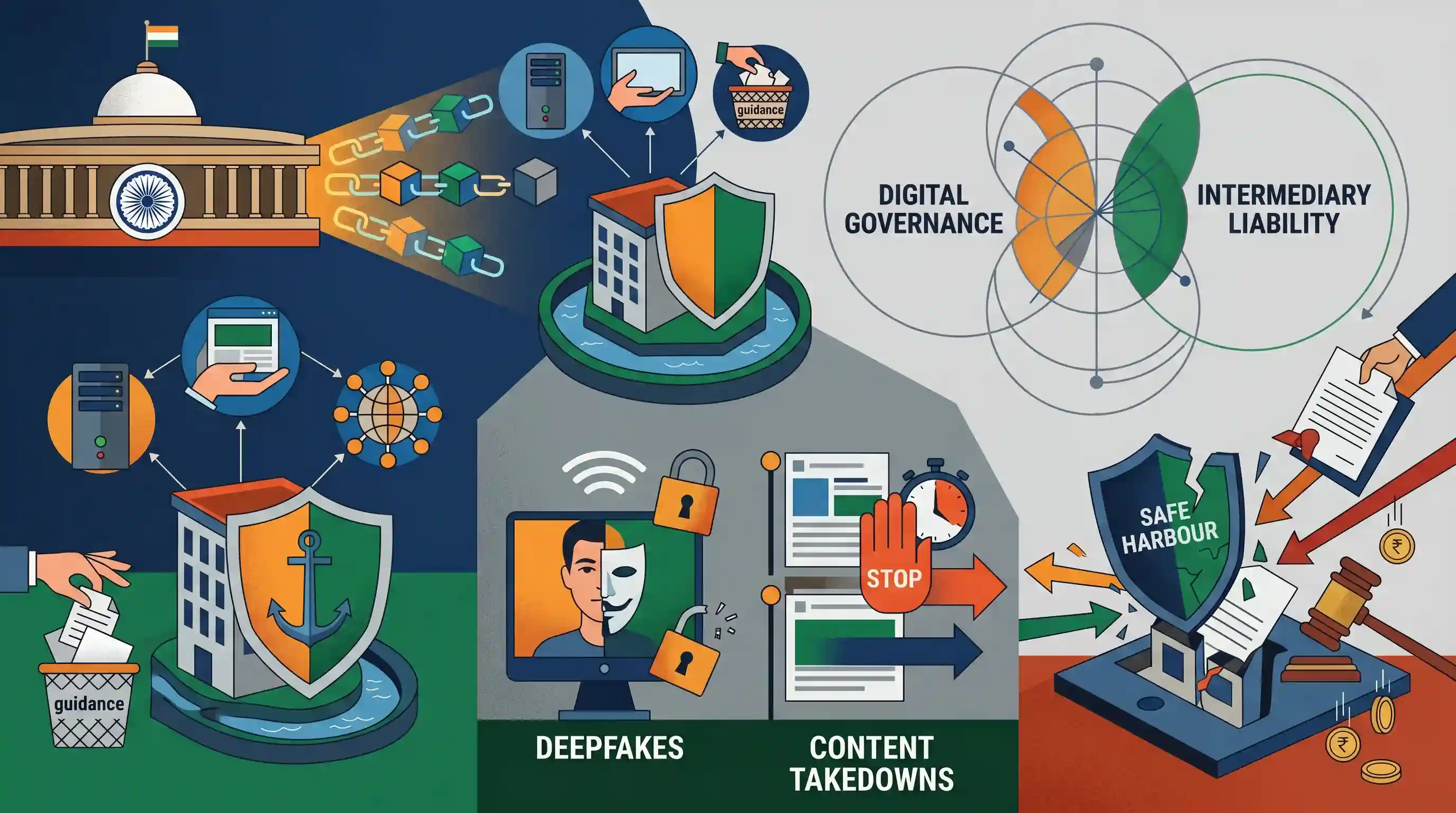
The Indian government has proposed amendments to its IT laws to make advisories and clarifications issued by the IT Ministry legally binding on internet platforms. Under the new rules, non-compliance with these advisories concerning issues like deepfakes and content takedowns would result in platforms losing their 'safe harbour' protection.
Key Points
- The proposed rules aim to strengthen the enforceability of IT Ministry advisories by making them legally binding on major tech platforms like Meta, Google, and X.
- Non-compliance with government guidelines will result in the forfeiture of the 'safe harbour' legal shield, which currently protects platforms from liability for user-generated content.
- The government recently compressed the timeline for platforms to take down flagged content from 36 hours to 3 hours.
- The binding advisories will heavily target the regulation of AI-generated content, deepfake labelling, and overall content takedown practices.
Important Terms
Information Technology Act, 2000

India's primary legislation governing cyber activities, electronic commerce, and digital signatures. It provides the legal framework for addressing cybercrimes and defining the responsibilities of internet intermediaries.
UPSC context
GS Paper II & III: Governance, Cybersecurity, and Regulatory Frameworks. Crucial for understanding digital rights and state regulatory powers.
Safe Harbour Provision
Legal immunity under Section 79 of the IT Act protecting online platforms from liability for third-party content, provided they observe due diligence and follow government takedown orders.
UPSC context
GS Paper III: Internal Security and Technology. Tests knowledge of platform accountability versus freedom of expression in the digital age.
Ministry of Electronics and Information Technology (MeitY)
The nodal agency of the Government of India responsible for IT policy, strategy, and the implementation of the Information Technology Act and its associated rules.
UPSC context
GS Paper II: Statutory and Regulatory bodies. Key for questions on digital governance and executive rule-making.
Intermediary
Any entity that receives, stores, or transmits electronic records on behalf of others, such as social media platforms (Meta, X), search engines (Google), and internet service providers.
UPSC context
GS Paper III: Cyber Security. Understanding the legal status of tech giants under Indian law.
IT (Intermediary Guidelines and Digital Media Ethics Code) Rules, 2021
Secondary legislation that mandates due diligence for platforms, including grievance redressal and compliance with government advisories on issues like deepfakes and misinformation.
UPSC context
GS Paper II: Governance and Government Policies. Central to debates on social media regulation and executive overreach.
Deepfakes
AI-generated synthetic media that realistically replaces a person's likeness. Regulation of such content is a primary driver behind making government advisories legally binding.
UPSC context
GS Paper III: Science & Tech and Internal Security. Focuses on emerging threats and ethical AI regulation.
Prelims Trap
Safe harbour protection under the IT Act grants absolute legal immunity to social media platforms.
Safe harbour is conditional, not absolute. Platforms retain immunity only if they act as neutral hosts, observe due diligence, and comply with binding government advisories.
Static Concepts Connected
What is the 'Safe Harbour' provision under the IT Act, 2000?
- Section 79: Provides conditional immunity to intermediaries like social media platforms from legal liability for third-party user-generated content.
- Conditional Nature: Immunity requires platforms to act purely as neutral conduits without modifying or initiating the transmission.
- Due Diligence: Protection is revoked if platforms fail to comply with government takedown mandates or legally binding advisories.
How do intermediary regulations interact with freedom of speech?
- Article 19(2) Limits: Any content takedown must strictly fall under reasonable restrictions like state security, public order, or decency.
- Chilling Effect: Strict 3-hour takedown windows risk proactive 'over-censorship' by platforms to avoid legal liability, threatening legitimate speech.
- Shreya Singhal Case: A landmark Supreme Court judgment that struck down Section 66A of the IT Act, reaffirming strict thresholds for online speech restrictions.
Cross-Topic Patterns
IT Rules + DPDP Act distinction
UPSC often conflates content regulation (IT Rules/MeitY) with data privacy (DPDP Act/Data Protection Board). Know exactly which framework governs deepfakes versus personal user data.
AI Deepfakes + ECI Model Code
Regulating 'Synthetically Generated Information' directly intersects with the Election Commission's mandate to curb AI-driven electoral misinformation, bridging the gap between technology and polity.

Expect a 2026 question linking Section 79 'Safe Harbour' conditions with Article 19(2) restrictions and new AI deepfake labelling rules.
Linked PYQs · 3
Linked PYQs · 3
- 2024MainsGS3
Social media and encrypting messaging services pose a serious security challenge. What measures have been adopted at various levels to address the security implications of social media? Also suggest any other remedies to address the problem.
- 2013MainsGS3
What are social networking sites and what security implications do these sites present ?
- 2014MainsGS2
What do you understand by the concept "freedom of speech and expression"? Does it cover hate speech also ? Why do the films in India stand on a slightly different plane from other forms of expression ? Discuss.
