Plastic Packaging Crisis: Challenges in Waste Management
Source:The Hindu ↗
Why It Matters
Plastic waste management and the phase-out of single-use plastics are core components of India's environmental policy. This article provides crucial analytical depth on why recycling fails, the health hazards of microplastics, and the trade-offs of using plastic alternatives, which is vital for writing balanced GS3 Mains answers on pollution and waste management.
Summary
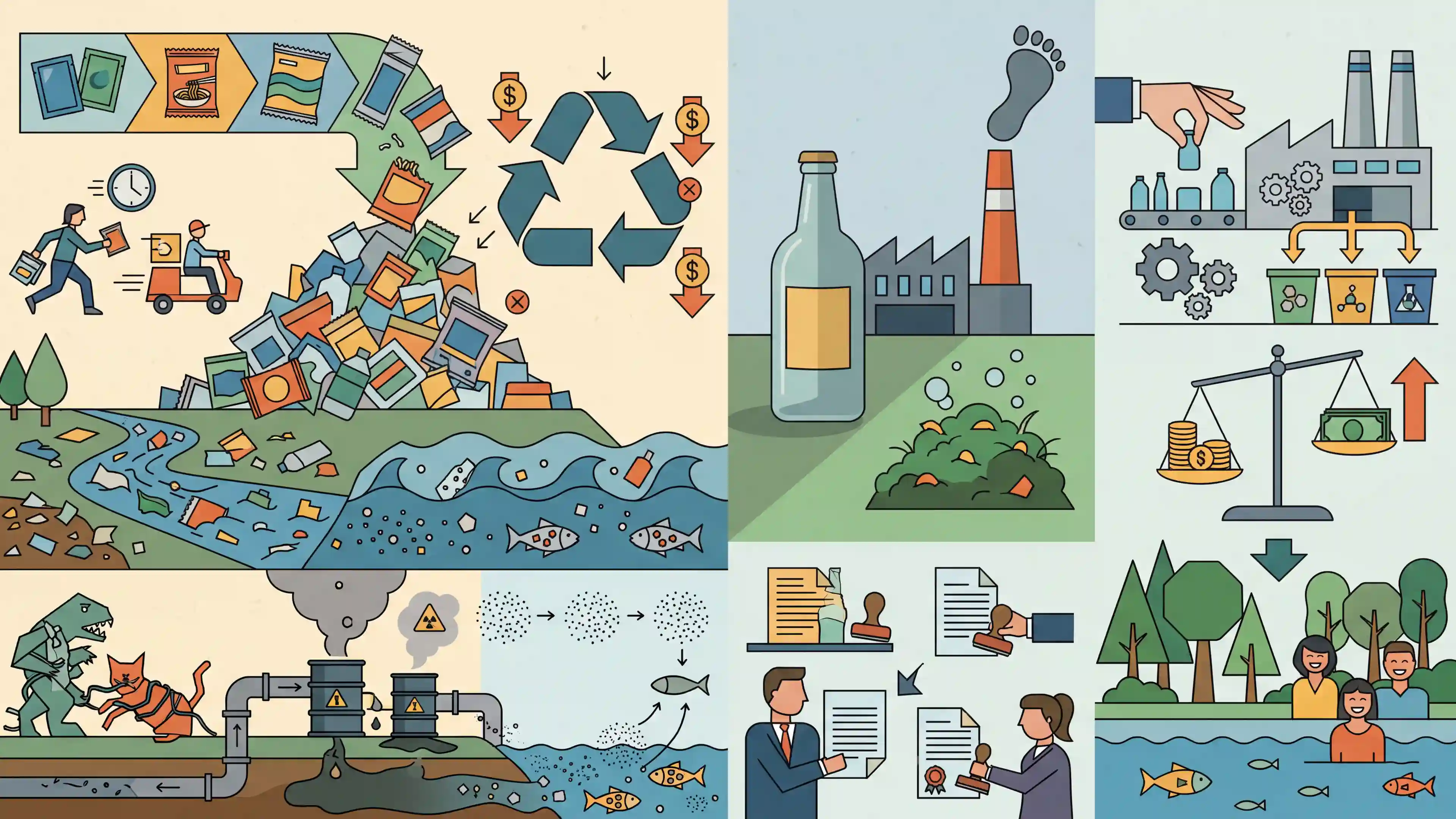
The article explores the roots and ramifications of India's plastic packaging crisis, emphasizing how a culture of convenience and disposable single-use items—like shampoo sachets and instant noodle wrappers—has fueled immense environmental degradation. Although recycling is often touted as the primary solution, it remains economically unviable for much of this waste, leading to widespread litter, toxic chemical exposure, and microplastic pollution. Furthermore, the article points out the hidden environmental costs of plastic alternatives, such as the carbon footprint of glass or the methane emissions from compostables. To meaningfully address the crisis, policymakers must simplify the types of plastics and chemical additives permitted in manufacturing to facilitate better recycling and reuse, while pricing materials to reflect their true ecological and social costs.
Key Points
- India has become the world's third-largest consumer of plastic and the largest contributor to plastic pollution, driven heavily by a shift toward single-use packaging.
- About 43% of plastics manufactured in India are used for packaging (often low-value sachets and pouches), much of which is economically unviable to recycle.
- Plastics contain up to 16,000 different chemicals, many of which pose serious health and environmental risks, including microplastics found in human organs and urban air.
- Transitioning away from plastics is complex because alternatives like glass, paper, aluminium, and compostables have significant environmental trade-offs, including high carbon intensity and methane emissions.
- Solutions require simplifying the approved range of plastics and chemicals to improve recycling viability, alongside policies that internalize the environmental and social costs of packaging materials.
Important Terms
Extended Producer Responsibility (EPR)

A policy approach making producers responsible for the entire lifecycle of their products, particularly the collection, recycling, and final disposal of plastic packaging waste.
UPSC context
GS Paper III: Essential for understanding Solid Waste Management Rules and corporate accountability in environmental conservation.
Circular Economy
An economic model designed to eliminate waste by keeping materials and products in use through recycling, reuse, and sustainable design, moving away from 'take-make-dispose'.
UPSC context
GS Paper III: Key concept for sustainable development, resource efficiency, and climate change mitigation strategies.
Multi-layered Packaging (MLP)
Packaging made of multiple layers of different materials (e.g., plastic and foil); common in sachets and highly difficult to recycle due to its complex composite nature.
UPSC context
GS Paper III: Focuses on specific challenges in solid waste management and industrial pollution control.
PlastIndia Foundation
The apex body of major associations in India’s plastics industry, promoting industrial growth alongside sustainability, recycling technology, and national policy advocacy.
UPSC context
GS Paper III: Relevant for industrial policy, stakeholder roles in environment management, and 'Make in India' sustainability.
WRAP (Waste and Resources Action Programme)
A global climate action NGO that collaborates with governments and businesses to reduce waste and promote circular living in food, textiles, and plastic packaging.
UPSC context
GS Paper III: Example of international non-state actors influencing domestic environmental standards and circularity models.
Safai Saathis
A dignified term for informal waste pickers who are critical to India's recycling ecosystem; they are increasingly being integrated into formal corporate waste management models.
UPSC context
GS Paper III/I: Important for questions on inclusive growth, social justice for informal workers, and urban waste management.
Hindustan Unilever Limited (HUL)
India's largest FMCG company, significant for its plastic footprint and its 'plastic neutral' status achieved through large-scale collection and processing initiatives.
UPSC context
GS Paper III: Case study for Corporate Social Responsibility (CSR) and private sector participation in environmental governance.
Nestlé India
A major food and beverage 'brand owner' in India involved in plastic waste management through projects like 'Hilldaari' and packaging innovation to reduce virgin plastic.
UPSC context
GS Paper III: Illustrates challenges of sachet culture and the implementation of EPR by multinational corporations.
Prelims Trap
"Compostable bioplastics are an emission-free, universally sustainable alternative to single-use plastics."
Aspirants assume compostables are universally safe, but if dumped in conventional anaerobic landfills (rather than specialized facilities), they break down and emit methane.
Static Concepts Connected
What is Extended Producer Responsibility (EPR) under India's Plastic Waste Management Rules?
- Producer Mandate: Makes producers, importers, and brand owners legally responsible for the end-of-life management of their plastic packaging products.
- Actionable Targets: It encompasses specific targets for collection, recycling, and the mandatory use of recycled plastic content in new packaging.
- Waste Categories: Plastic waste is categorized into rigid plastics, flexible plastics (including single-use), multilayered plastics, and compostables.
How do microplastics interact with Persistent Organic Pollutants (POPs)?
- Toxic Vectors: Microplastics (<5mm) act as sponges, absorbing and concentrating toxic chemicals like POPs from surrounding water bodies.
- Bioaccumulation: Contaminated microplastics are ingested by marine life, leading to the bioaccumulation of toxins as they move up the food chain to humans.
Cross-Topic Patterns
EPR + Circular Economy policy shift
EPR (Extended Producer Responsibility) links environmental conservation directly with industrial policy, pushing producers to redesign packaging and internalize ecological costs into market pricing.
Waste management vs. Carbon footprint trade-offs
Replacing plastic with glass or aluminium links solid waste management to climate change, as the high energy-intensity of these alternatives drastically shifts the pollution burden from land to air.
Microplastics + Endocrine disruptor health impacts
The bioaccumulation of toxic chemical additives (like POPs) riding on microplastics bridges environmental degradation with human biology and endocrine disruption.

Expect a multi-statement prelims question contrasting the carbon lifecycle of alternatives (glass, bioplastics) against EPR plastic targets.
Linked PYQs · 4
Linked PYQs · 4
- 2018MainsGS3
What are the impediments in disposing the huge quantities of discarded solid wastes which are continuously being generated? How do we remove safely the toxic wastes that have been accumulating in our habitable environment?
- 2019PrelimsGS1
Why is there a great concern about the 'microbeads' that are released into environment?
- 2024PrelimsGS1
Consider the following statements : Statement-I: Many chewing gums found in the market are considered a source of environmental pollution. Statement-II : Many chewing gums contain plastic as gum base. Which one of the following is correct in respect of the above statements?
- 2025PrelimsGS1
Consider the following: I. Cigarette butts II. Eyeglass lenses III. Car tyres How many of them contain plastic?
