India Out-of-Pocket Health Expenditure Rises in FY23
Source:Indian Express ↗
Why It Matters
Metrics like out-of-pocket expenditure (OOPE) and government health expenditure are critical indicators of healthcare equity. A rising OOPE signals an increased financial burden on households and a potential policy failure in universalizing healthcare, which directly impacts GS-II themes on social justice, poverty alleviation, and state intervention in essential services.
Summary
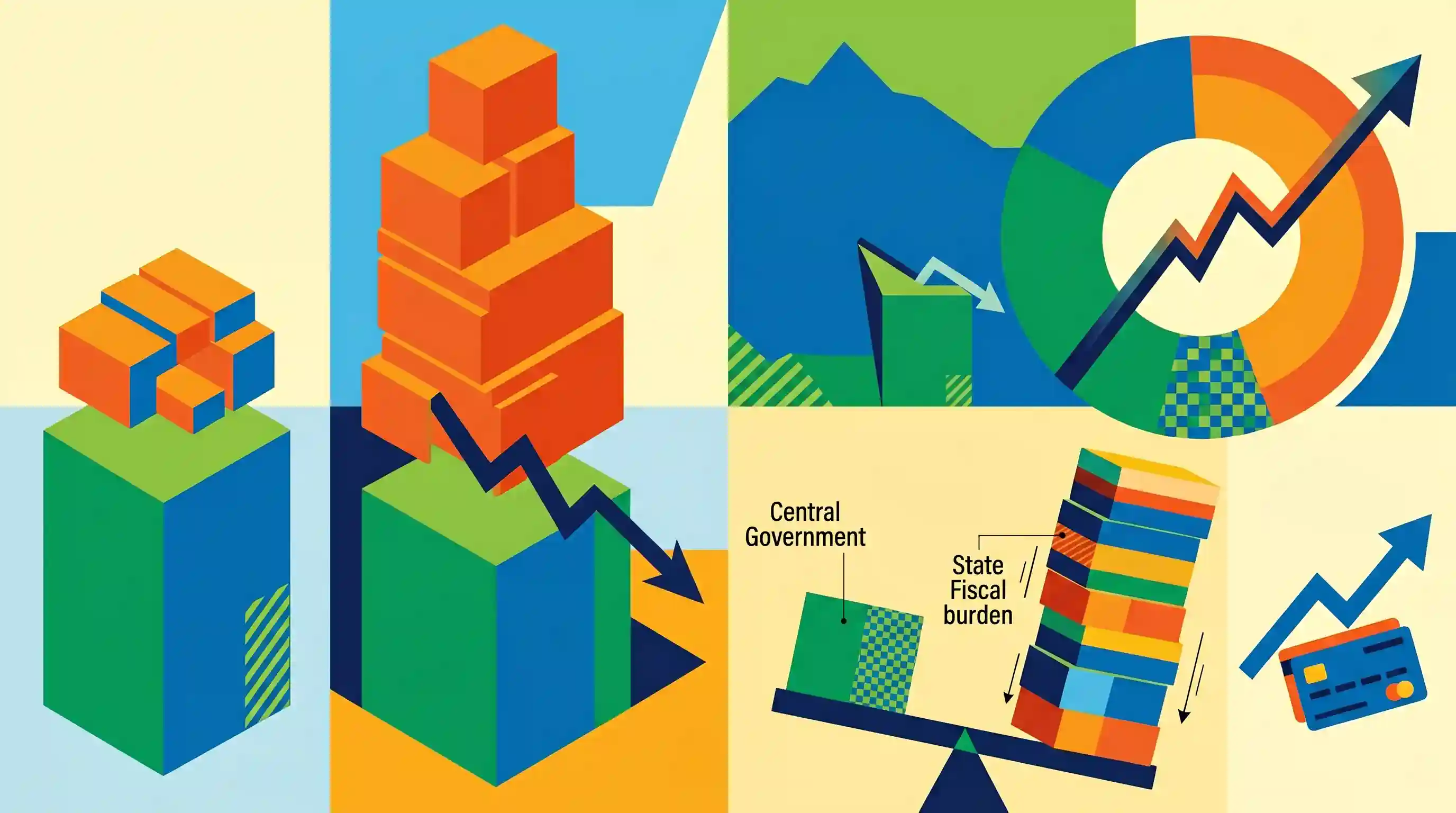
The latest National Health Accounts (NHA) Estimates for 2022-23 reveal a concerning reversal in India's healthcare financing metrics, with out-of-pocket expenditure (OOPE) rising sharply to 43.4% of Total Health Expenditure (THE). Concurrently, overall government health expenditure contracted by 11%, and THE as a share of GDP declined to 3.3%. The data also highlights a growing fiscal burden on state governments—who now account for 63.7% of public health spending—and a modest uptick in private health insurance penetration.
Key Points
- Out-of-pocket expenditure (OOPE) jumped to 43.4% of India's total health expenditure in FY23, reversing a multi-year downward trend.
- Total health expenditure (THE) as a proportion of GDP fell to 3.3% in FY23 from 3.8% in FY22.
- Overall government health spending (GHE) declined by 11% year-on-year, with the burden shifting towards states, whose share of GHE rose to 63.7%.
- The share of private health insurance in total health expenditure rose slightly to 9.19%, reflecting a modest increase in formalized healthcare financing.
Important Terms
National Health Accounts (NHA) Estimates

A systematic accounting framework aligned with international standards (SHA 2011) used to track and describe the flow of financial resources within India’s health system.
UPSC context
Relevant for GS-II (Social Justice/Health); tests understanding of healthcare financing, UHC progress, and National Health Policy targets.
Out-of-Pocket Expenditure (OOPE)
Direct payments made by individuals for healthcare services (medicines, diagnostics, hospital stays) at the point of service without reimbursement from insurance or government schemes.
UPSC context
GS-II (Issues relating to Health); tracks financial protection and the "catastrophic" impact of health costs on poverty.
Government Health Expenditure (GHE)
The sum of all health spending by Union, State, and local governments. It reflects the state’s fiscal commitment and determines progress toward the 2.5% of GDP target.
UPSC context
GS-II/III (Governance/Budgeting); critical for examining fiscal federalism, as states typically bear over 60% of public health spending.
Total Health Expenditure (THE)
The aggregate of all public and private spending on health services within a country, including government funds, private insurance, and household out-of-pocket payments.
UPSC context
GS-II/III; provides a baseline for comparing public versus private investment ratios and national health priorities.
Primary Healthcare
Essential healthcare made universally accessible to individuals. National health policies prioritize this sector, aiming for it to receive two-thirds of total public health spending.
UPSC context
GS-II (Social Sector); vital for assessing the efficiency of the "preventive" healthcare model and Ayushman Bharat (HWC) implementation.
Social Security Expenditure (SSE) on Health
Public funding for health insurance (e.g., PM-JAY) and employee medical reimbursements. It acts as a buffer to reduce OOPE through risk-pooling mechanisms.
UPSC context
GS-II/III; measures the maturity of India's social safety net and progress toward Universal Health Coverage.
Prelims Trap
Out-of-pocket expenditure (OOPE) in India has steadily and consistently declined over the past decade.
While OOPE saw a declining trend for a few years, FY23 NHA estimates reveal a concerning reversal, with OOPE jumping back up to 43.4%.
Static Concepts Connected
What constitutes Out-of-Pocket Expenditure (OOPE) in healthcare?
- Direct Payments: Payments made by individuals directly to healthcare providers at the time of receiving services.
- Key Exclusions: Pre-payments like health insurance premiums, taxes, or contributions to government schemes are excluded from OOPE calculations.
- Socioeconomic Impact: High OOPE is a primary driver of catastrophic health expenditure, frequently pushing vulnerable households below the poverty line.
What is the constitutional distribution of public health responsibilities?
- State List: 'Public health and sanitation; hospitals and dispensaries' fall exclusively under Entry 6 of the State List.
- Concurrent List: Population control, family planning, and preventing the inter-state spread of infectious diseases are shared concurrent responsibilities.
- Fiscal Reality: Due to this constitutional mandate, State governments naturally bear the largest share of public health expenditure (currently 63.7%).
Cross-Topic Patterns
Fiscal Federalism & Health Spending
States bearing 63.7% of public health spending connects directly to GS-2 and GS-3 debates on vertical fiscal imbalances, state borrowings, and Finance Commission devolutions.
National Health Policy 2017 Shortfalls
The data sharply contrasts with NHP 2017 targets, which aimed to increase government health expenditure to 2.5% of GDP by 2025 and reduce OOPE to 30%.

Expect a 2026 Prelims question contrasting National Health Policy 2017 targets (2.5% GDP, 30% OOPE) with the recent NHA trend reversals.
Linked PYQs · 3
Linked PYQs · 3
- 2024MainsGS2
In a crucial domain like the public healthcare system the Indian State should play a vital role to contain the adverse impact of marketisation of the system. Suggest some measures through which the State can enhance the reach of public healthcare at the grassroots level.
- 2021MainsGS2
“Besides being a moral imperative of a Welfare State, primary health structure is a necessary precondition for sustainable development.” Analyze.
- 2020MainsGS2
In order to enhance the prospects of social development, sound and adequate health care policies are needed particularly in the fields of geriatric and maternal health care. Discuss.
