Health Ministry orders crackdown on nicotine pouches
Source:The Hindu ↗
हे का महत्त्वाचे आहे
This development is crucial for understanding India's regulatory framework and policy interventions regarding emerging public health threats, substance addiction, and enforcement gaps in controlling novel tobacco substitutes.
सारांश
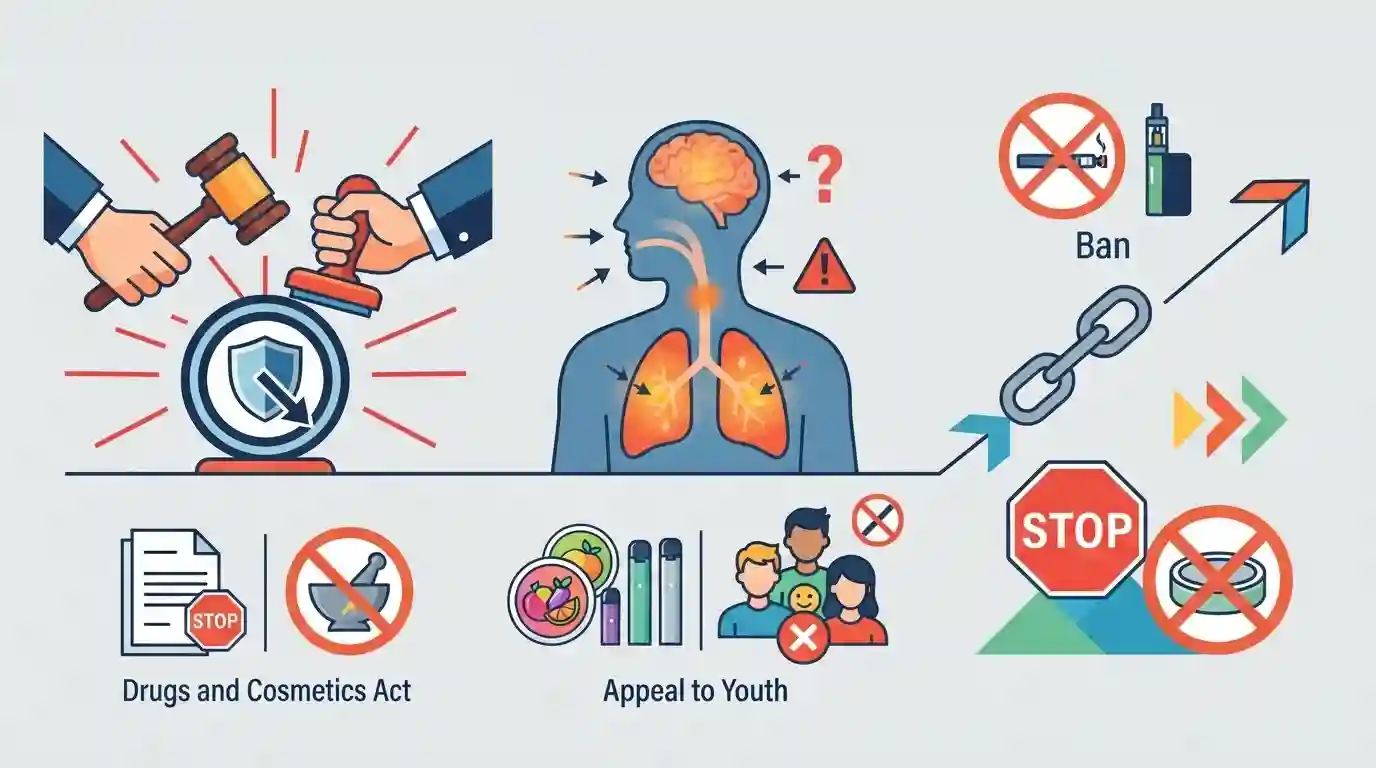
The Union Health Ministry has ordered a strict nationwide crackdown on nicotine pouches, highlighting major public health concerns and the absence of statutory approvals. These smokeless, flavored nicotine products, which have been gaining popularity as discreet alternatives, are being scrutinized for evading regulatory frameworks such as the Drugs and Cosmetics Act and targeting young populations. This action aligns with India's aggressive stance against novel tobacco and nicotine substitutes, following the comprehensive ban on e-cigarettes and vaping devices.
मुख्य मुद्दे
- The Union Health Ministry has ordered a nationwide crackdown on nicotine pouches, citing severe health risks and lack of regulatory approval.
- Nicotine pouches are marketed as modern, smokeless, and discreet alternatives to traditional tobacco, but they pose significant addiction and health hazards, especially to youth.
- Authorities have flagged that these products bypass existing tobacco control frameworks and are being sold without proper licensing or safety evaluation under the Drugs and Cosmetics Act.
- The move underscores India's stringent approach toward emerging alternative nicotine delivery systems (ANDS), following earlier bans on electronic nicotine delivery systems (ENDS) like e-cigarettes.
महत्त्वाच्या संज्ञा
Drugs and Cosmetics Act

The foundational 1940 Indian legislation governing the import, manufacture, distribution, and sale of drugs and cosmetics to ensure safety, efficacy, and quality standards.
UPSC context
UPSC Prelims/Mains: Important statutory frameworks, regulatory bodies, and health administration laws governing pharmaceuticals and novel nicotine or chemical products.
Cigarettes and Other Tobacco Products Act (COTPA)
The principal 2003 Indian legislation governing tobacco control, regulating the production, supply, distribution, advertising, and public consumption of cigarettes and other tobacco products.
UPSC context
UPSC Prelims/Mains: Key legislation for public health policies, tobacco control, and statutory restrictions on marketing to minors.
Drug Controller General of India (DCGI)
The principal national authority heading the Central Drugs Standard Control Organization (CDSCO), responsible for approving new drugs, vaccines, and medical devices under the Drugs and Cosmetics Act.
UPSC context
UPSC Prelims: Regulatory institutions, statutory authorities, and administrative bodies responsible for public health safety and drug licensing.
संबंधित स्थिर संकल्पना
How are Electronic Nicotine Delivery Systems (ENDS) and alternative nicotine products regulated in India?
- PECA 2019: Prohibition Act: E-cigarettes and ENDS are completely banned under the Prohibition of Electronic Cigarettes Act (PECA), 2019.
- D&C Act 1940: Drug Classification: Nicotine pouches and non-tobacco oral nicotine products are classified as 'drugs' under the Drugs and Cosmetics Act, 1940, requiring statutory import/sale licenses.
- Medicinal NRTs: Exemptions: Approved Nicotine Replacement Therapies (NRTs) like gums and patches used for cessation are permitted under medicinal supervision.
आंतर-विषय नमुने
ANDS/ENDS Bans vs. WTO Trade Rules
India's total ban on e-cigarettes and nicotine pouches contrasts with selective regulation in western nations, raising WTO TRIPS and non-tariff barrier debates.
COTPA Loopholes and Novel Nicotine Products
Recreational nicotine products sidestep COTPA via synthetic or tobacco-free nicotine, exposing legislative lags in India's public health safety net.

Novel nicotine bans (e-cigarettes, pouches) vs therapeutic NRTs under Drugs and Cosmetics Act likely in Prelims matching lists.
संबंधित PYQ · 1
संबंधित PYQ · 1
- 2024MainsGS2
In a crucial domain like the public healthcare system the Indian State should play a vital role to contain the adverse impact of marketisation of the system. Suggest some measures through which the State can enhance the reach of public healthcare at the grassroots level.
