Domestic Pharmaceutical R&D for Orphan Drugs and Rare Diseases
Source:Indian Express ↗
Why It Matters
The management of rare diseases is an emerging public health challenge in India. Understanding the interplay between healthcare policy (NPRD), pharmaceutical manufacturing, and the economic burden of treatment is crucial for GS-2 (Social Justice/Health) and GS-3 (Science & Technology/Economy).
Summary
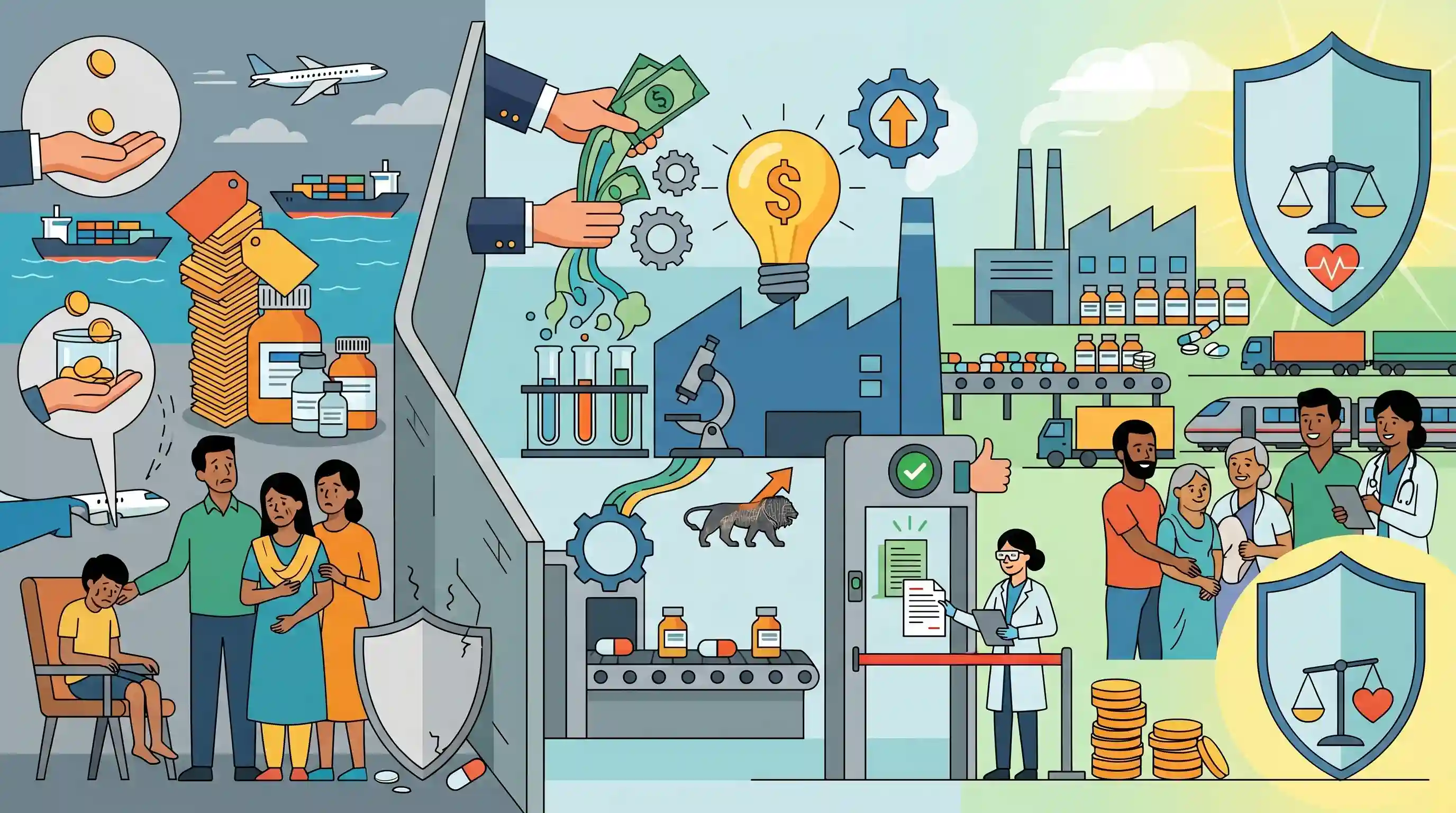
The article underscores the urgent need for India to develop and manufacture indigenous drugs to treat rare diseases. Currently, patients face prohibitive costs due to reliance on imported 'orphan drugs', and mechanisms under the National Policy for Rare Diseases, such as crowdfunding, fall short of providing sustainable support. By incentivizing domestic pharmaceutical companies through R&D funding, policy frameworks like the PLI scheme, and streamlined regulatory approvals, India can reduce treatment costs, ensure reliable supply chains, and enhance public healthcare equity for vulnerable populations suffering from rare diseases.
Key Points
- India faces a significant burden of rare diseases, but treatment is often inaccessible due to the exorbitant cost of imported 'orphan drugs'.
- The National Policy for Rare Diseases (NPRD) currently relies heavily on financial assistance limits and crowdfunding, which are insufficient for long-term and lifelong treatments.
- There is an urgent need to incentivize the Indian pharmaceutical industry to invest in indigenous research and development (R&D) and domestic manufacturing of drugs for rare diseases.
- Leveraging policy tools like targeted grants, fast-track approvals, and the PLI scheme can help make orphan drugs affordable and accessible, ensuring healthcare equity.
Important Terms
National Policy for Rare Diseases (NPRD) 2021

Launched by MoHFW to lower treatment costs through indigenous R&D. It categorizes diseases into three groups and provides up to ₹50 lakhs financial support for patients at designated Centres of Excellence.
UPSC context
GS2: Government Policies; GS3: Science & Technology. Tests understanding of social justice in healthcare and interventions for vulnerable populations.
Orphan Drugs
Medicines developed to treat rare (orphan) diseases. They are often economically unviable due to small patient populations, requiring government incentives and regulatory exemptions (like clinical trial waivers) to encourage domestic production.
UPSC context
GS3: Science & Technology (Health). Relevant for pharmaceutical R&D, patent issues, and the cost-accessibility of life-saving medicines.
Production Linked Incentive (PLI) Scheme
A central sector scheme providing financial incentives on incremental sales to boost domestic pharmaceutical manufacturing. It targets high-value goods like biopharmaceuticals and orphan drugs to reduce import dependency and enhance exports.
UPSC context
GS3: Indian Economy and Industrial Policy. Tests knowledge of 'Atmanirbhar Bharat' and strategies to strengthen the pharmaceutical global value chain.
Central Drugs Standard Control Organisation (CDSCO)
India's national regulatory authority under the MoHFW responsible for approving new drugs, regulating clinical trials, and setting quality standards. It is headed by the Drugs Controller General of India (DCGI).
UPSC context
GS2: Statutory/Regulatory bodies. Essential for understanding the institutional framework governing drug safety, efficacy, and pharmaceutical standards in India.
Active Pharmaceutical Ingredients (APIs)
The primary biologically active components in a drug responsible for the desired medicinal effect. India's PLI schemes specifically target API manufacturing to reduce critical import reliance, particularly from China.
UPSC context
GS3: Science & Technology and Indigenization of Technology. Tests understanding of the pharmaceutical supply chain and strategic autonomy in healthcare.
Prelims Trap
The National Policy for Rare Diseases provides fully subsidized, free lifelong treatment for all notified rare diseases.
NPRD 2021 does not offer unlimited free treatment. It caps financial support at ₹50 lakh per patient and relies heavily on a government digital portal for voluntary crowdfunding.
Static Concepts Connected
What is Compulsory Licensing under the Indian Patents Act?
- Section 84: Allows generic companies to produce a patented product without the patent owner's consent if the original drug is unaffordable or unavailable to the public.
- TRIPS Compliance: It is fully compliant with the WTO's TRIPS agreement, utilizing the flexibilities explicitly affirmed by the Doha Declaration on Public Health.
How are Orphan Drugs defined and regulated in India?
- Population Threshold: The New Drugs and Clinical Trials Rules, 2019 define an orphan drug as one intended to treat a condition affecting fewer than five lakh persons in India.
- Trial Waivers: The DCGI can waive mandatory local clinical trials for orphan drugs already approved in specific developed nations (US, UK, EU) to fast-track patient access.
Cross-Topic Patterns
PLI Scheme + Healthcare Equity
Expanding the PLI scheme from basic APIs to high-end 'orphan drugs' shows a policy shift from mere import-substitution to directly addressing domestic healthcare equity and catastrophic out-of-pocket expenditure.
IPR Flexibilities + Public Health
The push to manufacture orphan drugs locally triggers the debate on Section 84 (Compulsory Licensing) and India's utilization of TRIPS flexibilities under the WTO Doha Declaration to bypass exorbitant patents.

Expect a 2026 multi-statement question combining the definition of 'orphan drugs' (<5 lakh persons) with NPRD's ₹50 lakh assistance limit.
Linked PYQs · 4
Linked PYQs · 4
- 2024MainsGS2
In a crucial domain like the public healthcare system the Indian State should play a vital role to contain the adverse impact of marketisation of the system. Suggest some measures through which the State can enhance the reach of public healthcare at the grassroots level.
- 2020MainsGS2
In order to enhance the prospects of social development, sound and adequate health care policies are needed particularly in the fields of geriatric and maternal health care. Discuss.
- 2024MainsGS3
What is the present world scenario of intellectual property rights with respect to life materials? Although, India is second in the world to file patents, still only a few have been commercialized. Explain the reasons behind this less commercialization.
- 2024PrelimsGS1
With reference to monoclonal antibodies, often mentioned in news, consider the following statements : I. They are man-made proteins. II. They stimulate immunological function due to their ability to bind to specific antigens. III. They are used in treating viral infections like that of Nipah virus. Which of the statements given above are correct?
