Macroeconomic Resilience Buffers Indian Economy Against Global Tariffs
Source:Indian Express ↗
Why It Matters
Provides a critical counter-narrative for Mains GS3 answers on globalization and trade, demonstrating how India's unique domestic-driven growth model and services-heavy export basket act as a shield against the rising tide of global protectionism.
Summary
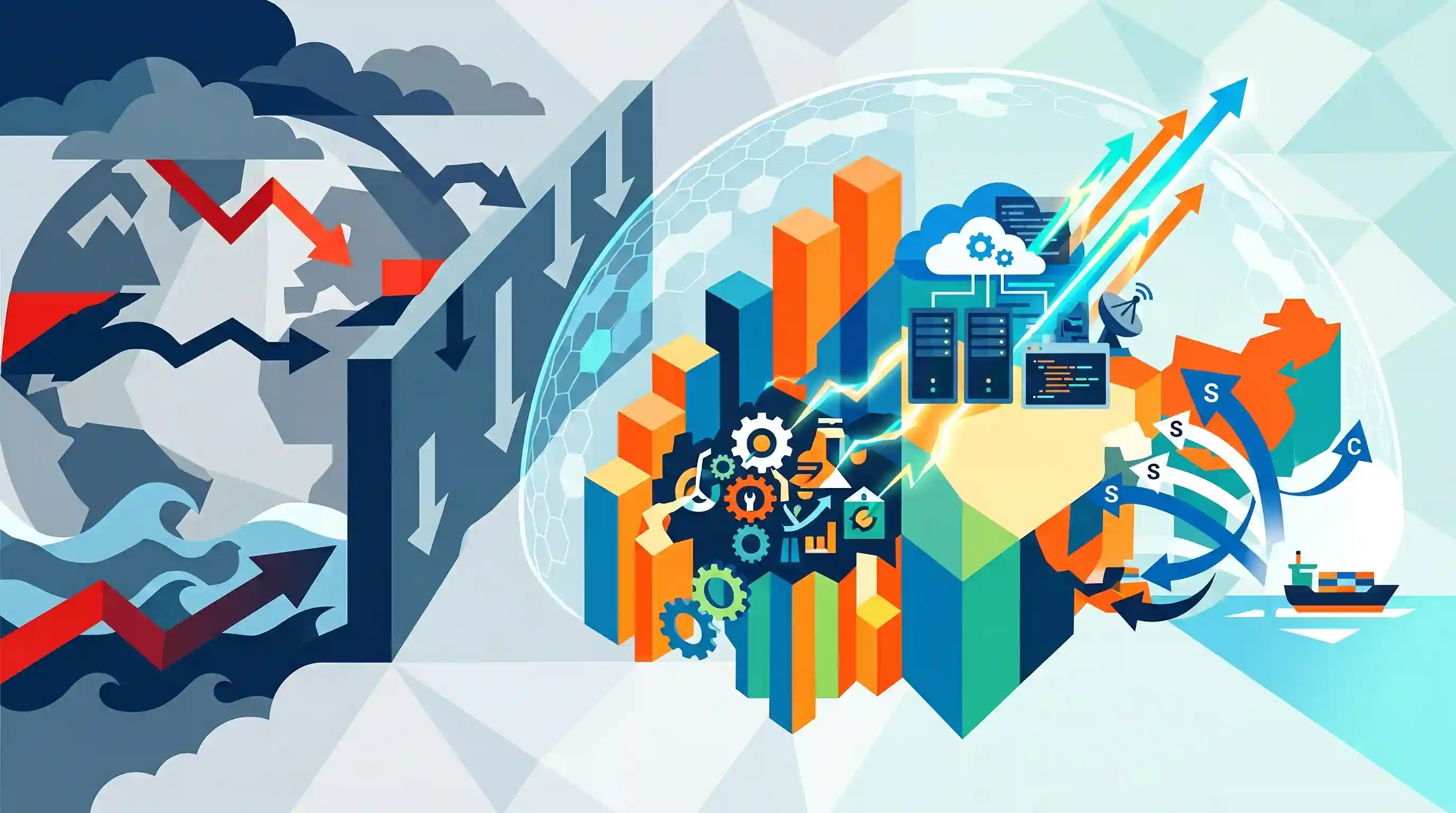
This article analyses why India is well-positioned to weather the growing global trend of trade protectionism and rising tariffs. It argues that India's economy is largely driven by domestic demand, which naturally insulates it from external trade shocks compared to export-heavy nations. Furthermore, India’s export engine is uniquely powered by the services sector—such as IT services and Global Capability Centres (GCCs)—which are less vulnerable to conventional goods tariffs. Finally, geopolitical realignments, specifically the 'China Plus One' strategy, continue to present India with structural opportunities to secure strategic trade partnerships despite a broader retreat from multilateralism.
Key Points
- The global economic landscape is undergoing a structural shift, moving away from multilateral free trade toward increased protectionism and unilateral tariff impositions.
- Unlike export-led economies, India's macroeconomic stability is largely anchored in robust domestic consumption and investment, providing a natural buffer against external tariff shocks.
- India's export portfolio is increasingly driven by high-value services, including IT exports and Global Capability Centres (GCCs), which are generally insulated from traditional merchandise tariffs.
- Despite broader protectionist headwinds, the ongoing global supply chain realignment (the 'China Plus One' strategy) continues to provide India with strategic leverage to negotiate bilateral exemptions and attract foreign investment.
Important Terms
Trade Protectionism

Economic policy of restricting imports through tariffs, quotas, and subsidies to shield domestic industries from foreign competition.
UPSC context
GS Paper III (External Sector); tests global trade barriers and their impact on India’s export competitiveness.
Domestic Demand-led Growth
A growth strategy driven by internal factors like private consumption and investment, rather than over-reliance on external demand and exports.
UPSC context
GS Paper III (Growth & Development); assesses resilience against global headwinds and external demand shocks.
Global Capability Centres (GCCs)
Strategic offshore units established by MNCs for high-end, knowledge-intensive business services like R&D and digital innovation.
UPSC context
GS Paper III (Industrial Policy & Services); tests knowledge of India's service-led growth and high-skill employment.
China Plus One Strategy
A business approach where companies diversify manufacturing supply chains away from China to mitigate risks like geopolitical tensions.
UPSC context
GS Paper III (Liberalization & Investment); evaluates India's role as an alternative global manufacturing hub.
Free Trade Agreements (FTAs)
Formal treaties between two or more countries to reduce or eliminate tariffs and trade barriers on goods and services.
UPSC context
GS Paper II (International Relations); focuses on bilateral trade diplomacy and market access strategies.
World Trade Organization (WTO)
A multilateral organization regulating global trade rules, ensuring they are stable, predictable, and inclusive for its 164 members.
UPSC context
GS Paper II (International Institutions); critical for understanding the rules-based global trade order and its current challenges.
Prelims Trap
"Global tariff hikes will proportionately damage India's overall export earnings."
Tariffs primarily target physical goods. India's export resilience relies heavily on services (IT/GCCs), which face regulatory or non-tariff barriers rather than conventional customs duties.
Static Concepts Connected
What are the primary types of trade barriers?
- Tariff Barriers: Duties levied on physical goods, either as a fixed fee per unit (Specific) or a percentage of the good's value (Ad Valorem).
- Non-Tariff Barriers (NTBs): Include quotas, licensing requirements, sanitary and phytosanitary (SPS) measures, and technical barriers to trade (TBT).
- Retaliatory Tariffs: Punitive duties levied in response to penalizing tariffs imposed by another nation.
How do services exports impact India's Balance of Payments?
- Invisibles Category: Services fall under the 'Invisibles' category of the Current Account, alongside remittances and income transfers.
- Current Account Buffer: India's consistent net services surplus structurally offsets a significant portion of its large merchandise trade deficit.
- FDI and Services Linkage: The expansion of GCCs boosts both Foreign Direct Investment (Capital Account) and specialized service exports (Current Account).
Cross-Topic Patterns
GCCs driving Tier-2 urbanization
The proliferation of Global Capability Centres (GCCs) extends beyond trade; it structurally alters commercial real estate demand and drives urbanization patterns into Tier-2 Indian cities.
China Plus One and PLI schemes
The geopolitical 'China Plus One' strategy directly intersects with India's domestic Production Linked Incentive (PLI) scheme, aiming to capture relocating manufacturing capital amidst global trade wars.

Expect a 2026 prelims question contrasting India's service-export resilience against the vulnerability of merchandise-led Asian economies.
Linked PYQs · 2
Linked PYQs · 2
- 2025MainsGS3
What are the challenges before the Indian economy when the world is moving away from free trade and multilateralism to protectionism and bilateralism? How can these challenges be met?
- 2018MainsGS3
How would the recent phenomena of protectionism and currency manipulations in world trade affect macroeconomic stability of India?
