Artificial Intelligence Training and Copyright Frameworks
Source:Indian Express ↗
Why It Matters
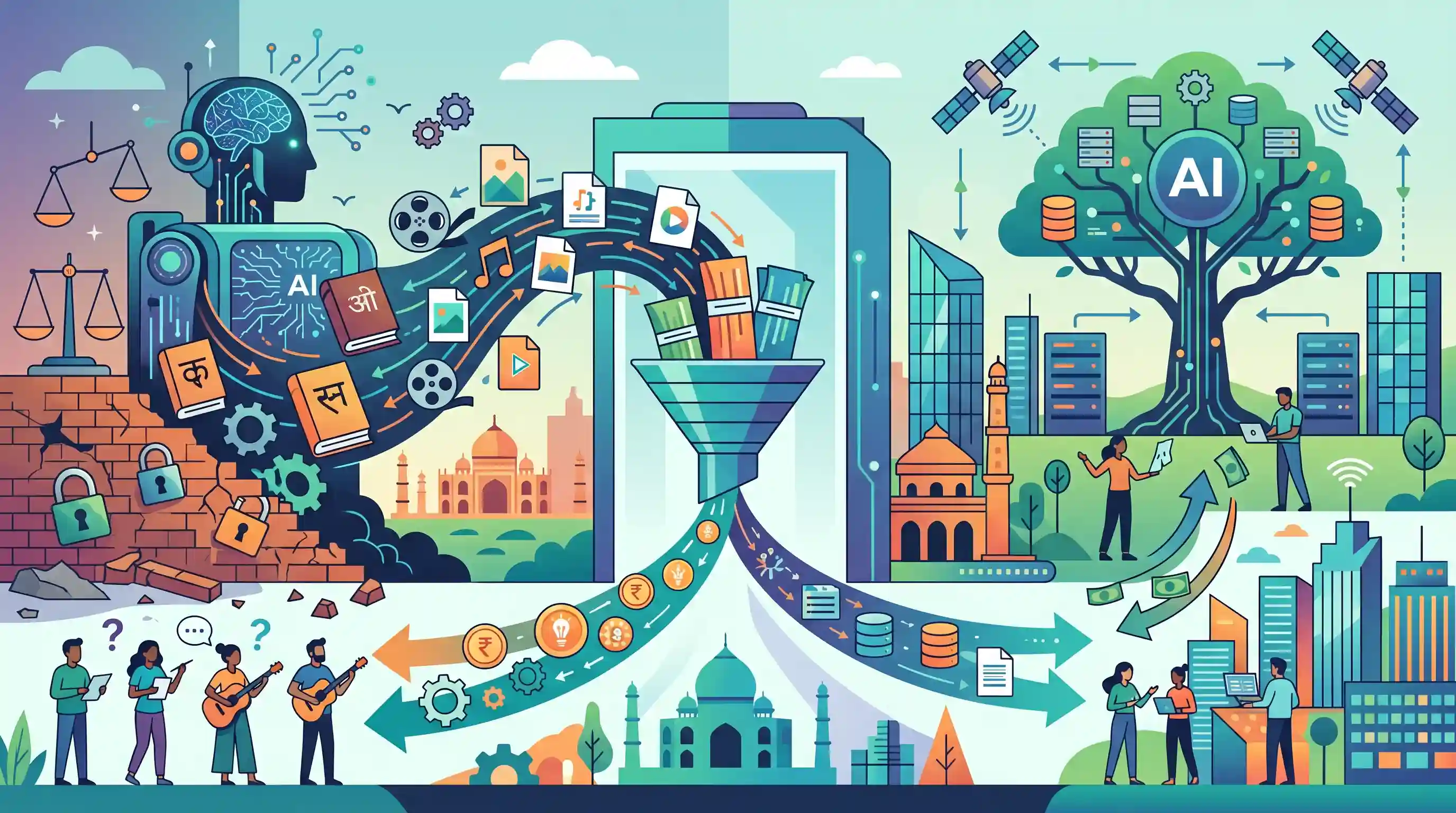
As AI becomes central to global technological dominance, establishing a robust and balanced IPR framework for AI training is critical for India to protect its creative industries while remaining competitive in the global AI race.
Summary
The article discusses the complex legal and economic challenges surrounding the use of copyrighted material to train Artificial Intelligence models in India. It highlights that the current policy approaches to resolving this tension are flawed, as they fail to strike an adequate balance between fostering AI innovation and protecting the intellectual property rights of creators. The author argues that relying on traditional frameworks like the 'fair dealing' doctrine under the Copyright Act is insufficient for the era of Generative AI, advocating instead for modernized, specialized mechanisms such as collective licensing or data trusts that ensure fair remuneration for creators without unnecessarily impeding technological advancement.
Key Points
- The rapid advancement of Generative AI (GenAI) models heavily depends on scraping vast datasets, leading to significant friction with copyright holders whose works are used without consent or compensation.
- Traditional intellectual property frameworks, such as the Copyright Act, 1957, and the 'fair dealing' doctrine, are ill-equipped to handle the scale, complexity, and commercial nature of modern AI training.
- The article critiques India's current policy trajectory for either being overly restrictive, which could stifle domestic AI innovation, or overly permissive, failing to protect the economic rights of creators.
- A balanced regulatory approach is advocated, potentially involving collective licensing models, data trusts, or standardized opt-out mechanisms, rather than force-fitting legacy copyright laws onto emerging AI technologies.
Important Terms
Copyright Act, 1957

The primary legal framework governing intellectual property rights for original literary, dramatic, musical, and artistic works in India, protecting creators from unauthorized reproduction.
UPSC context
GS Paper 3 (IPR); tests legal safeguards for creators and how statutes adapt to emerging technologies like generative AI.
Fair Dealing
A legal doctrine under Section 52 of the Copyright Act allowing limited use of copyrighted material without permission for specific purposes like research, criticism, or news reporting.
UPSC context
GS Paper 3 (IPR); critical for understanding the balance between innovation (AI training) and the protection of original creative works.
Department for Promotion of Industry and Internal Trade (DPIIT)
The nodal agency under the Ministry of Commerce and Industry responsible for formulating IPR policy and overseeing the protection of intellectual property in India.
UPSC context
GS Paper 2 & 3; tests knowledge of institutional frameworks for industrial growth and current policy shifts in digital copyright.
Ministry of Electronics and Information Technology (MeitY)
The executive ministry responsible for India's digital strategy, including the IndiaAI mission and the regulatory guidelines for AI development and deployment.
UPSC context
GS Paper 3 (Science & Tech); tests awareness of government bodies spearheading the digital economy and technological regulation.
World Intellectual Property Organization (WIPO)
A specialized UN agency that promotes intellectual property protection globally and facilitates international discussions on how AI impacts authorship, ownership, and copyright.
UPSC context
GS Paper 2 (International Relations); relevant for international treaties (TRIPS) and global norms on emerging tech-IP intersections.
Collective Licensing
A mechanism where a single entity manages rights for multiple creators, allowing AI developers to pay a blanket fee for data use instead of negotiating individual permissions.
UPSC context
GS Paper 3 (Economy); an emerging policy solution for remunerating creators in the high-volume data era of generative AI.
Prelims Trap
The Indian Copyright Act explicitly exempts 'Text and Data Mining' (TDM) for AI training under the 'fair dealing' provision.
India's Copyright Act lacks an explicit TDM exception. It is currently ambiguous whether AI scraping qualifies as 'fair dealing' or constitutes infringement.
Static Concepts Connected
What constitutes 'fair dealing' under the Indian Copyright Act, 1957?
- Private research: Permitted for private or personal use, including educational research, without requiring the creator's explicit permission.
- Criticism or review: Allowed for the criticism or review of that specific copyrighted work or any other work.
- Reporting events: Permitted for the reporting of current events and affairs, including public lectures.
What are the key international treaties governing copyright protection?
- Berne Convention: Establishes minimum global standards for protecting literary and artistic works automatically, without requiring formal registration.
- WIPO Copyright Treaty: Adapts the Berne Convention for the digital environment, explicitly covering computer programs and digital databases.
- TRIPS Agreement: Integrates Berne principles into the WTO framework, making copyright enforcement binding and subject to formal dispute resolution.
Cross-Topic Patterns
GenAI scraping vs. DPDP Act 2023
AI copyright disputes intersect with the Digital Personal Data Protection (DPDP) Act, allowing UPSC to test intellectual property theft alongside personal data privacy violations in web scraping.
AI Innovation vs. Creator Rights
DPIIT’s 'One Nation, One License' proposal highlights the recurring GS3 theme of balancing disruptive technological innovation with regulatory guardrails and economic rights.

Expect a 2026 GS3 question evaluating the inadequacy of the Copyright Act 1957 for GenAI, comparing India's framework to the EU AI Act.
Linked PYQs · 4
Linked PYQs · 4
- 2014MainsGS3
In a globalized world, Intellectual Property Rights assume significance and are a source of litigation. Broadly distinguish between the terms-Copyrights, Patents and Trade Secrets.
- 2023MainsGS3
Introduce the concept of Artificial Intelligence (AI). How does Al help clinical diagnosis? Do you perceive any threat to privacy of the individual in the use of Al in healthcare?
- 2020PrelimsGS1
With the present state of development, Artificial Intelligence can effectively do which of the following? 1. Bring down electricity consumption in industrial units 2. Create meaningful short stories and songs 3. Disease diagnosis 4. Text-to-Speech Conversion 5. Wireless transmission of electrical energy Select the correct answer using the code given below:
- 2023PrelimsGS1
Consider the investments in the following assets: 1. Brand recognition 2. Inventory 3. Intellectual property 4. Mailing list of clients How many of the above are considered intangible investments?
