India Pursues Practical Diplomatic Agreements on Ukraine Conflict
Source:The Hindu ↗
આ શા માટે મહત્વનું છે
It highlights India's evolving diplomatic role in international conflicts, moving from neutral advocacy to proactive bilateral engagement on global security and humanitarian issues like food and maritime safety.
સારાંશ
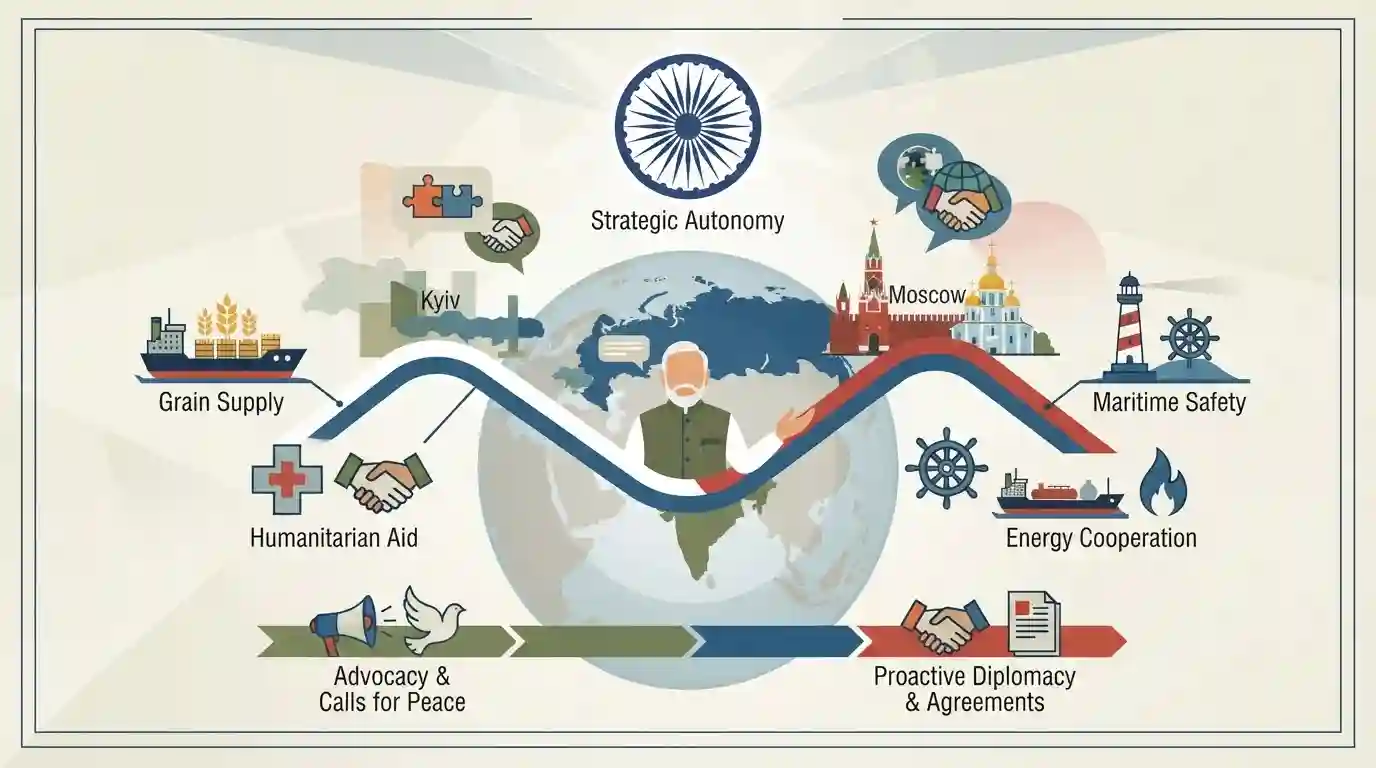
External Affairs Minister S. Jaishankar noted that India's diplomatic approach to the Russia-Ukraine conflict has evolved beyond advocacy into proactive discussions on practical agreements, including grain supply and maritime safety, with both Moscow and Kyiv, while upholding its strategic autonomy.
મુખ્ય મુદ્દા
- External Affairs Minister S. Jaishankar stated that India is moving beyond mere advocacy to active diplomatic engagement on the Russia-Ukraine conflict.
- India is discussing specific agreements regarding grain supplies and maritime safety with both Moscow and Kyiv.
- India maintains its strategic autonomy, engaging constructively with both sides to facilitate dialogue and address humanitarian and logistical challenges.
મહત્વપૂર્ણ શબ્દો
Strategic Autonomy

India's core foreign policy tenet enabling independent decision-making and diplomatic engagement with all major global powers without entering into binding military alliances.
UPSC context
GS Paper II (International Relations): Tests understanding of India's foreign policy principles, non-alignment, and multi-alignment strategy in geopolitics.
Moscow
The capital of Russia, central to bilateral diplomatic, defense, and economic ties with India, including energy and maritime cooperation.
UPSC context
GS Paper II (International Relations): Essential for questions on India-Russia bilateral relations and regional security dynamics.
Kyiv
The capital of Ukraine, engaging with India on practical diplomatic proposals regarding grain supply, maritime safety, and conflict resolution.
UPSC context
GS Paper II (International Relations): Tests India's diplomatic balancing act and peace efforts concerning the Russia-Ukraine war.
સંલગ્ન સ્થિર ખ્યાલો
What are the key pillars of India's Strategic Autonomy in contemporary foreign policy?
- Multi-Alignment Strategy: Multi-alignment allows India to engage conflicting power blocs (US, Russia, West, Global South) simultaneously without formal alliance entanglements.
- National Interest Priority: Prioritizing national interest (energy security, defense supplies, diaspora welfare) over external pressure from major powers.
- Independent Multilateralism: Advocating for reformed multilateralism and adherence to the UN Charter while maintaining independent bilateral ties.
આંતર-વિષય પેટર્ન
Food Security and Maritime Safety in Geopolitics
India's mediation and food security initiatives in the Black Sea tie directly into broader Indo-Pacific logistics and supply chain resilience frameworks like the Supply Chain Resilience Initiative (SCRI).

India's strategic autonomy in the Russia-Ukraine war will likely feature in a statement-based IR question on non-aligned diplomacy.
સંલગ્ન PYQ · 2
સંલગ્ન PYQ · 2
- 2024MainsGS2
Critically analyse India's evolving diplomatic, economic and strategic relations with the Central Asian Republics (CARs) highlighting their increasing significance in regional and global geopolitics.
- 2020MainsGS2
What is the significance of Indo-US defence deals over Indo-Russian defence deals? Discuss with reference to stability in the Indo-Pacific region.
