India GDP Growth and Macroeconomic Headwinds Analysis
Source:Indian Express ↗
Why It Matters
Understanding macroeconomic assessments by rating agencies like Crisil helps aspirants evaluate India's growth trajectory, inflation dynamics, and external sector challenges in line with GS3 syllabus requirements.
Summary
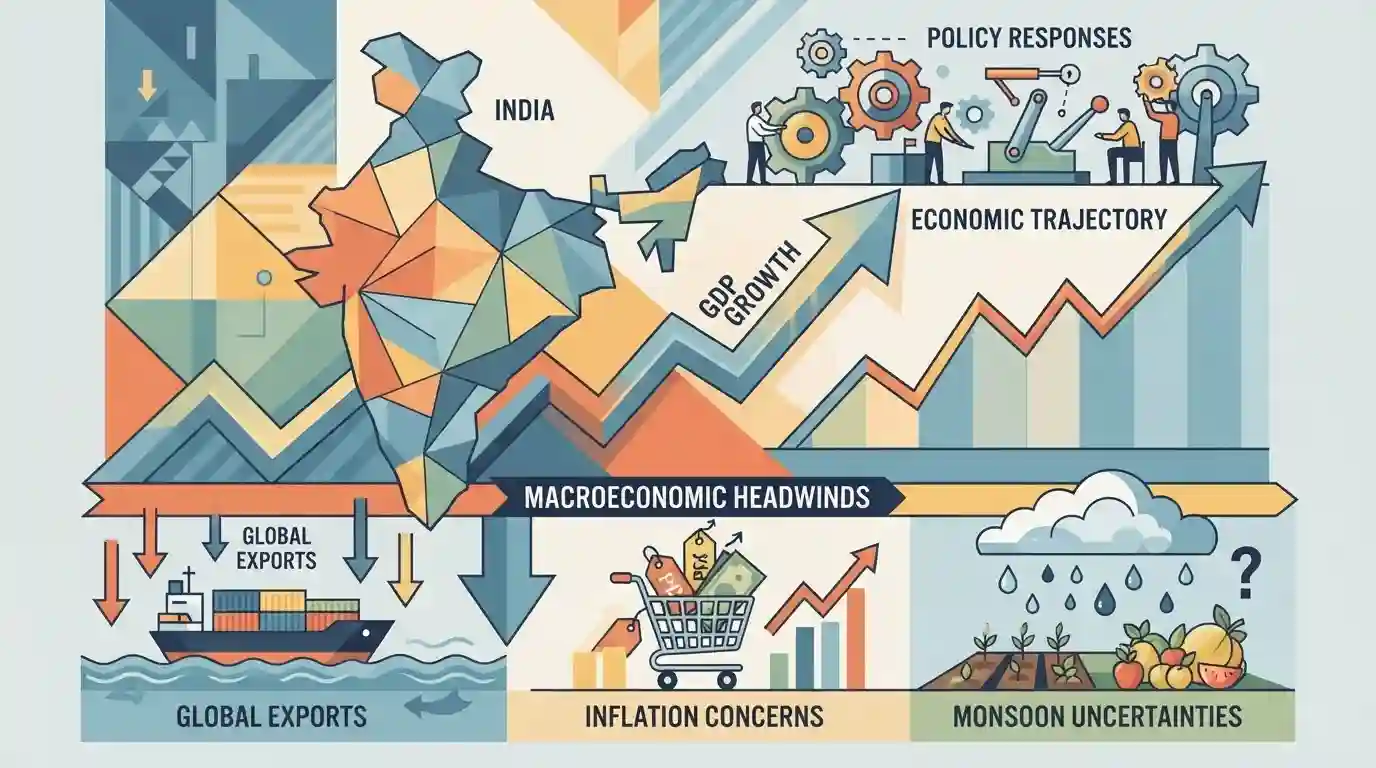
An analysis of India's GDP growth prospects by Crisil highlights various macroeconomic headwinds, including sluggish global exports, inflation concerns, and monsoon uncertainties, which impact the broader economic trajectory and policy responses.
Key Points
- Crisil analysis projects moderating GDP growth for India due to headwinds like global trade fragmentation, weak external demand, and domestic constraints.
- Inflation trends remain a critical variable for RBI monetary policy, impacting consumption recovery and purchasing power.
- Monsoon variability and agricultural performance continue to influence rural demand and food inflation dynamics.
- Export competitiveness faces pressure from rising global protectionism and sluggish international trade.
Important Terms
Crisil

A leading Indian rating agency and analytical company that provides independent research, ratings, and risk analytics, widely referenced for forecasting macroeconomic indicators such as GDP growth and inflation.
UPSC context
UPSC GS Paper III (Indian Economy): relevant for evaluating economic growth projections, macroeconomic indicators, and fiscal-monetary policy analysis.
Reserve Bank of India
India's central banking institution that controls monetary policy, regulates the banking system, manages foreign exchange reserves, and issues currency to ensure financial stability.
UPSC context
UPSC GS Paper III (Indian Economy): crucial for topics on central banking, inflation targeting, monetary policy tools, and financial sector regulation.
Prelims Trap
Crisil's economic analysis mandates the Reserve Bank of India to adjust its monetary policy stance...
Aspirants often assume rating agencies like Crisil have statutory or regulatory authority over RBI's monetary policy decisions, whereas Crisil only provides analytical projections.
Static Concepts Connected
What are the core instruments and mandate of the Monetary Policy Committee (MPC) in India?
- Legal Framework: Statutory backing under the Reserve Bank of India Act, 1934, amended in 2016 to institutionalize inflation targeting.
- Primary Mandate: Primary mandate is to maintain price stability while keeping in mind the objective of growth.
- Inflation Target: CPI-Combined inflation target set at 4% with a tolerance band of +/- 2 percent.
Cross-Topic Patterns
Inflation Targeting and Rural Demand Linkages
How monetary policy balances domestic inflation targeting with growth support during supply-side agricultural shocks.
Protectionism and Export Competitiveness Challenge
Global trade fragmentation and protectionist trends directly impact India's export-led growth strategy and balance of payments stability.

RBI monetary policy stance + food inflation + rural demand dynamics likely to be tested via multi-statement economic reasoning Qs.
Linked PYQs · 3
Linked PYQs · 3
- 2024MainsGS3
What are the causes of persistent high food inflation in India? Comment on the effectiveness of the monetary policy of the RBI to control this type of inflation.
- 2019MainsGS3
Do you agree with the view that steady GDP growth and low inflation have left the Indian economy in good shape? Give reasons in support of your arguments.
- 2025MainsGS3
What are the challenges before the Indian economy when the world is moving away from free trade and multilateralism to protectionism and bilateralism? How can these challenges be met?
