Quarterly GDP Growth Performance and Central Bank Projections
Source:Indian Express ↗
ఇది ఎందుకు ముఖ్యం
Understanding quarterly GDP growth figures, sectoral drivers, and central bank projections is crucial for analyzing macroeconomic stability and growth policymaking in India.
సారాంశం
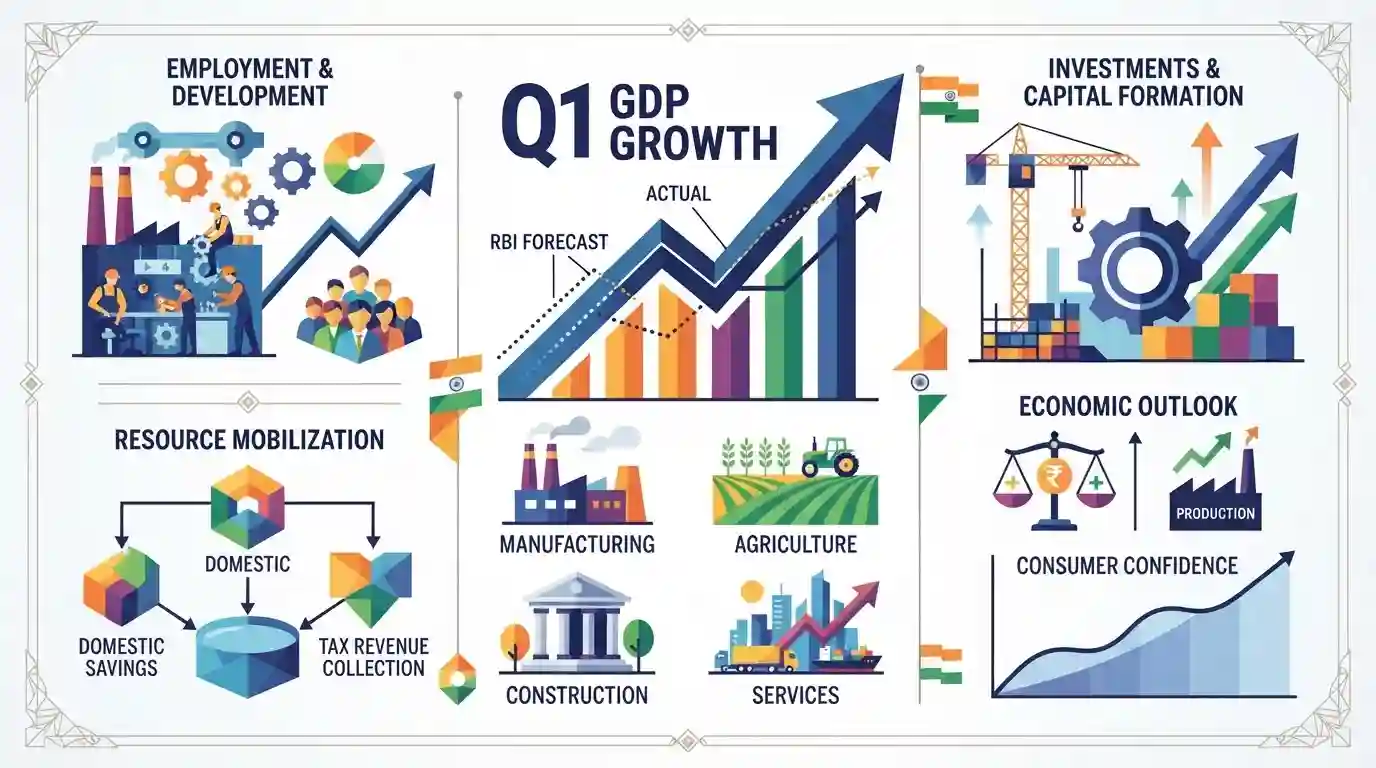
The article discusses India's GDP growth statistics for the April-June quarter, analyzing performance against RBI forecasts and examining sectoral drivers, investments, and economic outlook indicators released by the statistics ministry.
ముఖ్య అంశాలు
- India's quarterly GDP growth metrics and economic performance data.
- Comparison between RBI growth projections and actual statistical releases by the Ministry.
- Sectoral performance breakdown including manufacturing, services, agriculture, and investment indicators (GFCF).
ముఖ్యమైన పదాలు
Reserve Bank of India

India's central banking institution that regulates the monetary policy, issues currency, and sets growth and inflation forecasts to maintain financial stability.
UPSC context
UPSC Prelims/Mains (GS Paper III): Crucial for questions on monetary policy, inflation control, and central banking functions.
National Statistical Office
India's central statistical agency responsible for compiling macroeconomic aggregates like GDP, GVA, and conducting large-scale sample surveys.
UPSC context
UPSC Prelims/Mains (GS Paper III): Essential for understanding national income accounting, economic planning, and data veracity.
Ministry of Statistics and Programme Implementation
The central government ministry overseeing national statistics generation, economic censuses, and monitoring central sector infrastructure projects.
UPSC context
UPSC Prelims/Mains (GS Paper III): Important for topics relating to resource mobilization, planning, and institutional governance of economic statistics.
ప్రిలిమ్స్ ఉచ్చు
nominal GDP growth stood at 10.3%
Aspirants often confuse real GDP growth with nominal GDP growth; nominal GDP incorporates inflation, whereas real GDP is adjusted for price changes using a base year.
అనుసంధానమైన స్థిర భావనలు
What is the difference between Gross Domestic Product (GDP) and Gross Value Added (GVA)?
- At Purchaser Prices: GDP measures total economic output at purchaser prices by adding taxes on products and subtracting subsidies on products to GVA.
- Value Addition: GVA measures the value of goods and services produced in an economy after deducting the cost of inputs and raw materials.
- Sectoral vs Total: GVA gives a sector-specific picture of economic growth, whereas GDP shows the total economic performance from the expenditure or demand side.
అంతర-అంశ నమూనాలు
National Income Accounting & Fiscal Policy
Macroeconomic indicators like GFCF and GVA growth connect national income accounting directly with fiscal policy targets and capital expenditure planning in the Union Budget.
Services Sector Growth & External Sector
Strong tertiary sector growth (IT and professional services) directly drives urban employment elasticity and services trade surplus in the Balance of Payments.

Expect a multi-statement prelims question combining GDP vs GVA growth dynamics, GFCF definitions, and RBI's forecasting mandates.
అనుసంధాన PYQలు · 2
అనుసంధాన PYQలు · 2
- 2023MainsGS3
Faster economic growth requires increased share of the manufacturing sector in GDP, particularly of MSMEs. Comment on the present policies of the Government in this regard.
- 2022MainsGS3
Is inclusive growth possible under market economy ? State the significance of financial inclusion in achieving economic growth in India.
