Structural analysis of India GDP growth beyond headline numbers
Source:Indian Express ↗
Why It Matters
Crucial for GS3 Indian Economy syllabus, especially regarding the debate on jobless growth, inclusive development, and the divergence between headline GDP figures and ground-level welfare.
Summary
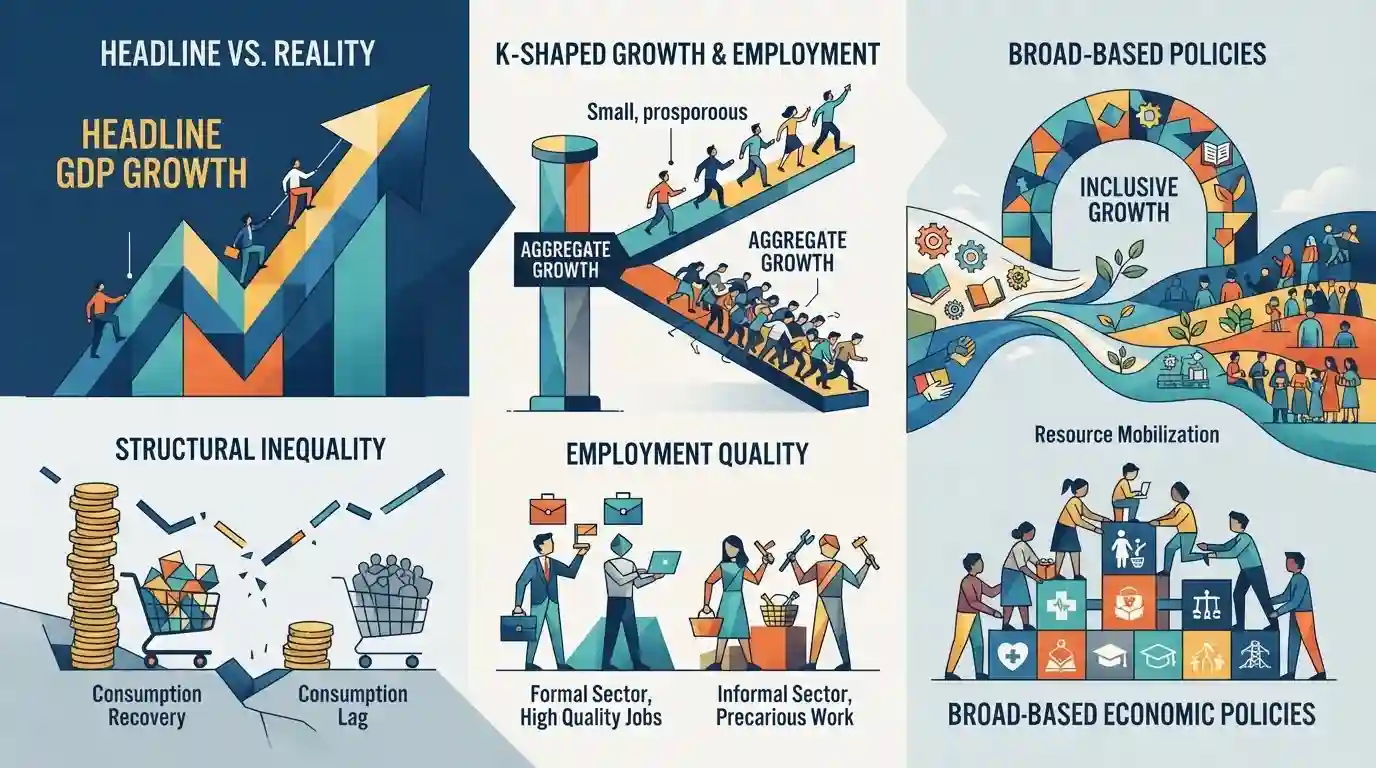
The article analyzes India's GDP growth beyond headline numbers, highlighting structural challenges such as uneven consumption recovery, K-shaped inequality, employment quality concerns, and the need for inclusive, broad-based economic policies rather than relying solely on high aggregate growth figures.
Key Points
- Headline GDP growth numbers often mask underlying structural disparities, such as uneven consumption recovery and a widening K-shaped divergence between rich and poor.
- The quality of employment generation remains a critical bottleneck, with large-scale informal sector vulnerabilities and stagnant real wages for lower-income groups.
- Analyzing growth beyond headline figures requires a closer look at capacity utilization, private capital expenditure, and rural versus urban demand dynamics.
- Policy interventions need to pivot from chasing high macroeconomic aggregates alone to fostering inclusive growth, job creation, and boosting broad-based purchasing power.
Important Terms
Reserve Bank of India

India's central banking institution that regulates the monetary system, controls inflation, manages currency, and frames monetary policy to balance macroeconomic stability with economic growth.
UPSC context
Important for GS Paper III (Indian Economy, Monetary Policy, Banking). Tests understanding of central bank interventions, inflation targeting, and growth management.
National Statistical Office
The apex statistical body under the Ministry of Statistics and Programme Implementation responsible for collecting, compiling, and publishing macroeconomic aggregates like GDP and inflation data in India.
UPSC context
Important for GS Paper III (Inclusive Growth and Economic Data). Tests knowledge of official national accounts, GDP estimation, and measurement challenges.
Static Concepts Connected
What are the key indicators used to measure inclusive growth and structural inequality in India?
- Lorenz Curve & Gini:: Measures the cumulative share of income earned by bottom percentiles over time to detect widening disparities.
- Poverty Estimation:: Measures the proportion of population below the Tendulkar or Rangarajan poverty thresholds.
- PLFS Surveys:: Annual survey by NSO tracking workforce participation, worker population ratio, and unemployment rates.
Cross-Topic Patterns
Growth vs. Employment Quality Linkages
Concerns over jobless growth and K-shaped recovery link directly to the quality of employment data reported through PLFS surveys and social sector welfare spending allocations.

K-shaped recovery and informal sector job quality will be framed in Prelims via employment elasticity or PLFS indicators.
Linked PYQs · 2
Linked PYQs · 2
- 2022MainsGS3
Is inclusive growth possible under market economy ? State the significance of financial inclusion in achieving economic growth in India.
- 2023MainsGS3
Most of the unemployment in India is structural in nature. Examine the methodology adopted to compute unemployment in the country and suggest improvements.
