India strongly condemns theft of Mahatma Gandhi statue in Australia
Source:Indian Express ↗
Why It Matters
The vandalism of national symbols abroad directly impacts diaspora sentiments and highlights the diplomatic challenges India faces in protecting its soft power and countering extremist elements operating on foreign soil.
Summary
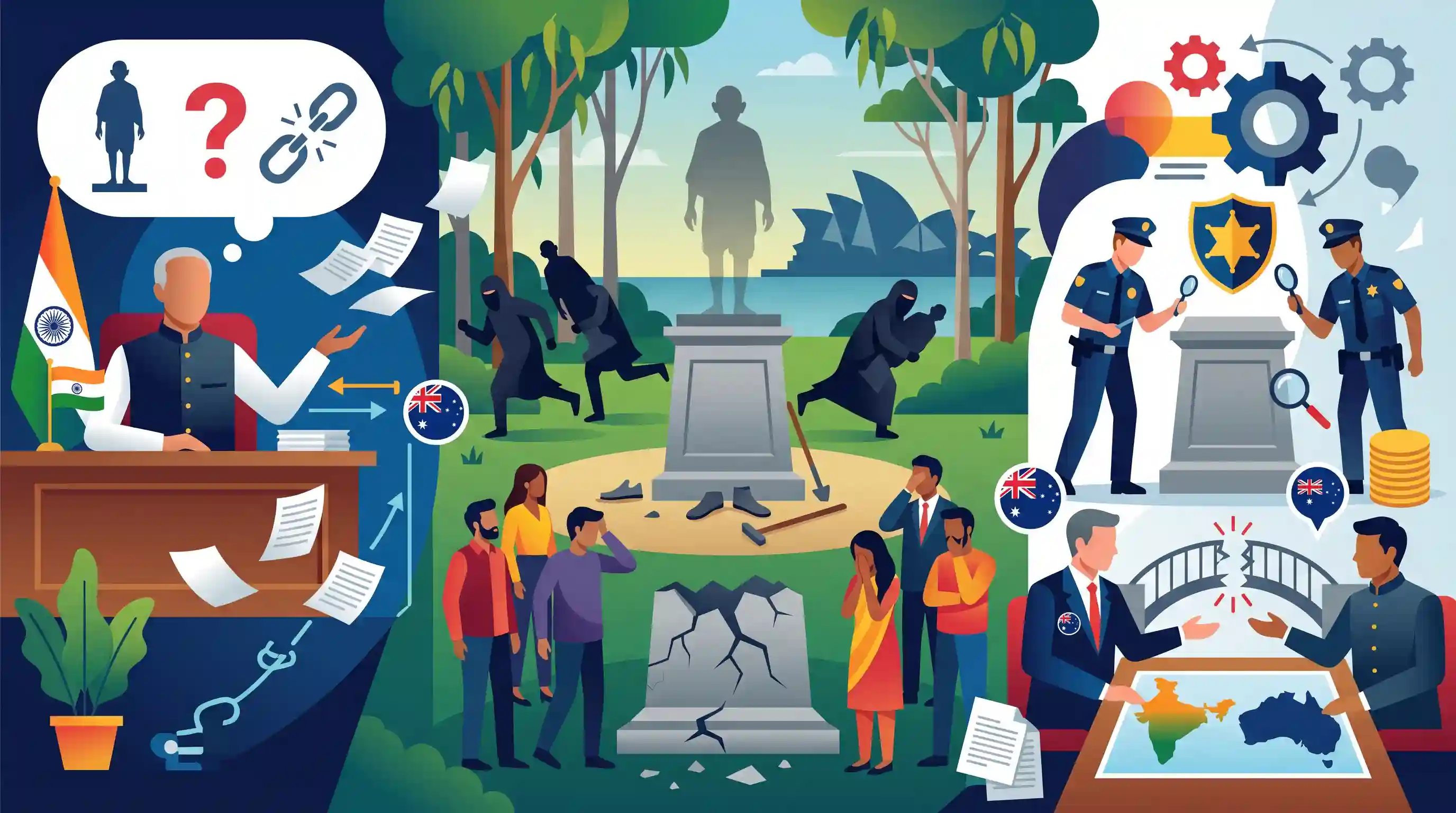
The Indian Ministry of External Affairs (MEA) has strongly condemned the theft of a Mahatma Gandhi statue in Australia, an act that followed a previous attempt to vandalize the monument. India has officially demanded answers and urged Australian authorities to swiftly investigate and bring the perpetrators to justice. The incident raises concerns regarding the safety of Indian cultural symbols overseas and highlights the broader challenge of combating extremist or anti-India elements that seek to intimidate the diaspora and strain diplomatic relations.
Key Points
- A Mahatma Gandhi statue in Australia was stolen, marking the second incident of vandalism targeting the monument.
- India's Ministry of External Affairs (MEA) strongly condemned the theft, demanding immediate investigation and strict action by Australian authorities.
- The recurring vandalism of Indian national symbols and heritage overseas underscores growing concerns over extremist elements targeting diaspora sentiment and soft power assets.
- The incident highlights the necessity for proactive diplomatic engagement to ensure the protection of cultural monuments and manage potential strains on bilateral relations.
Important Terms
Ministry of External Affairs (MEA)

The nodal government agency responsible for India's foreign relations, managing diplomatic missions, and safeguarding national interests through policy formulation and consular services.
UPSC context
GS II: Bilateral and international relations; mandates of key constitutional and executive bodies.
Indian Council for Cultural Relations (ICCR)
An autonomous body under the MEA that promotes India's cultural diplomacy by fostering intellectual exchange and presenting cultural symbols (e.g., statues) as diplomatic gifts.
UPSC context
GS II: Institutional frameworks for international relations; tools of soft power.
Indian Diaspora
The global community of Non-Resident Indians (NRIs) and Persons of Indian Origin (PIOs) who serve as strategic assets for India's foreign policy and soft power.
UPSC context
GS II: Impact of the diaspora on India's interests and bilateral relations.
Soft Power
A nation's ability to co-opt rather than coerce, using culture, political values, and foreign policies to shape the preferences of others.
UPSC context
GS II: Evolving nature of Indian foreign policy and global positioning.
Comprehensive Strategic Partnership (CSP)
An elevated bilateral framework involving deep cooperation in defense, trade, and technology, as established between India and Australia in 2020.
UPSC context
GS II: Bilateral, regional and global groupings involving India.
Prelims Trap
"Under the Vienna Convention, host nations are legally mandated to protect all statues of foreign national leaders."
The Vienna Convention specifically protects diplomatic and consular premises/staff. Public monuments and statues fall entirely under the host nation's domestic municipal law and policing jurisdiction.
Static Concepts Connected
What are the core pillars of India's Soft Power diplomacy?
- Cultural Heritage: Global promotion of Yoga, Ayurveda, and Gandhian principles of Ahimsa (often projected via statues and cultural centers).
- Diaspora Engagement: The overseas Indian community acts as a 'living bridge' that fosters economic integration, political lobbying, and cultural exchange.
- Development Assistance: Capacity building, ITEC programs, and lines of credit extended to the Global South generate deep geopolitical goodwill.
How do extremist elements in the diaspora impact India's internal security?
- Funding & Radicalization: Extremist groups use foreign bases to route hawala funds, organize terror activities, and radicalize youth via social media inside India.
- Diplomatic Strain: Vandalism of Indian missions or symbols forces the MEA to intervene, causing friction with strategic partners like Canada, UK, and Australia.
- Safe Havens: Operatives utilize foreign asylum laws or citizenship to evade Indian law enforcement and extradition requests.
Cross-Topic Patterns
Diaspora: Soft Power vs Internal Security
While the diaspora is celebrated as a soft power 'living bridge', radicalized factions within it increasingly pose direct internal security threats via terror funding and diplomatic friction.
Economic treaties vs Political friction
The India-Australia Economic Cooperation and Trade Agreement (ECTA) relies heavily on mutual trust, which is periodically tested by unchecked anti-India extremism and cultural vandalism in Australian cities.

Mains 2026 may ask how anti-India extremism in Western democracies tests the limits of India's diaspora diplomacy and bilateral relations.
Linked PYQs · 3
Linked PYQs · 3
- 2018MainsGS1
Throw light on the significance of the thoughts of Mahatma Gandhi in the present times.
- 2023MainsGS2
Indian diaspora has scaled new heights in the West. Describe its economic and political benefits for India.
- 2020MainsGS2
Indian diaspora has a decisive role to play in the politics and economy of America and European Countries'. Comment with examples.
