US-China भूराजनीतिक तनाव के बीच भारत का व्यापारिक संकट
स्रोत:इंडियन एक्सप्रेस ↗
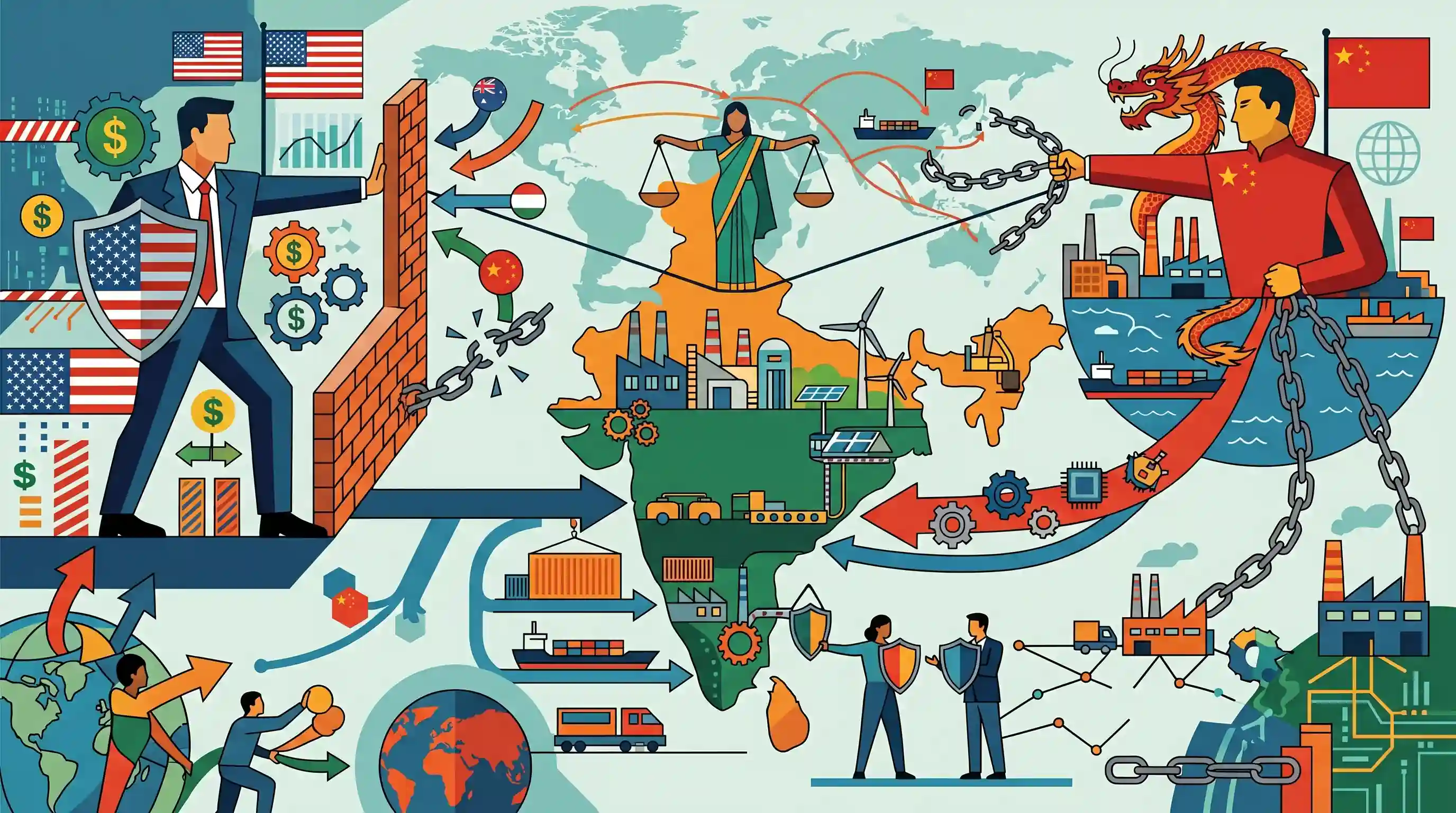
क्यों मायने रखता है
भू-राजनीति और व्यापार के अंतर्संबंधों को समझना UPSC अभ्यर्थियों के लिए अत्यंत महत्वपूर्ण है, क्योंकि आपूर्ति श्रृंखला पुनर्गठन और बढ़ता संरक्षणवाद प्रत्यक्ष रूप से भारत की मैक्रोइकॉनॉमिक स्थिरता, औद्योगिक विकास और विदेश नीति की रणनीतियों को प्रभावित करते हैं।
सारांश
The article analyzes India's strategic and macroeconomic dilemma amidst the intensifying US-China trade tensions. While the US's decoupling from China and the resulting "China Plus One" strategy offer India a unique opportunity to attract global supply chains, India is constrained by its structural dependence on Chinese imports for intermediate goods to fuel its own manufacturing. Furthermore, rising protectionism in the US, characterized by aggressive tariffs and a shift towards bilateralism, threatens Indian exports. Indian policymakers must delicately balance the need to build self-reliance and domestic manufacturing capacity with the geopolitical necessity of navigating US trade pressures without stifling its own export growth.
मुख्य बिंदु
- बढ़ते अमेरिका-चीन व्यापार युद्ध और पश्चिम की डिकपलिंग (decoupling) रणनीति (China Plus One) भारत को वैश्विक आपूर्ति श्रृंखलाओं (global supply chains) में एकीकृत होने का एक अवसर प्रदान करते हैं।
- India faces a structural dilemma due to its heavy reliance on Chinese imports for intermediate goods (like APIs and electronic components) essential for its own export-driven manufacturing.
- Rising protectionist tendencies in the US, including potential reciprocal tariffs and a pivot away from multilateralism, pose direct threats to India's export potential.
- To capitalize on the geopolitical shifts, India must enhance its domestic manufacturing competitiveness while navigating complex bilateral trade pressures from Washington.
महत्वपूर्ण शब्द
चीन प्लस वन रणनीति

A business strategy where companies diversify manufacturing and supply chains beyond China to reduce over-dependence and mitigate geopolitical and supply-chain risks.
UPSC context
GS Paper 3/2: वैश्विक आपूर्ति श्रृंखला में बदलाव, FDI और भारत की विनिर्माण क्षमता पर केंद्रित है।
मुक्त व्यापार समझौते (FTAs)
देशों के बीच ऐसे समझौते जिनका उद्देश्य टैरिफ और गैर-टैरिफ बाधाओं को कम करना या समाप्त करना है, जिससे सीमाओं के पार वस्तुओं और सेवाओं के विनिमय को सुगम बनाया जा सके।
UPSC context
GS पेपर 3: निर्यात वृद्धि और भारत की विकसित होती व्यापार नीति को समझने के लिए महत्वपूर्ण।
विश्व व्यापार संगठन (WTO)
The global international body governing trade rules between nations, focusing on trade liberalization, negotiations, and resolving commercial disputes.
UPSC context
GS पेपर 2: अंतरराष्ट्रीय संस्थानों और नियम-आधारित वैश्विक शासन के ज्ञान का परीक्षण करता है।
संरक्षणवाद
Economic policies like tariffs and quotas used to restrict imports to protect domestic industries from foreign competition.
UPSC context
GS पेपर 3: व्यापार बाधाओं और भारत की निर्यात प्रतिस्पर्धात्मकता पर उनके प्रभाव का परीक्षण करता है।
Intermediate Goods
Semi-finished goods or components used in the production of final products; India’s reliance on China for these remains a structural vulnerability.
UPSC context
GS पेपर 3: औद्योगिक नीति और व्यापार घाटे की प्रकृति से संबंधित।
डिकपलिंग
राष्ट्रों के बीच आर्थिक परस्पर निर्भरता को कम करने की प्रक्रिया, विशेष रूप से आपूर्ति श्रृंखलाओं (supply chains) को प्रतिकूल या जोखिम भरे भागीदारों से दूर स्थानांतरित करना।
UPSC context
GS Paper 2: भारत के हितों पर वैश्विक भू-राजनीतिक तनावों के प्रभाव से संबंधित है।
प्रारंभिक ट्रैप
भारत आयातित विनिर्माण इनपुट्स पर अपनी निर्भरता के कारण संयुक्त राज्य अमेरिका और चीन दोनों के साथ लगातार एक संरचनात्मक व्यापार घाटा (structural trade deficit) बनाए रखता है।
भारत का अमेरिका (उसका सबसे बड़ा निर्यात गंतव्य) के साथ महत्वपूर्ण व्यापार SURPLUS है, जबकि चीन के साथ भारी व्यापार DEFICIT है। अभ्यर्थी अक्सर यह मान लेते हैं कि भारत का दोनों के साथ घाटा है।
संबंधित अवधारणाएँ
What are the primary trade defense instruments permitted under the WTO?
- एंटी-डंपिंग शुल्क: जब कोई विदेशी देश अपने घरेलू बाजार मूल्य से कम कीमत पर वस्तुओं का निर्यात करता है, जिससे आयातक देश के उद्योग को क्षति पहुँचती है, तो ऐसी स्थिति में लगाए जाने वाले शुल्क।
- Countervailing duties: Additional import tariffs levied to neutralize the negative effects of unfair production or export subsidies granted by the exporting country's government.
- Safeguard measures: किसी विशिष्ट घरेलू उद्योग को आयात में होने वाली अप्रत्याशित और अचानक वृद्धि से बचाने के लिए किसी उत्पाद के आयात को प्रतिबंधित करने वाले आपातकालीन और अस्थायी उपाय।
'रूल्स ऑफ ओरिजिन' भारत के मुक्त व्यापार समझौतों (FTAs) को कैसे प्रभावित करते हैं?
- मूल परिभाषा: They are criteria used to determine the national source of a product, ensuring only genuine partner countries benefit from FTA tariff concessions.
- Preventing trade diversion: They prevent third nations (like China) from routing their products through an FTA partner (like ASEAN or UAE) to dump goods in India tariff-free.
- मूल्यवर्धन खंड: CAROTAR 2020 नियमों के तहत, भारतीय आयातकों को कड़ाई से यह सत्यापित करना होगा कि आयातित वस्तुएं भागीदार देश में न्यूनतम घरेलू मूल्य संवर्धन सीमा को पूरा करती हैं।
अंतर-विषय पैटर्न
APIs and National Health Security
'दुनिया की फार्मेसी' के रूप में भारत का दर्जा एक्टिव फार्मास्युटिकल इंग्रीडिएंट्स (API) के लिए चीन पर ~70% निर्भरता के कारण संरचनात्मक रूप से संवेदनशील है, जो व्यापार घाटे को सीधे राष्ट्रीय स्वास्थ्य सुरक्षा से जोड़ता है।
Paralysis of WTO's Dispute Settlement
Rising US bilateralism and protectionist reciprocal tariffs thrive because of the ongoing paralysis of the WTO's Appellate Body, forcing nations to abandon multilateralism for mini-lateral FTAs.

Expect a GS3 Mains question evaluating 'China Plus One' viability given India's deep structural reliance on Chinese intermediate goods.
संबद्ध PYQ · 3
संबद्ध PYQ · 3
- 2024MainsGS2
‘The West is fostering India as an alternative to reduce dependence on China's supply chain and as a strategic ally to counter China's political and economic dominance.’ Explain this statement with examples.
- 2025MainsGS3
What are the challenges before the Indian economy when the world is moving away from free trade and multilateralism to protectionism and bilateralism? How can these challenges be met?
- 2018MainsGS3
How would the recent phenomena of protectionism and currency manipulations in world trade affect macroeconomic stability of India?
