India Trade Dilemma Amid US-China Geopolitical Tensions
Source:Indian Express ↗
Why It Matters
Understanding the intersection of geopolitics and trade is crucial for UPSC aspirants, as supply chain realignments and rising protectionism directly affect India's macroeconomic stability, industrial growth, and foreign policy strategies.
Summary
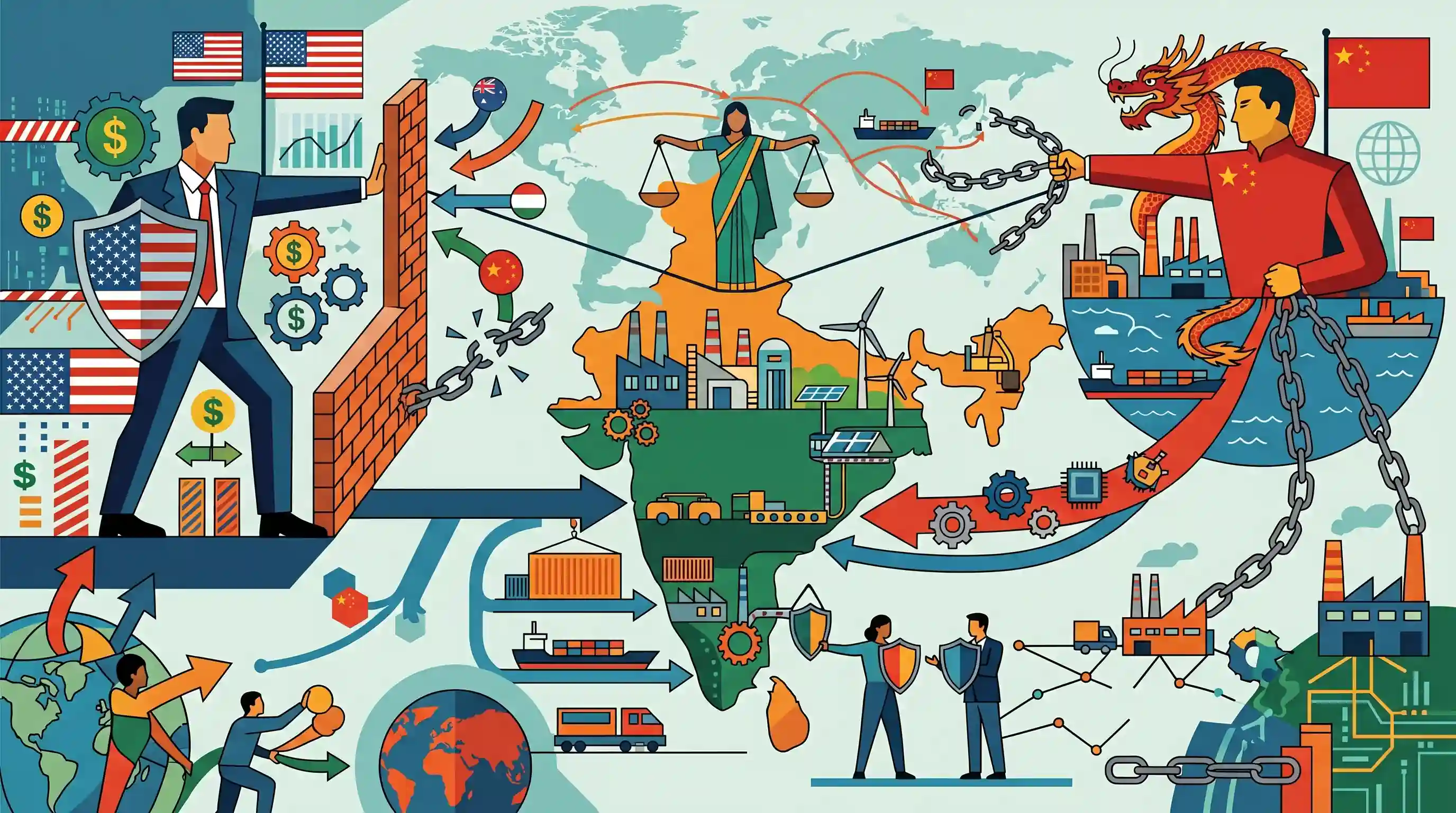
The article analyzes India's strategic and macroeconomic dilemma amidst the intensifying US-China trade tensions. While the US's decoupling from China and the resulting "China Plus One" strategy offer India a unique opportunity to attract global supply chains, India is constrained by its structural dependence on Chinese imports for intermediate goods to fuel its own manufacturing. Furthermore, rising protectionism in the US, characterized by aggressive tariffs and a shift towards bilateralism, threatens Indian exports. Indian policymakers must delicately balance the need to build self-reliance and domestic manufacturing capacity with the geopolitical necessity of navigating US trade pressures without stifling its own export growth.
Key Points
- The escalating US-China trade war and the West's decoupling strategy (China Plus One) present India with an opportunity to integrate into global supply chains.
- India faces a structural dilemma due to its heavy reliance on Chinese imports for intermediate goods (like APIs and electronic components) essential for its own export-driven manufacturing.
- Rising protectionist tendencies in the US, including potential reciprocal tariffs and a pivot away from multilateralism, pose direct threats to India's export potential.
- To capitalize on the geopolitical shifts, India must enhance its domestic manufacturing competitiveness while navigating complex bilateral trade pressures from Washington.
Important Terms
China Plus One Strategy

A business strategy where companies diversify manufacturing and supply chains beyond China to reduce over-dependence and mitigate geopolitical and supply-chain risks.
UPSC context
GS Paper 3/2: Focuses on global supply chain shifts, FDI, and India’s manufacturing potential.
Free Trade Agreements (FTAs)
Agreements between countries to reduce or eliminate tariffs and non-tariff barriers, facilitating easier exchange of goods and services across borders.
UPSC context
GS Paper 3: Crucial for understanding export growth and India’s evolving trade policy.
World Trade Organization (WTO)
The global international body governing trade rules between nations, focusing on trade liberalization, negotiations, and resolving commercial disputes.
UPSC context
GS Paper 2: Tests knowledge of international institutions and rules-based global governance.
Protectionism
Economic policies like tariffs and quotas used to restrict imports to protect domestic industries from foreign competition.
UPSC context
GS Paper 3: Examines trade barriers and their impact on India’s export competitiveness.
Intermediate Goods
Semi-finished goods or components used in the production of final products; India’s reliance on China for these remains a structural vulnerability.
UPSC context
GS Paper 3: Relates to industrial policy and the nature of trade deficits.
Decoupling
The process of reducing economic interdependence between nations, specifically shifting supply chains away from adversarial or risky partners.
UPSC context
GS Paper 2: Concerns the impact of global geopolitical tensions on India’s interests.
Prelims Trap
India consistently runs a structural trade deficit with both the United States and China due to its reliance on imported manufacturing inputs.
India runs a significant trade SURPLUS with the US (its largest export destination), while running a massive trade DEFICIT with China. Aspirants often assume India has deficits with both.
Static Concepts Connected
What are the primary trade defense instruments permitted under the WTO?
- Anti-dumping duties: Duties imposed when a foreign country exports goods at a price lower than its own domestic market price, injuring the importing country's industry.
- Countervailing duties: Additional import tariffs levied to neutralize the negative effects of unfair production or export subsidies granted by the exporting country's government.
- Safeguard measures: Emergency, temporary measures restricting imports of a product to protect a specific domestic industry from an unforeseen, sudden surge in imports.
How do 'Rules of Origin' impact India's Free Trade Agreements (FTAs)?
- Core definition: They are criteria used to determine the national source of a product, ensuring only genuine partner countries benefit from FTA tariff concessions.
- Preventing trade diversion: They prevent third nations (like China) from routing their products through an FTA partner (like ASEAN or UAE) to dump goods in India tariff-free.
- Value addition clause: Under CAROTAR 2020 rules, Indian importers must strictly verify that imported goods meet a minimum domestic value addition threshold in the partner country.
Cross-Topic Patterns
APIs and National Health Security
India's title as the 'Pharmacy of the World' is structurally vulnerable due to ~70% reliance on China for Active Pharmaceutical Ingredients, linking trade deficits directly to national health security.
Paralysis of WTO's Dispute Settlement
Rising US bilateralism and protectionist reciprocal tariffs thrive because of the ongoing paralysis of the WTO's Appellate Body, forcing nations to abandon multilateralism for mini-lateral FTAs.

Expect a GS3 Mains question evaluating 'China Plus One' viability given India's deep structural reliance on Chinese intermediate goods.
Linked PYQs · 3
Linked PYQs · 3
- 2024MainsGS2
‘The West is fostering India as an alternative to reduce dependence on China's supply chain and as a strategic ally to counter China's political and economic dominance.’ Explain this statement with examples.
- 2025MainsGS3
What are the challenges before the Indian economy when the world is moving away from free trade and multilateralism to protectionism and bilateralism? How can these challenges be met?
- 2018MainsGS3
How would the recent phenomena of protectionism and currency manipulations in world trade affect macroeconomic stability of India?
