Structural Reforms and Evolution in Indian Civil Services
Source:Indian Express ↗
આ શા માટે મહત્વનું છે
Civil services form the steel frame of Indian administration. Understanding structural reforms, capacity building (like Mission Karmayogi), and bureaucratic accountability is crucial for aspirants studying governance under GS Paper II.
સારાંશ
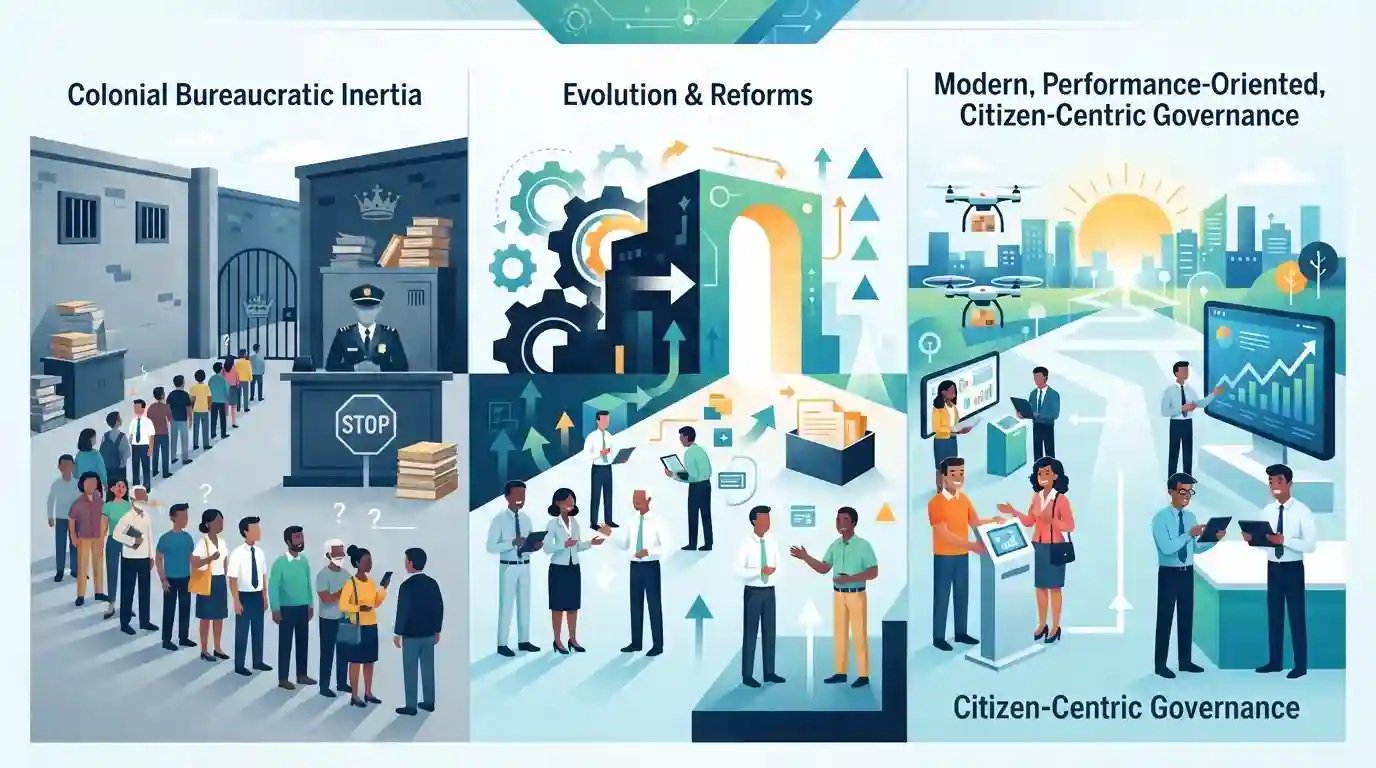
The article discusses the ongoing evolution and necessary reforms in India's civil services under Prime Minister Narendra Modi, highlighting the shift from colonial bureaucratic inertia toward a more modern, performance-oriented, and citizen-centric governance model.
મુખ્ય મુદ્દા
- Civil services reforms in India require moving away from colonial-era structures to a more agile, citizen-centric, and accountable framework.
- PM Narendra Modi's approach emphasizes breaking silos, promoting multi-lateral thinking, lateral entry, and performance-based evaluation.
- Overcoming resistance to change and deep-seated status quo within the bureaucracy remains a fundamental challenge for effective governance.
મહત્વપૂર્ણ શબ્દો
Mission Karmayogi

A comprehensive national capacity-building program for civil servants aiming to transition bureaucracy from a rule-based to a role-based, competency-driven governance model through the iGOT Karmayogi digital platform.
UPSC context
UPSC GS Paper II (Governance, Civil Services Reforms). Tests understanding of modern administrative reforms, capacity building, and e-governance initiatives.
Government of India
The central executive machinery of India comprising the President, Union Council of Ministers headed by the Prime Minister, and permanent civil services executing national policies.
UPSC context
UPSC GS Paper II (Indian Constitution and Polity). Fundamental for understanding the separation of powers and institutional framework of governance.
Prime Minister's Office
The apex administrative staff agency directly assisting the Prime Minister in coordinating policy, administration, and public grievances across various ministries and departments.
UPSC context
UPSC GS Paper II (Structure, Organization, and Functioning of the Executive). Crucial for analyzing executive power dynamics and centralized decision-making.
પ્રિલિમ્સ ટ્રેપ
Mission Karmayogi has replaced the UPSC Civil Services Examination for direct recruitment of administrative officers.
Aspirants often assume Mission Karmayogi replaces the UPSC Civil Services Examination entirely, when it actually focuses on in-service capacity building and competency-driven HR management.
સંલગ્ન સ્થિર ખ્યાલો
What are the key constitutional protections guaranteed to civil servants under Part XIV of the Indian Constitution?
- Article 311 Protections: Article 311 safeguards civil servants against arbitrary dismissal, removal, or reduction in rank by ensuring inquiries are conducted before penalties are imposed.
- All India Services: All India Services (Article 312) are created by Parliament on a Rajya Sabha resolution, maintaining uniform administrative standards across the Union and States.
- Doctrine of Pleasure: Doctrine of Pleasure under Article 310 governs tenure, subject to constitutional limitations prescribed under Article 311.
આંતર-વિષય પેટર્ન
Lateral Entry vs. UPSC Cadre Integrity
Lateral entry shifts recruitment away from purely UPSC-administered generalist cadres toward specialized domain induction, raising questions about constitutional safeguards and reservation policies.
Digital Governance & Capacity Building Models
Mission Karmayogi operationalizes continuous digital skilling, echoing global trends in e-governance and public sector HR transformation under digital public infrastructure.

Mission Karmayogi + Lateral Entry + structural shift from rules-based to roles-based HR management will feature in Mains GS-2.
સંલગ્ન PYQ · 3
સંલગ્ન PYQ · 3
- 2024MainsGS2
The Doctrine of Democratic Governance makes it necessary that the public perception of the integrity and commitment of civil servants becomes absolutely positive. Discuss.
- 2017MainsGS2
Initially Civil Services in India were designed to achieve the goals of neutrality and effectiveness, which seems to be lacking in the present context. Do you agree with the view that drastic reforms are required in Civil Services? Comment.
- 2024MainsGS2
The Citizens' charter has been a landmark initiative in ensuring citizen-centric administration. But it is yet to reach its full potential. Identify the factors hindering the realisation of its promise and suggest measures to overcome them.
