India Tehran Diplomatic Talks on Strait of Hormuz Shipping
Source:Indian Express ↗
Why It Matters
The article illustrates the direct impact of Middle Eastern conflicts on India's domestic energy security and economy. It serves as a strong case study for GS2 (International Relations) on how India uses strategic diplomacy to navigate regional crises, and for GS3 on managing supply chain disruptions and energy imports.
Summary
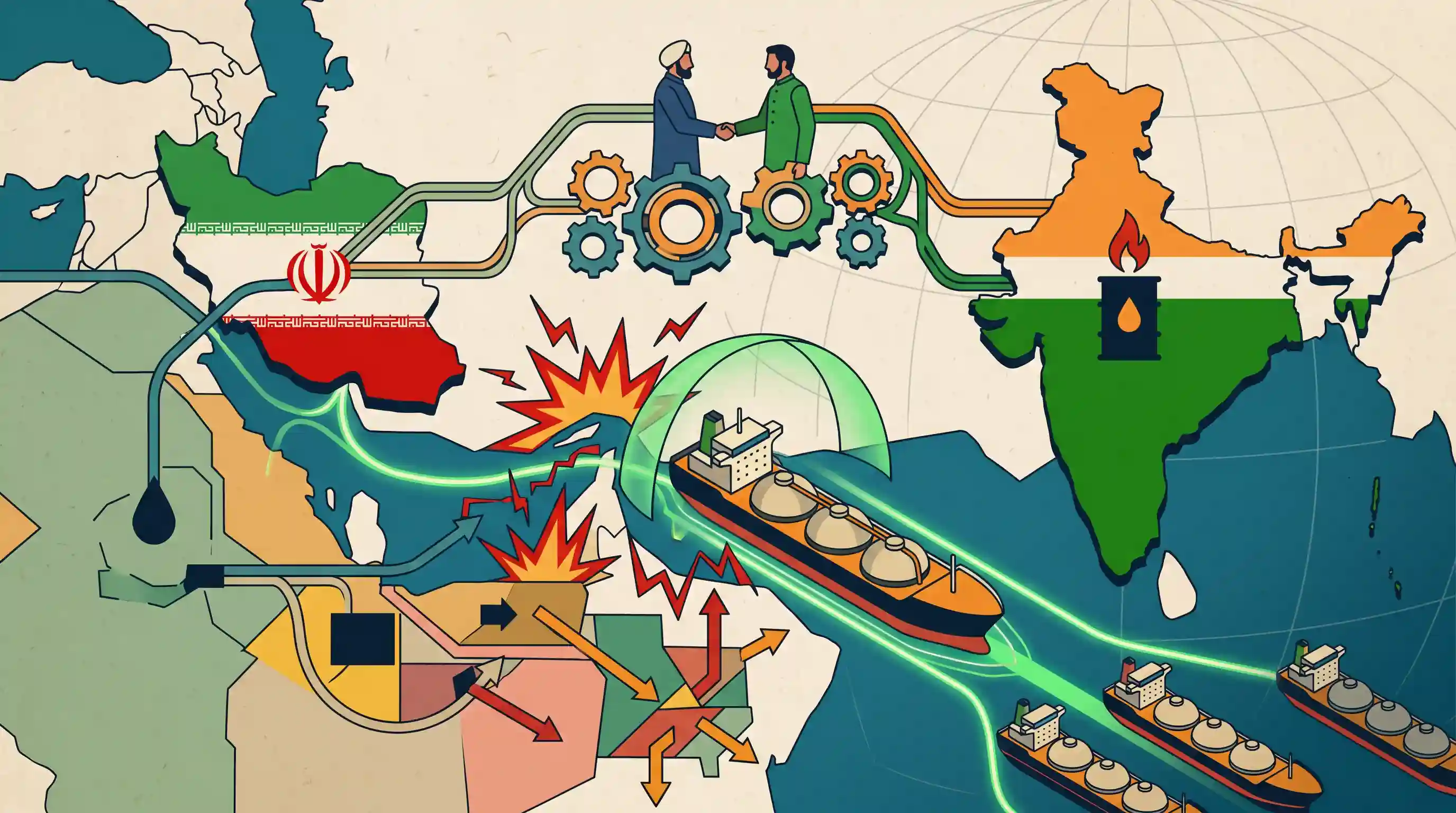
India is engaging in urgent diplomatic talks with Iran to ensure the unhindered passage of fuel ships bound for India through the Strait of Hormuz. Amid escalating geopolitical tensions in the Middle East and threats to block this vital maritime chokepoint, India's energy security is at risk due to its heavy reliance on regional oil imports. The negotiations demonstrate India's effort to leverage its bilateral relationship with Tehran to safeguard its strategic and economic interests against supply chain disruptions.
Key Points
- India has initiated urgent diplomatic negotiations with Tehran to secure the safe passage of fuel ships bound for India.
- The talks are a response to escalating tensions and potential blockades in the Strait of Hormuz, a critical maritime chokepoint for global oil trade.
- The situation highlights India's vulnerability to supply chain disruptions in the Middle East and underscores the necessity of diplomatic agility to ensure domestic energy security.
Prelims Trap
"The Strait of Hormuz is a narrow maritime corridor located between Iran and the United Arab Emirates."
While the UAE is nearby, the actual chokepoint is bordered by Iran to the north and Oman (specifically its Musandam Peninsula exclave) to the south.
Static Concepts Connected
What are the primary maritime chokepoints affecting India's West Asian trade?
- Strait of Hormuz: Connects the Persian Gulf to the Gulf of Oman and the Arabian Sea. Crucial for regional oil exports.
- Bab-el-Mandeb: Connects the Red Sea to the Gulf of Aden. A key chokepoint for trade heading toward the Suez Canal.
- Suez Canal: Artificial sea-level waterway in Egypt linking the Mediterranean Sea to the Red Sea, bypassing the Cape of Good Hope.
How does India mitigate crude oil supply disruptions through strategic reserves?
- Phase I SPRs: Underground rock caverns managed by ISPRL at Visakhapatnam, Mangaluru, and Padur, holding roughly 5.33 MMT of crude oil.
- Phase II Expansion: Planned commercial-cum-strategic facilities at Chandikhol and Padur to enhance India's current ~9-day strategic oil buffer.
- Import Diversification: Beyond domestic reserves, Indian refiners are encouraged to diversify supply chains and invest in overseas oil equity.
Cross-Topic Patterns
Transit Corridors as Energy De-risking
Geopolitical volatility at Hormuz pushes India to operationalize alternate land-sea routes like INSTC and IMEC, merging infrastructure connectivity with energy security imperatives.
India's Strategic Autonomy in West Asia
Directly negotiating with Iran for vessel safety despite US sanctions illustrates India's de-hyphenated foreign policy and careful balancing between Arab states, Israel, and Tehran.

Map-based matching pairs linking West Asian chokepoints (Hormuz, Bab-el-Mandeb) to bordering nations and connected seas are highly probable.
Linked PYQs · 2
Linked PYQs · 2
- 2017MainsGS2
The question of India's Energy Security constitutes the most important part of India's economic progress. Analyze India's energy policy cooperation with West Asian countries.
- 2024PrelimsGS1
Consider the following statements : Statement-I : Sumed pipeline is a strategic route for Persian Gulf oil and natural gas shipments to Europe. Statement-II : Sumed pipeline connects the Red Sea with the Mediterranean Sea. Which one of the following is correct in respect of the above statements?
