MEA response on India Bangladesh diplomatic row and border security
Source:The Hindu ↗
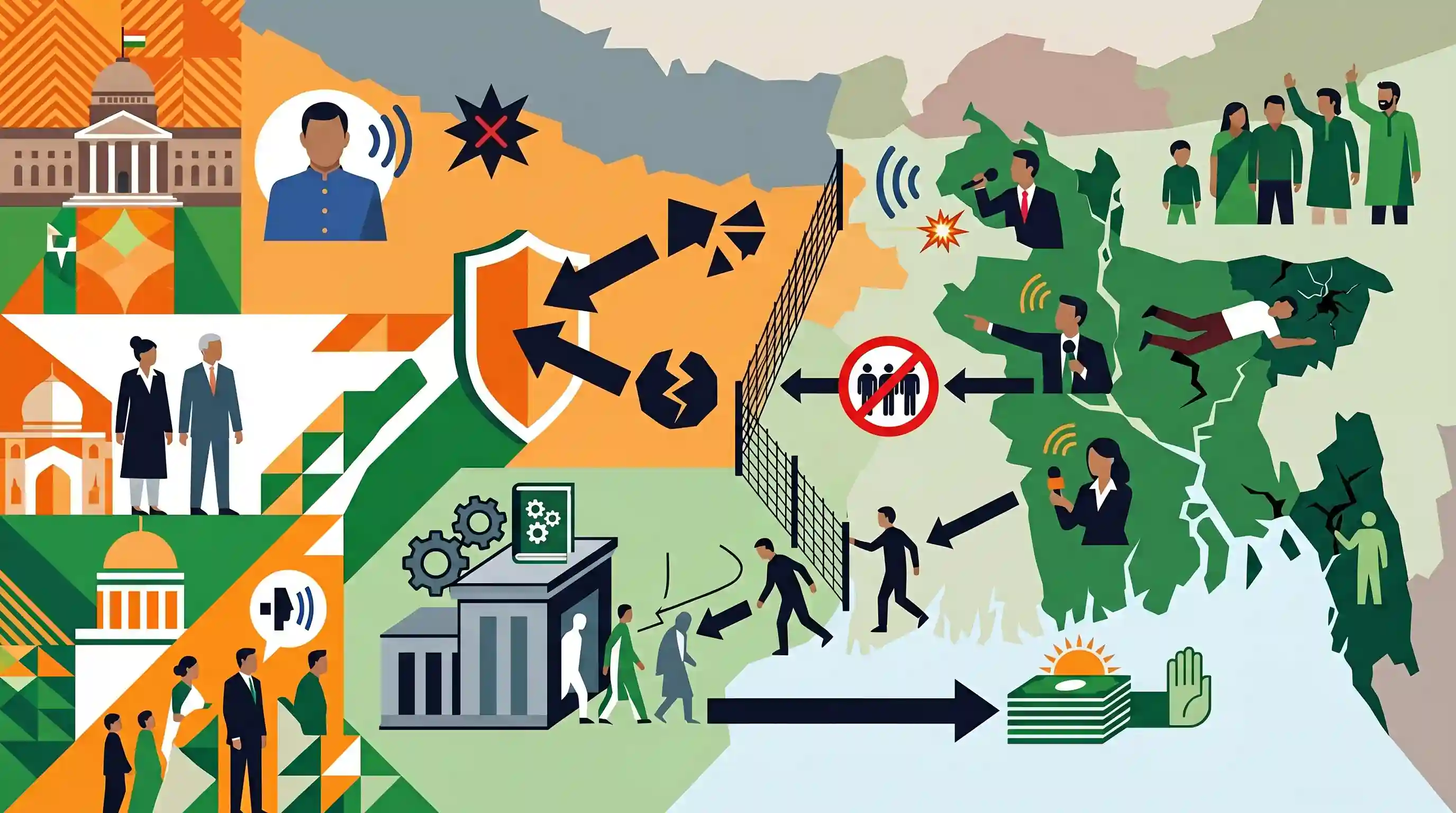
Why It Matters
The unfolding diplomatic row with Bangladesh tests India's "Neighbourhood First" policy and highlights the complexities of managing regime changes, political fugitives, and cross-border security dynamics in South Asia.
Summary
India’s Ministry of External Affairs has rebuffed allegations from Bangladesh that Indian territory is being used to destabilize the neighboring country. Following the summoning of the Indian High Commissioner in Dhaka over statements made by deposed Bangladeshi Prime Minister Sheikh Hasina, India reiterated its commitment to a stable and democratic Bangladesh. Tensions have been exacerbated by the recent shooting of a youth leader in Dhaka, prompting Bangladesh to request that India deny shelter to the accused. India has maintained that all criminal and extradition requests must be processed through formal bilateral mechanisms.
Key Points
- India's Ministry of External Affairs (MEA) asserted that Indian territory is never allowed for activities inimical to Bangladesh's interests.
- The MEA's response came after Bangladesh summoned Indian High Commissioner Pranay Verma over statements made by deposed PM Sheikh Hasina from India.
- Bangladesh alleged that Hasina's rhetoric threatens peaceful coexistence and incites "terrorist attacks" aimed at disrupting potential 2026 elections.
- Diplomatic tensions were further strained by the shooting of a youth leader in Dhaka, with Bangladesh requesting India to prevent suspects from finding refuge across the border.
- India emphasized that requests involving criminal investigations or extradition should be routed through formal diplomatic channels rather than the media.
Important Terms
Ministry of External Affairs (MEA)

India's executive agency responsible for managing foreign relations, diplomatic missions, and implementing foreign policy under the Union Government.
UPSC context
GS Paper 2 (IR); tests knowledge of institutional frameworks governing India’s neighborhood relations and diplomatic responses to regional crises.
Ministry of Foreign Affairs (Bangladesh)
The executive department of the Bangladesh government responsible for conducting the country's foreign relations and managing its diplomatic missions abroad.
UPSC context
GS Paper 2 (IR); relevant for understanding the formal diplomatic channels and friction points between India and its immediate neighbors.
Awami League
A major secular political party in Bangladesh, historically led by Sheikh Hasina, which was ousted from power in 2024 following mass uprisings.
UPSC context
GS Paper 2 (IR); tests understanding of internal political dynamics of neighboring countries and their impact on India’s security and strategic interests.
India-Bangladesh Extradition Treaty (2013)
A bilateral agreement facilitating the handover of fugitives for offenses punishable by at least one year’s imprisonment in both nations.
UPSC context
GS Paper 2 (IR/Law); important for questions on legal mechanisms in international relations, 'dual criminality,' and 'political offense' exceptions.
Bangladesh Nationalist Party (BNP)
A right-of-center political party in Bangladesh, currently led by Tarique Rahman, which returned to power following the February 2026 elections.
UPSC context
GS Paper 2 (IR); essential for analyzing the shifting political landscape in South Asia and its implications for India's regional influence.
Neighbourhood First Policy
India’s strategic foreign policy priority to foster stable, collaborative, and friendly relations with its immediate neighbors in South Asia.
UPSC context
GS Paper 2 (IR); the core framework for evaluating India's diplomatic efficacy and security management in the immediate region.
Prelims Trap
"The India-Bangladesh Extradition Treaty requires the requesting state to submit concrete evidence of the crime."
The 2016 amendment to the treaty explicitly removed the requirement for concrete evidence; a valid arrest warrant from a competent court is now sufficient.
Static Concepts Connected
What are the key features governing extradition in India?
- Governing Law: The Extradition Act of 1962 is the overarching domestic legislative framework, administered by the Consular, Passport & Visa (CPV) Division of the MEA.
- Dual Criminality: An individual can only be extradited if the offense is punishable under the laws of both the requesting and the requested countries.
- Political Exception: Under Section 31 of the Act, India can legally refuse the surrender of a fugitive if the offense is determined to be of a "political character."
What are the foundational tenets of the Gujral Doctrine?
- Non-reciprocity: India should accommodate smaller neighbors (like Bangladesh, Nepal) in good faith without demanding reciprocal concessions.
- Territorial Protocol: No South Asian country should permit its territory to be used against the interests of another nation in the region.
- Non-interference: Strict adherence to non-interference in internal affairs and resolving all disputes through bilateral peaceful negotiations.
Cross-Topic Patterns
Extradition vs. Political Asylum
India's lack of a formal refugee framework makes the Extradition Act’s "political character" exception the de facto legal shield for deposed foreign leaders like Sheikh Hasina.
Border Management + Extradition Treaties
The 4,096 km riverine border makes formal extradition complex, as criminals exploit porous boundaries to escape before formal bilateral diplomatic and legal mechanisms can be activated.

The political offense exception in the Extradition Act (1962) alongside Gujral Doctrine tenets will likely appear in 2026 Prelims.
Linked PYQs · 2
Linked PYQs · 2
- 2020MainsGS3
Analyze internal security threats and transborder crimes along Myanmar, Bangladesh and Pakistan borders including Line of Control (LoC). Also discuss the role played by various security forces in this regard.
- 2022MainsGS2
India is an age-old friend of Sri Lanka.’ Discuss India's role in the recent crisis in Sri Lanka in the light of the preceding statement.
