India Bangladesh Joint Rivers Commission and Water Diplomacy
Source:The Hindu ↗
Why It Matters
Transboundary water management is a vital component of India's neighborhood diplomacy and internal security, directly impacting regional stability, cross-border resource sharing, and cooperative federalism.
Summary
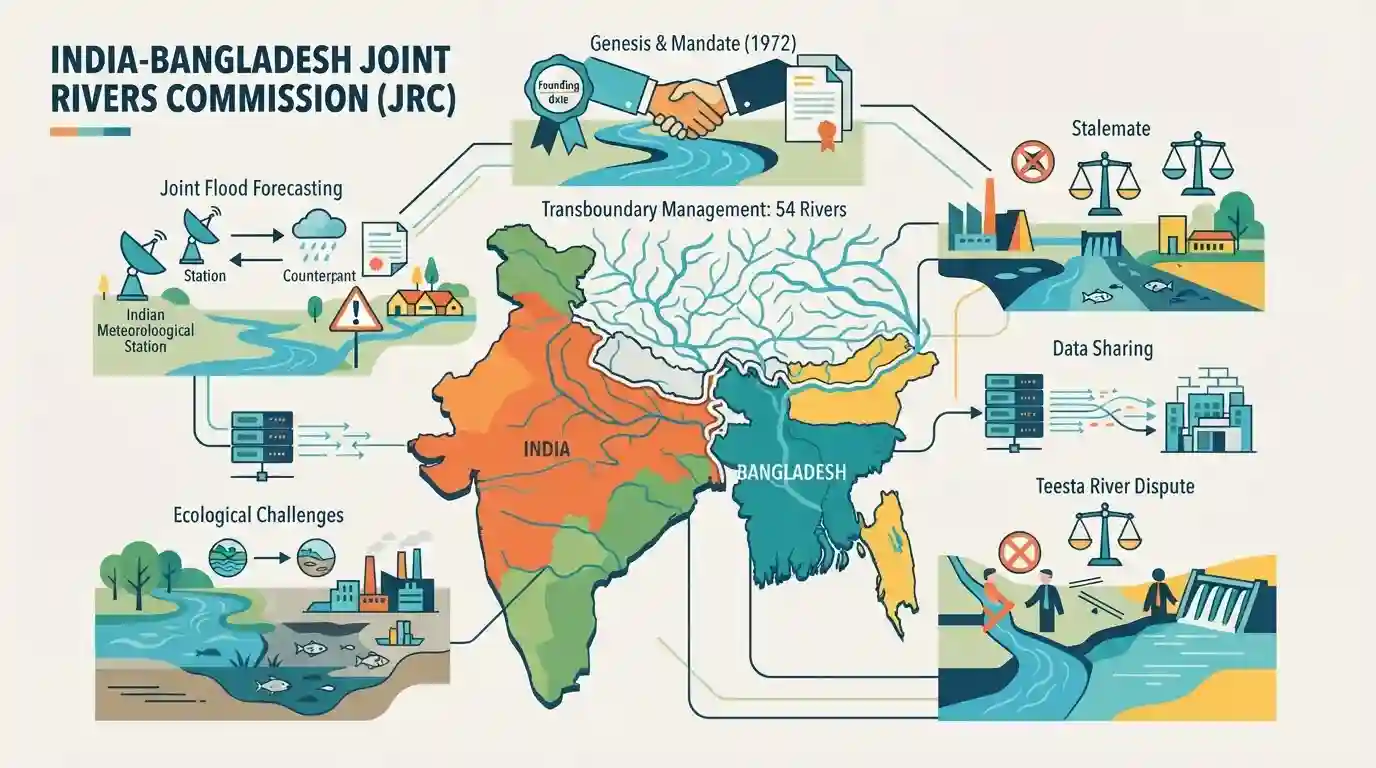
This article explains the genesis, mandate, and functioning of the India-Bangladesh Joint Rivers Commission (JRC). Formed in 1972, the JRC provides a bilateral mechanism for addressing transboundary water management across 54 shared rivers. The piece discusses critical issues like joint flood forecasting, data sharing, ecological challenges, and pending disputes such as the Teesta River water-sharing agreement, emphasizing the diplomatic and federal challenges involved in managing transboundary water resources between the two nations.
Key Points
- The India-Bangladesh Joint Rivers Commission (JRC) was established in 1972 under a bilateral framework to address transboundary river issues, resource management, and flood forecasting.
- India and Bangladesh share 54 common rivers, making cooperative basin management crucial for ecological sustainability and agricultural livelihoods in the region.
- Major pending agreements include the Teesta water-sharing pact, highlighting complexities arising from domestic federal politics and interstate water allocation in India.
- The JRC serves as a technical and consultative platform to resolve disputes regarding irrigation, flood control, and environmental flows.
Important Terms
India-Bangladesh Joint River Commission

A bilateral mechanism established in 1972 by India and Bangladesh to address transboundary water management, flood forecasting, and data sharing across their 54 shared rivers.
UPSC context
UPSC GS Paper II (International Relations - India and its neighborhood). Tests bilateral diplomacy and transboundary water resource management.
Ganga Water Treaty
A 30-year bilateral agreement signed in 1996 regulating the dry-season water sharing of the Ganges River at the Farakka Barrage, set to expire in 2026.
UPSC context
UPSC GS Paper II (International Relations). Tests multilateral and bilateral treaties, hydro-diplomacy, and cooperative resource sharing between India and neighbours.
Teesta River Water Sharing Agreement
A pending bilateral water-sharing dispute between India and Bangladesh over the Teesta River, complicated by upstream utilization and federal domestic political opposition in India.
UPSC context
UPSC GS Paper II (International Relations / Polity). Tests cooperative federalism, regional security, and transboundary river disputes.
Static Concepts Connected
What are the constitutional provisions regarding water and interstate river water disputes in India?
- Constitutional Split: Water is placed under Entry 17 of the State List, while Parliament can legislate on interstate rivers under Article 262.
- Article 262: Article 262 empowers Parliament to provide by law for the adjudication of any dispute relating to waters of inter-state rivers.
- Statutory Framework: The River Boards Act, 1956 and Inter-State Water Disputes Act, 1956 are the statutory frameworks established under this constitutional mandate.
What are the key bilateral water treaties and mechanisms between India and Bangladesh?
- JRC Genesis: Established in March 1972 as a bilateral mechanism to address transboundary river issues across 54 shared rivers.
- Ganga Treaty: Signed in 1996 for a 30-year duration to manage dry-season water sharing at the Farakka Barrage.
- Kushiyara Agreement: Interim water-sharing agreement signed in 2022 allowing withdrawal of water from the Kushiyara River.
Cross-Topic Patterns
Transboundary Water Treaties and Federalism
Water diplomacy in the sub-continent intersects with the Indus Waters Treaty disputes, highlighting India's bilateral hydro-diplomacy frameworks across its western and eastern borders.
River Basins and Regional Security
Cooperative basin management of shared rivers like the Teesta and Kushiyara directly impacts regional security, cross-border migration, and border trade under the Act East policy.

India-Bangladesh water-sharing mechanics, constitutional division of powers on water, and the JRC's mandate are ripe for Prelims/Mains.
Linked PYQs · 2
Linked PYQs · 2
- 2012MainsGS2
The situation today is far different to that prevalent fifty years back when the Indus Water Treaty was signed." Highlight the complexity of the current challenges on both sides of the border in this regard. Do you think that a review of the Treaty is in India's best interests?
- 2026PrelimsGS1
Consider the following statements about river bridges connecting India with neighbouring countries : 1. 'Maitri Setu', built over Feni river, connects Ramgarh in India with Sabroom in Bangladesh. 2. Jhulaghat suspension bridge connects India with Myanmar. 3. Mechi bridge and its approaches connect Panitanki Bypass in India with Kakarvitta in Nepal. Which of the statements given above is/are correct ?
