US sanctions waiver for the strategic Chabahar port project
Source:Indian Express ↗
Why It Matters
The Chabahar port is central to India's "Look West" and Central Asian connectivity strategies. Understanding how US sanctions influence India-Iran bilateral ties is a recurring theme in UPSC Mains (GS2). The specific strategic utility of Chabahar to bypass Pakistan is a verified Prelims testing area.
Summary
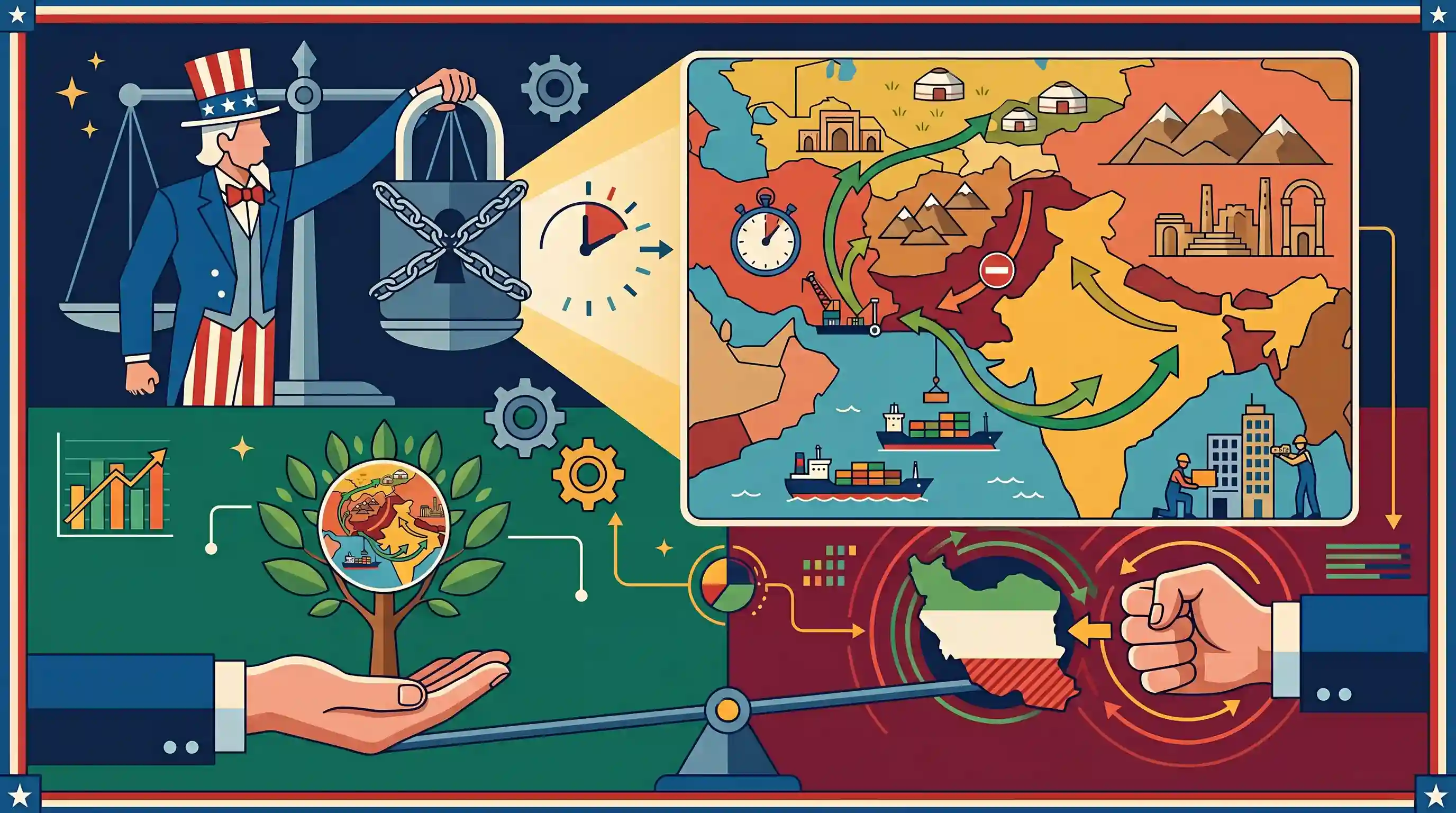
The United States has granted a six-month relief from sanctions for the Chabahar port project in Iran, a significant diplomatic turnaround. This waiver is crucial for India, as it allows continued development and operation of the port without the looming threat of secondary sanctions. Chabahar is a linchpin in India's regional strategy, providing a critical transit route to Afghanistan and Central Asia that bypasses Pakistan. The US decision reflects a delicate balancing act, acknowledging India's geostrategic necessities while maintaining a broader stance of pressure against Iran.
Key Points
- The United States has provided a six-month waiver/relief from sanctions for the development of the Chabahar port project in Iran.
- This turnaround allows Indian entities to continue investing in and operating the port without triggering secondary US sanctions.
- Chabahar port remains a crucial strategic node for India to bypass Pakistan and gain direct access to Afghanistan, Central Asia, and the International North-South Transport Corridor (INSTC).
- The waiver demonstrates a recognition of India's strategic interests in the region by the US, despite Washington's broader policy of isolating Iran.
Important Terms
Chabahar Port

Iran’s only oceanic port, located in Sistan-Baluchistan. India develops its Shahid Beheshti terminal to gain a maritime gateway to Afghanistan and Central Asia, bypassing Pakistan.
UPSC context
GS-II (International Relations); critical for India's 'Connect Central Asia' policy and as a geostatregic counterweight to China’s Gwadar Port.
Secondary Sanctions
US economic penalties targeting third-party (non-US) entities that trade with a sanctioned nation. They threaten to cut off these entities from the US financial system to enforce global compliance.
UPSC context
GS-II; tests understanding of the 'Effect of Policies of Developed Countries' on India's strategic and trade interests.
Sanctions Waiver
A temporary legal exemption granted by the US government allowing specific projects (like Chabahar) to continue operating with a sanctioned country without facing penalties.
UPSC context
GS-II; illustrates the diplomatic balancing act in India-US relations and the role of geostrategy in economic policy.
International North-South Transport Corridor (INSTC)
A 7,200-km multi-modal transit network connecting India to Russia and Europe via Iran and Central Asia. Chabahar serves as a key maritime entry point for this corridor.
UPSC context
GS-II/III; essential for regional connectivity, trade diversification, and reducing logistics costs for Indian exports.
Strategic Autonomy
India's policy of maintaining independent decision-making in foreign affairs, balancing competing interests between global powers (e.g., US vs. Iran) to safeguard its own national security.
UPSC context
GS-II; a core tenet of Indian diplomacy often tested by secondary sanctions and regional geopolitical shifts.
CAATSA
A 2017 US law that mandates sanctions against countries engaging in 'significant transactions' with Iran, North Korea, or Russia, particularly in defense and energy sectors.
UPSC context
GS-II; vital for understanding potential friction in India-US ties regarding defense purchases and regional energy projects.
Prelims Trap
India operates the entirety of Chabahar Port, which is strategically located in the Persian Gulf.
India operates only the Shahid Beheshti terminal, not the entire port. Furthermore, Chabahar is situated on the Makran coast in the Gulf of Oman.
Static Concepts Connected
What is the geographical and strategic scope of the INSTC?
- Multi-modal network: A 7,200-km network of ship, rail, and road routes moving freight between India, Iran, Azerbaijan, Russia, Central Asia, and Europe.
- Suez alternative: Designed to significantly reduce transit time and freight costs compared to the traditional deep-sea route via the Suez Canal.
- Chabahar integration: While initially anchored by Bandar Abbas, Chabahar is being integrated to serve as a primary maritime gateway for the corridor.
What are secondary sanctions and how do they impact third-party nations?
- Extraterritorial reach: They target non-US persons or entities doing business with a sanctioned country, forcing them to choose between that market and the US financial system.
- Executive waivers: Under frameworks like CAATSA, the US can penalize foreign entities, though executive waivers can be granted for allies' strategic interests.
Cross-Topic Patterns
Gwadar vs. Chabahar strategic dynamics
Chabahar on Iran's Makran coast directly counters China's String of Pearls strategy, specifically the Chinese-operated Gwadar port located just 170 km away in Pakistan's Balochistan province.
Connect Central Asia and resource security
Uninterrupted access to Chabahar is critical for India's Connect Central Asia policy, unlocking overland trade routes to uranium and hydrocarbon reserves in landlocked countries like Kazakhstan and Uzbekistan.

Expect a Prelims question combining Chabahar's exact geography (Gulf of Oman, not Persian Gulf), INSTC nodes, and US secondary sanctions.
Linked PYQs · 5
Linked PYQs · 5
- 2017PrelimsGS1
What is the importance of developing Chabahar Port by India?
- 2012MainsGS2
How have the US sanctions against Iran affected India's bilateral relations with Iran?
- 2018MainsGS2
In what ways would the ongoing US-Iran Nuclear Pact Controversy affect the national interest of India? How should India respond to this situation?
- 2024MainsGS2
Critically analyse India's evolving diplomatic, economic and strategic relations with the Central Asian Republics (CARs) highlighting their increasing significance in regional and global geopolitics.
- 2018MainsGS2
A number of outside powers have entrenched themselves in Central Asia, which is a zone of interest to India. Discuss the implications, in this context, of India's joining the Ashgabat Agreement, 2018.
