Social Sciences and AI Ethics for Technological Governance
Source:Indian Express ↗
Why It Matters
The intersection of technology and human values is a recurring theme in UPSC exams across GS3 (Science & Tech), GS4 (Ethics), and the Essay paper. Understanding the societal implications of AI and the necessity of interdisciplinary approaches is crucial for framing holistic answers on technological governance and ethics.
Summary
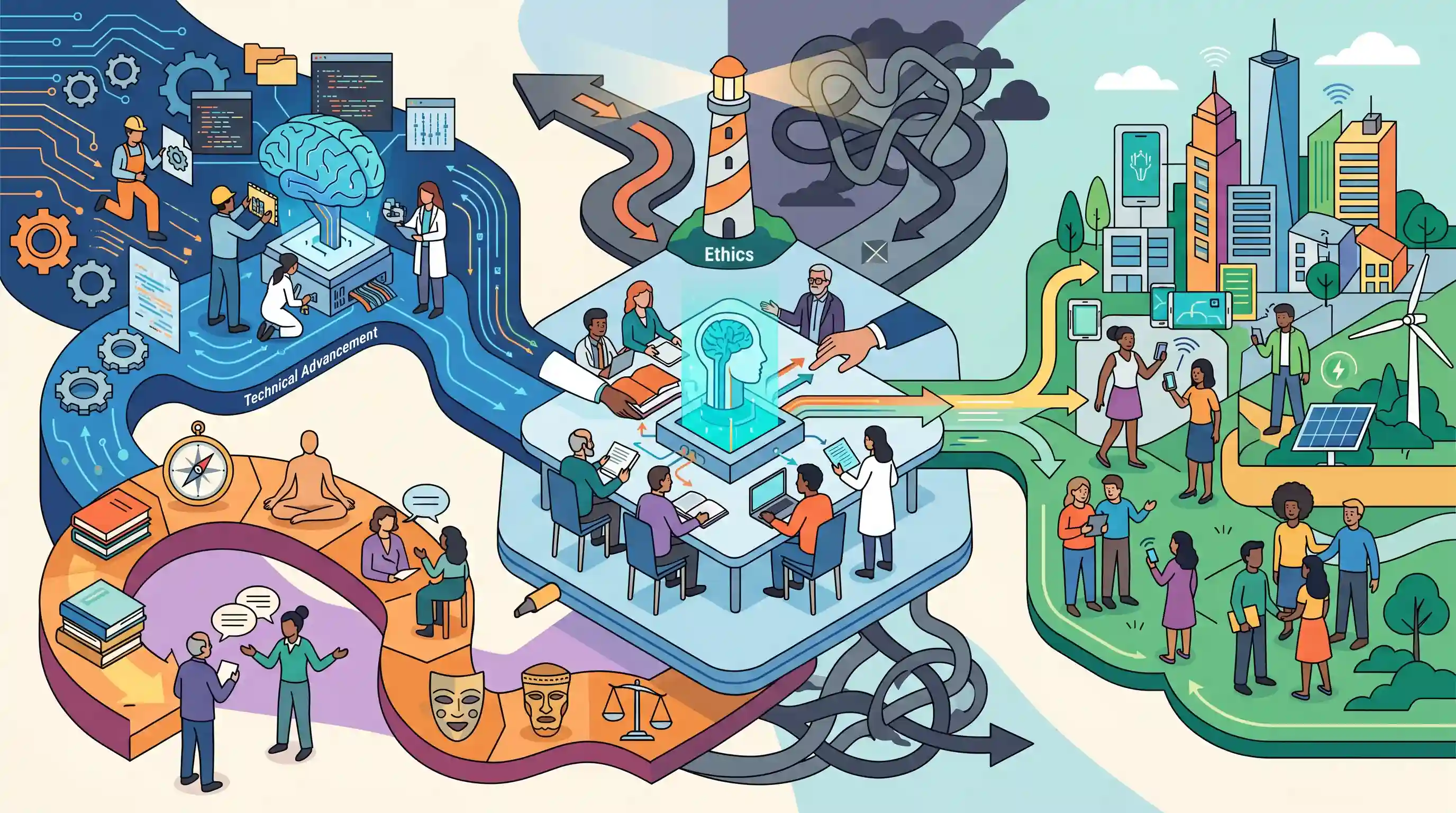
The article highlights the critical importance of social sciences in an era driven by rapid technological advancements such as Artificial Intelligence. It argues that while technical and STEM disciplines are essential for driving innovation, the social sciences—including sociology, psychology, and philosophy—are indispensable for understanding the broader impact of these technologies on human behavior, societal structures, and ethics. By offering a human-centric perspective, the social sciences help anticipate unintended consequences, mitigate risks like algorithmic bias, and ensure that technology aligns with human values. Ultimately, the piece advocates for an interdisciplinary approach, asserting that guiding technological progress ethically requires marrying technical capability with deep societal foresight.
Key Points
- Technological innovation, particularly in AI and digital platforms, requires a profound understanding of human behavior, society, and ethics to ensure it serves humanity responsibly.
- While STEM fields provide the technical capability ('how') for innovation, social sciences provide the critical context ('why' and 'what for') regarding ethical and societal impacts.
- Navigating modern technological challenges such as algorithmic bias, privacy erosion, and the digital divide necessitates interdisciplinary collaboration between technologists and social scientists.
- Social sciences equip policymakers and creators with the foresight to anticipate unintended consequences, fostering the development of equitable, human-centric technological solutions.
Prelims Trap
"NEP 2020 proposes establishing specialized, standalone technical universities by strictly separating STEM from humanities."
This contradicts NEP 2020's core pillar, which explicitly aims to phase out standalone technical institutes in favor of holistic, multidisciplinary universities integrating arts and sciences.
Static Concepts Connected
What are the core ethical concerns associated with Artificial Intelligence?
- Algorithmic Bias: AI models inherit and amplify historical societal prejudices present in their training data, leading to unfair outcomes.
- Black Box Problem: Opaque decision-making processes in deep learning algorithms make it difficult to establish accountability for automated decisions.
- Agency Erosion: Over-reliance on predictive algorithms and algorithmic curation can diminish human moral agency and cognitive autonomy.
How does NEP 2020 integrate humanities with STEM education?
- No Hard Silos: It mandates the elimination of rigid boundaries between arts and sciences to encourage holistic, interdisciplinary problem-solving.
- Multidisciplinary Shift: Aims to gradually transform all higher education institutions, including technical institutes like IITs, into multidisciplinary entities.
- Holistic Development: Focuses on equipping students with 21st-century skills by balancing technological proficiency with critical thinking and ethics.
Cross-Topic Patterns
AI Bias + E-Governance (GS2/GS4)
Deploying AI in public welfare targeting creates exclusionary risks. Understanding algorithmic bias requires blending technical knowledge with a sociological awareness of how marginalized groups are represented in data.
UPSC Essays + Technological Determinism
The philosophical conflict between autonomous technological progress and human-centric ethics is a frequent UPSC Essay theme. It tests whether technology serves or dictates human values.

Expect a 2026 GS4 case study requiring an administrator to resolve algorithmic bias in an AI-driven public welfare or policing system.
Linked PYQs · 3
Linked PYQs · 3
- 2024MainsGS4
The application of Artificial Intelligence as a dependable source of input for administrative rational decision-making is a debatable issue. Critically examine the statement from the ethical point of view.
- 2015MainsEssay
Technology cannot replace manpower.
- 2023MainsGS3
Introduce the concept of Artificial Intelligence (AI). How does Al help clinical diagnosis? Do you perceive any threat to privacy of the individual in the use of Al in healthcare?
