India US trade talks need balance clarity and reciprocity
Source:Indian Express ↗
Why It Matters
India-US bilateral relations are a cornerstone of India's foreign policy. Understanding the nuances of their trade negotiations, especially the push for reciprocity and market access amid global protectionist trends, is highly relevant for GS-2 (International Relations) and GS-3 (Economy) in the UPSC examination.
Summary
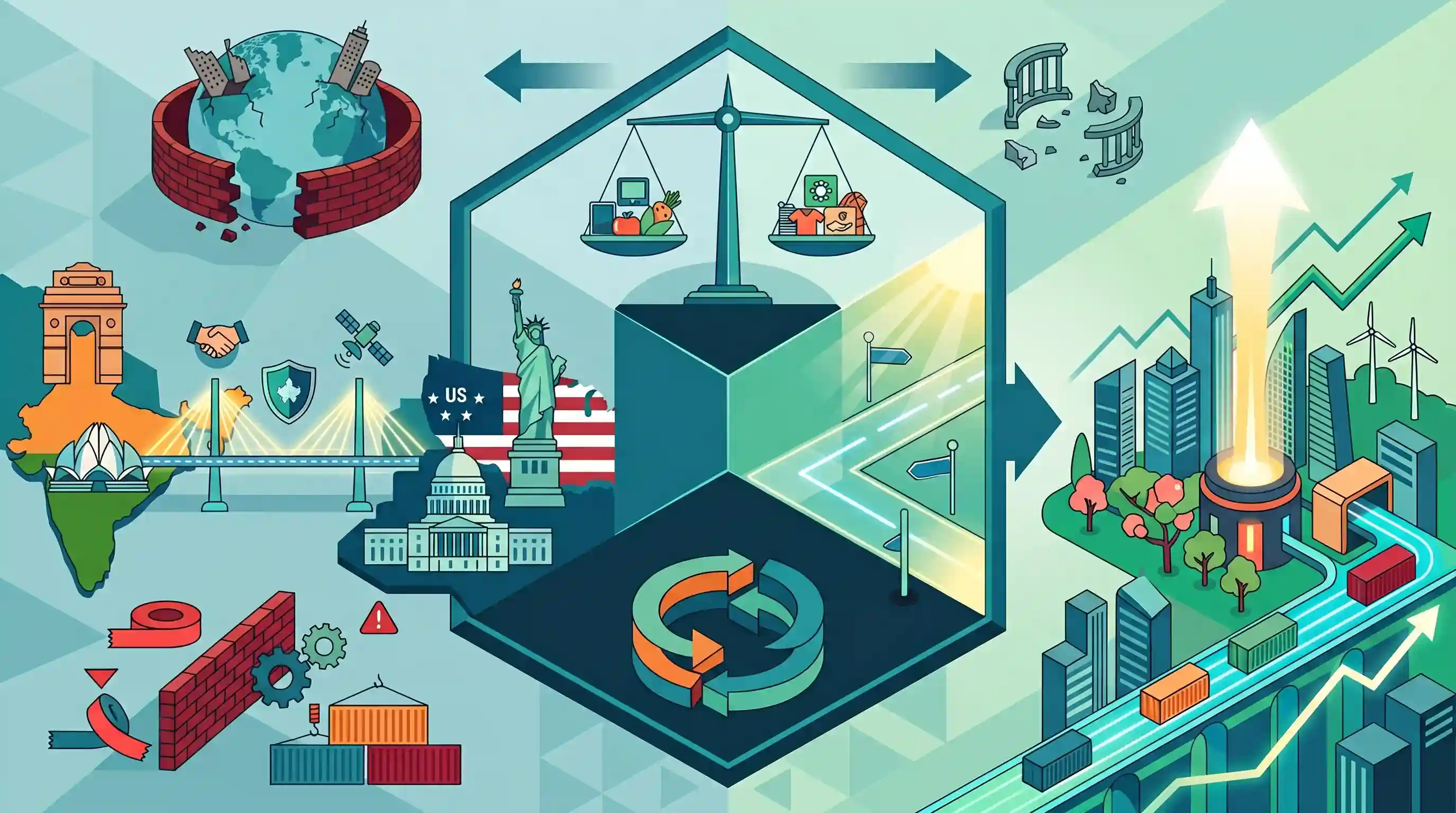
The article highlights the core principles—balance, clarity, and reciprocity—that should guide the next phase of India-US trade negotiations. While strategic and defense ties between the two democracies have deepened, trade relations often encounter friction over tariffs, market access, and regulatory issues. In an era marked by shifting global trade paradigms from multilateralism to protectionism, achieving reciprocal and clear bilateral trade agreements is crucial for unlocking the full economic potential of the partnership.
Key Points
- The upcoming phase of India-US trade negotiations must prioritize balance, clarity, and reciprocity to achieve mutually beneficial outcomes.
- Despite robust strategic and defense cooperation, bilateral trade ties have historically faced friction over tariffs, market access, and regulatory frameworks.
- A global shift toward protectionism and bilateralism makes it imperative for both nations to resolve trade bottlenecks and secure reciprocal market access.
- Enhancing clarity on issues like data localization, intellectual property, and non-tariff barriers will be crucial for deeper economic integration.
Prelims Trap
"The Generalized System of Preferences (GSP) is a reciprocal trade framework under the WTO."
GSP is inherently non-reciprocal, designed to help developing nations. The US revoked India's GSP status in 2019 precisely because it felt India wasn't providing "equitable and reasonable" reciprocal access, blurring the lines for aspirants.
Static Concepts Connected
What are the key flexibilities in India's Patent Act that cause US trade friction?
- Section 3(d): Prevents the "evergreening" of patents, denying fresh patents for minor tweaks to existing drugs—a frequent complaint from US pharmaceutical giants.
- Compulsory Licensing: Allows the government to authorize generic production of a patented drug without the patent owner's consent in cases of public health emergencies or extreme unaffordability.
- Doha Declaration alignment: These Indian legal provisions are entirely compliant with the WTO's Doha Declaration (2001), which prioritizes public health over strict IPR enforcement.
What is the Generalized System of Preferences (GSP) in international trade?
- WTO Enabling Clause: It is an exemption from the WTO's Most Favored Nation (MFN) principle, legally permitted under the WTO's "Enabling Clause" of 1979.
- Non-reciprocal framework: Developed countries grant preferential tariff reductions to developing nations without requiring any reciprocal market access in return.
- Core objective: To promote economic growth and export-driven industrialization in developing countries by giving them a competitive edge in developed markets.
Cross-Topic Patterns
Data localization & the DPDP Act 2023
Friction over cross-border data flows links directly to India's Digital Personal Data Protection Act (2023), which softened strict localization mandates to facilitate global tech operations and ease bilateral trade tensions.
Tech diplomacy outshining traditional FTA routes
While traditional tariff negotiations stall, India-US economic convergence has shifted towards the Initiative on Critical and Emerging Technology (iCET), bypassing traditional trade barriers for strategic tech cooperation.

Expect a multi-statement Prelims question mixing US GSP rules, India's cross-border data norms, and WTO TRIPS flexibilities.
Linked PYQs · 2
Linked PYQs · 2
- 2019MainsGS2
‘What introduces friction into the ties between India and the United States is that Washington is still unable to find for India a position in its global strategy, which would satisfy India's national self-esteem and ambitions.’ Explain with suitable examples.
- 2025MainsGS3
What are the challenges before the Indian economy when the world is moving away from free trade and multilateralism to protectionism and bilateralism? How can these challenges be met?
