Nepal Internal Political Instability and Implications for India
Source:Indian Express ↗
Why It Matters
Understanding Nepal's internal political dynamics is crucial for civil servants as it directly influences India's strategic, security, and economic interests under the 'Neighborhood First' policy.
Summary
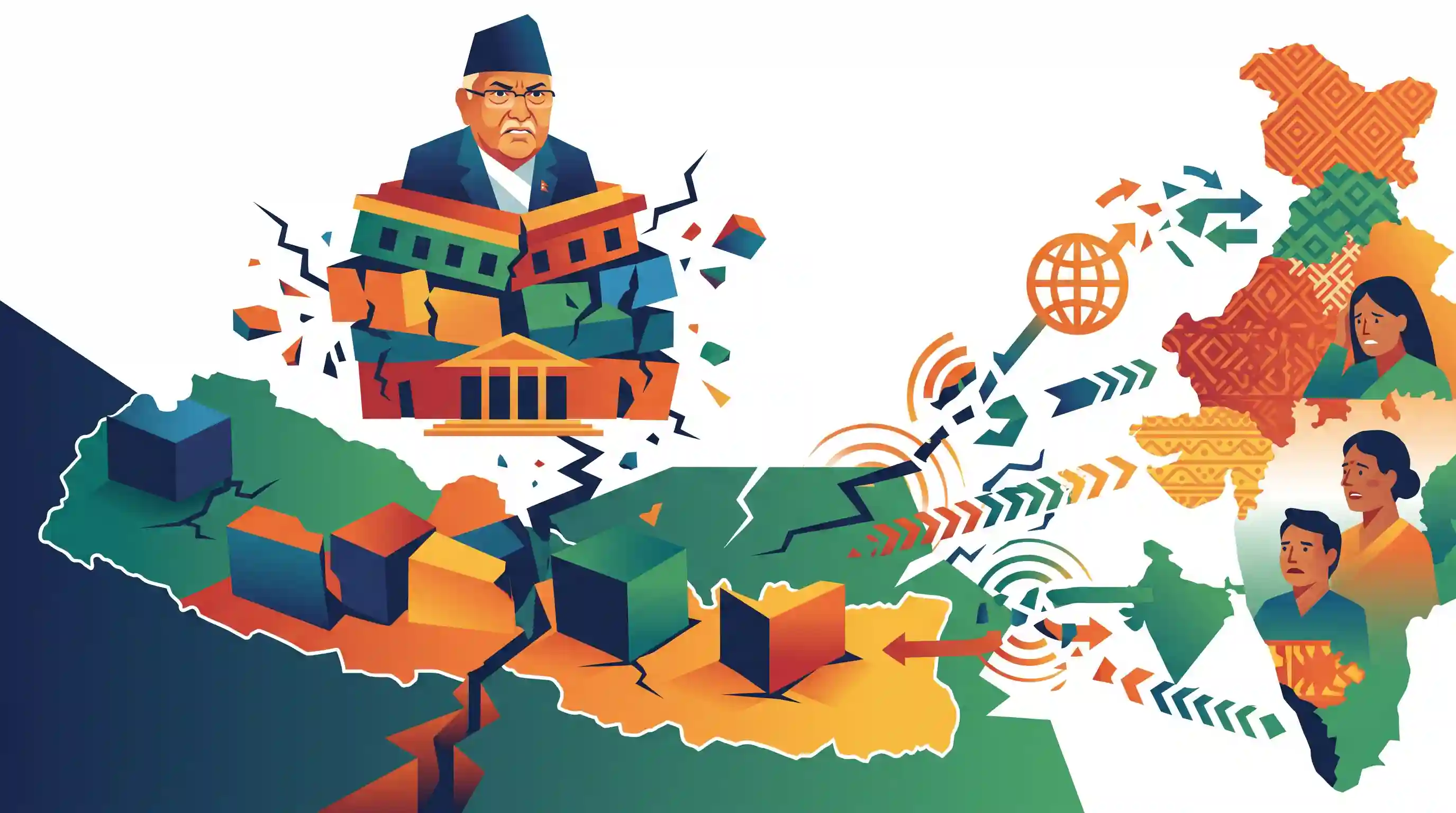
The article analyzes the political landscape in Nepal, focusing on Prime Minister K.P. Sharma Oli's return to power. It highlights that despite successfully forming a government and sidelining the opposition, Oli's primary challenges stem from internal factionalism and coalition management. This situation underscores the broader issue of political instability and fragile democratic structures in Nepal, which not only impacts its internal governance but also has ripple effects on its foreign policy, particularly its relations with neighboring countries like India.
Key Points
- Prime Minister K.P. Sharma Oli faces his most significant political challenges from within his own party and ruling coalition, rather than from the opposition.
- Internal factionalism and fragile alliances continue to drive political instability in Nepal, hindering consistent governance.
- Frequent government changes and internal power struggles affect Nepal's domestic policy consistency and economic development.
- The ongoing political volatility in Nepal has significant implications for India's neighborhood diplomacy and regional security interests.
Important Terms
CPN-UML (Communist Party of Nepal - Unified Marxist-Leninist)

A major center-left communist party in Nepal, currently led by K.P. Sharma Oli. It advocates for 'People's Multiparty Democracy,' balancing communist ideals with parliamentary participation.
UPSC context
Relevant for GS Paper-II: 'India and its neighborhood-relations' and 'Effect of policies/politics of developing countries on India'.
Nepali Congress (NC)
Nepal's oldest and largest social-democratic party. It historically led the movement against the monarchy and remains a key proponent of representative democracy and close ties with India.
UPSC context
Tests understanding of democratic transitions and political stability in neighboring countries under GS-II International Relations.
People's Multiparty Democracy (PMPD)
The guiding political doctrine of the CPN-UML, formulated by Madan Bhandari. It integrates Marxist-Leninist principles within a competitive multiparty democratic framework.
UPSC context
Important for understanding the ideological shifts in Nepal's communist movement and their impact on regional governance.
Political Instability
A state where a government lacks a stable majority or suffers from frequent internal collapses, leading to policy inconsistency and governance deficits.
UPSC context
A recurring theme in GS-II (Neighborhood Relations) as it impacts India's security and strategic interests in the Himalayas.
1950 Treaty of Peace and Friendship
The foundational framework for bilateral relations between India and Nepal, ensuring an open border and special status for citizens, but often a subject of nationalist debate.
UPSC context
Primary document for GS-II IR questions regarding India-Nepal territorial and strategic ties.
Coalition Management
The practice of governing through an alliance of different political parties, often leading to compromises, internal friction, and fragile executive authority in Nepal's parliamentary system.
UPSC context
Tests analytical depth in GS-II regarding the challenges of democratic consolidation in South Asian neighbors.
Prelims Trap
The territorial boundary between India and Nepal was finalized and demarcated by the 1950 Treaty of Peace and Friendship.
The 1950 Treaty established the open border, but the actual territorial boundary was defined by the 1816 Treaty of Sugauli following the Anglo-Nepalese War.
Static Concepts Connected
What are the key territorial disputes between India and Nepal?
- Kalapani-Limpiyadhura-Lipulekh: Dispute driven by varying interpretations of the Mahakali river's exact origin under the 1816 Treaty of Sugauli. Included in Nepal's 2020 map.
- Susta region: A dispute in the Bihar/Uttar Pradesh border region caused by the changing course of the Gandak river over time.
What are the major bilateral hydropower projects between India and Nepal?
- Pancheshwar Multipurpose: A bi-national mutual project on the Mahakali River, governed by the 1996 Mahakali Treaty.
- Arun-III: A 900 MW run-of-river project on the Arun River awarded to India's SJVN, crucial for cross-border power export.
- Upper Karnali: A 900 MW project developed by GMR India, frequently delayed due to political shifts and domestic opposition in Nepal.
Cross-Topic Patterns
Regional Grid Integration (BBIN)
Nepal's political instability delays mega-hydropower projects, directly stalling India's push for a regional South Asian energy grid (BBIN) and cross-border electricity trade policies.
Border Management vs Free Movement
The 1950 Treaty's open border, combined with Nepal's fragile governance, escalates GS-3 internal security threats like fake currency and trafficking, complicating the mandate of the Sashastra Seema Bal (SSB).

Prelims 2026 may pair border treaties (Sugauli 1816) with disputed regions, while Mains links neighborhood instability to border security.
Linked PYQs · 1
Linked PYQs · 1
- 2012MainsGS2
Discuss the contentious issues that have caused the prolonged constitutional logjam in Nepal.
