Economic impact of United States tariffs on steel and aluminium
Source:The Hindu ↗
Why It Matters
The rise of protectionist policies like tariffs in advanced economies like the US directly impacts global supply chains, multilateral trade frameworks (WTO), and macroeconomic stability. For UPSC aspirants, understanding the shift from free trade to protectionism is crucial for analyzing challenges to India's exports and global economic growth.
Summary
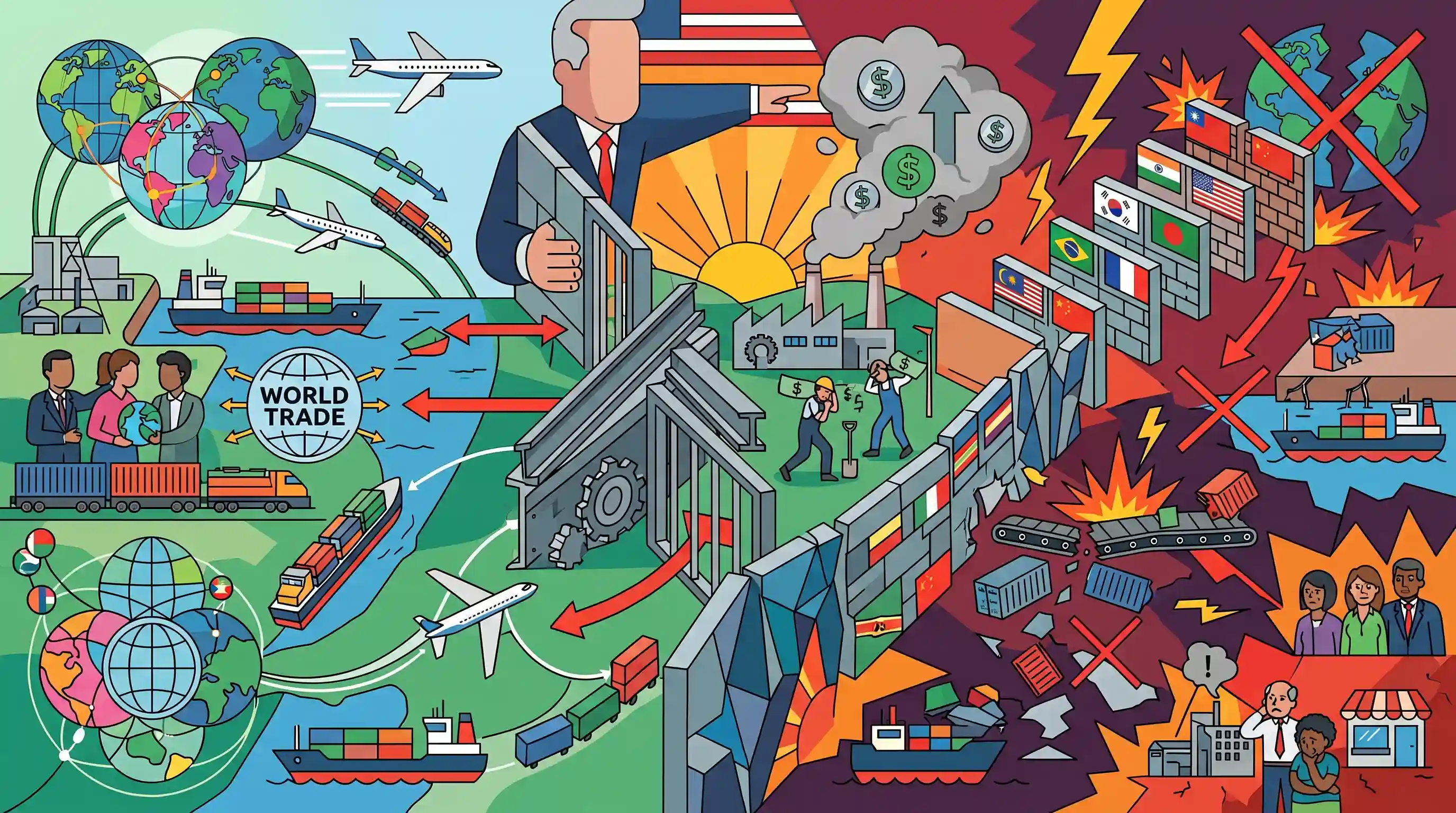
The article analyzes the potential economic consequences of US President Donald Trump's proposed new tariffs on steel and aluminium imports. It highlights how these protectionist measures, while aimed at boosting domestic metal producers, could backfire by raising input costs for US manufacturers, thereby driving up inflation and consumer prices. Furthermore, the move underscores a broader global shift away from multilateral free trade towards protectionism, which risks triggering retaliatory trade wars, disrupting global supply chains, and impacting emerging economies that rely on open international trade.
Key Points
- US President Donald Trump has proposed imposing new tariffs on imported steel and aluminium in a bid to shield domestic industries from foreign competition.
- While intended to protect local producers, the tariffs are likely to increase raw material costs for downstream US manufacturing sectors (such as automobiles and construction), potentially fueling domestic inflation.
- Such protectionist trade policies risk sparking retaliatory measures from global trading partners, further escalating trade wars and disrupting international supply chains.
- The development reflects a continuing global trend of moving away from free trade and multilateralism towards protectionism and bilateral trade barriers, posing challenges for export-oriented economies.
Important Terms
World Trade Organization (WTO)

The only global international organization (est. 1995) dealing with the rules of trade between nations. It provides a forum for negotiating trade agreements and settling trade disputes among its 164 members.
UPSC context
GS Paper 2: Important International institutions; GS Paper 3: Effects of liberalization on the economy. Tests understanding of multilateral trade governance.
Protectionism
Economic policy of restricting imports from other countries through methods such as tariffs on imported goods, restrictive quotas, and a variety of other government regulations.
UPSC context
GS Paper 3: Indian Economy and issues relating to planning, mobilization of resources. Tests awareness of trade barriers and domestic industry safeguards.
Trade War
A conflict where nations retaliate against each other's trade barriers, such as tariffs or quotas. This cycle often results in reduced international trade and disrupted global production networks.
UPSC context
GS Paper 2: Effect of policies and politics of developed and developing countries on India's interests. Tests impact of global geopolitics on trade.
Most-Favored-Nation (MFN) Status
A WTO principle requiring a country to provide the same trade concessions to all member nations. It ensures non-discrimination, preventing one partner from being favored over others.
UPSC context
GS Paper 2: International Relations. Tests knowledge of core WTO principles and their role in maintaining non-discriminatory global trade.
Countervailing Duty (CVD)
A specific tax imposed by a government to protect domestic producers by offsetting the negative impact of subsidies provided by foreign governments to their exporters.
UPSC context
GS Paper 3: Economy. Tests understanding of trade remedial measures used to level the playing field against foreign subsidies.
Anti-dumping Duty
A protectionist tariff that a domestic government imposes on foreign imports that it believes are priced below fair market value, often to harm local competitors.
UPSC context
GS Paper 3: Economy. Tests knowledge of tools used to prevent predatory pricing and "dumping" in the domestic market.
Global Supply Chain
The worldwide network of processes and resources involved in producing and delivering goods. Protectionism and tariffs often cause "shocks" or disruptions to these integrated global systems.
UPSC context
GS Paper 3: Changes in industrial policy and their impact on industrial development. Tests understanding of globalized production interdependencies.
Tariff
A tax or duty imposed by a government on imported goods. It increases the cost for importers, making foreign products less competitive against domestic alternatives.
UPSC context
GS Paper 3: Economy. Tests basic understanding of fiscal tools used in trade policy and their inflationary impact.
Prelims Trap
"The US imposition of steel tariffs is a WTO-approved safeguard measure to protect domestic industries."
These tariffs are unilateral moves under GATT Article XXI (national security exception), not standard WTO safeguard measures which require proof of import surges and follow strict compensation rules.
Static Concepts Connected
What are the key WTO provisions governing tariff limits and exceptions?
- Bound Rates: The maximum tariff rate a WTO member commits to not exceed for a specific product under GATT Article II.
- National Security Exception: A controversial provision (GATT Article XXI) allowing WTO members to breach trade commitments to protect essential national security interests.
- Appellate Body: The final dispute resolution tier at the WTO, effectively paralyzed since 2019 due to the US blocking judicial appointments.
How do import tariffs on raw materials impact domestic macroeconomic indicators?
- Cost-Push Inflation: Tariffs on metals increase input costs for downstream sectors like auto and construction, leading to supply-side inflation.
- Margin Squeeze: Manufacturers face higher production costs, which are either passed onto consumers (inflation) or absorbed (lower corporate profits).
- Export Competitiveness: Domestic manufacturers relying on costlier imported inputs must raise final product prices, losing competitiveness in the global export market.
Cross-Topic Patterns
Protectionism inflating central bank targets
Tariffs on raw metals cause cost-push inflation in downstream manufacturing, complicating central banks' efforts to manage interest rates without triggering economic slowdowns.
Agri exports as retaliatory trade weapons
Trade wars in industrial metals frequently spill over into agriculture, with countries like India targeting high-value US farm exports (almonds, walnuts) to exert political pressure in retaliation.

Expect a 2026 prelims question mixing WTO Appellate Body paralysis, GATT Article XXI, and bound vs. applied tariff differences.
Linked PYQs · 3
Linked PYQs · 3
- 2025MainsGS3
What are the challenges before the Indian economy when the world is moving away from free trade and multilateralism to protectionism and bilateralism? How can these challenges be met?
- 2018MainsGS3
How would the recent phenomena of protectionism and currency manipulations in world trade affect macroeconomic stability of India?
- 2012MainsGS2
Discuss the likely negative impact of the protectionist measures proposed by the US on India's software industry.
