International Monetary Fund Debt Spillover Warnings
Source:Indian Express ↗
हे का महत्त्वाचे आहे
Understanding global macroeconomic spillovers, sovereign debt crises, and the role of international financial institutions is vital for analyzing global economic stability and its impact on developing economies like India.
सारांश
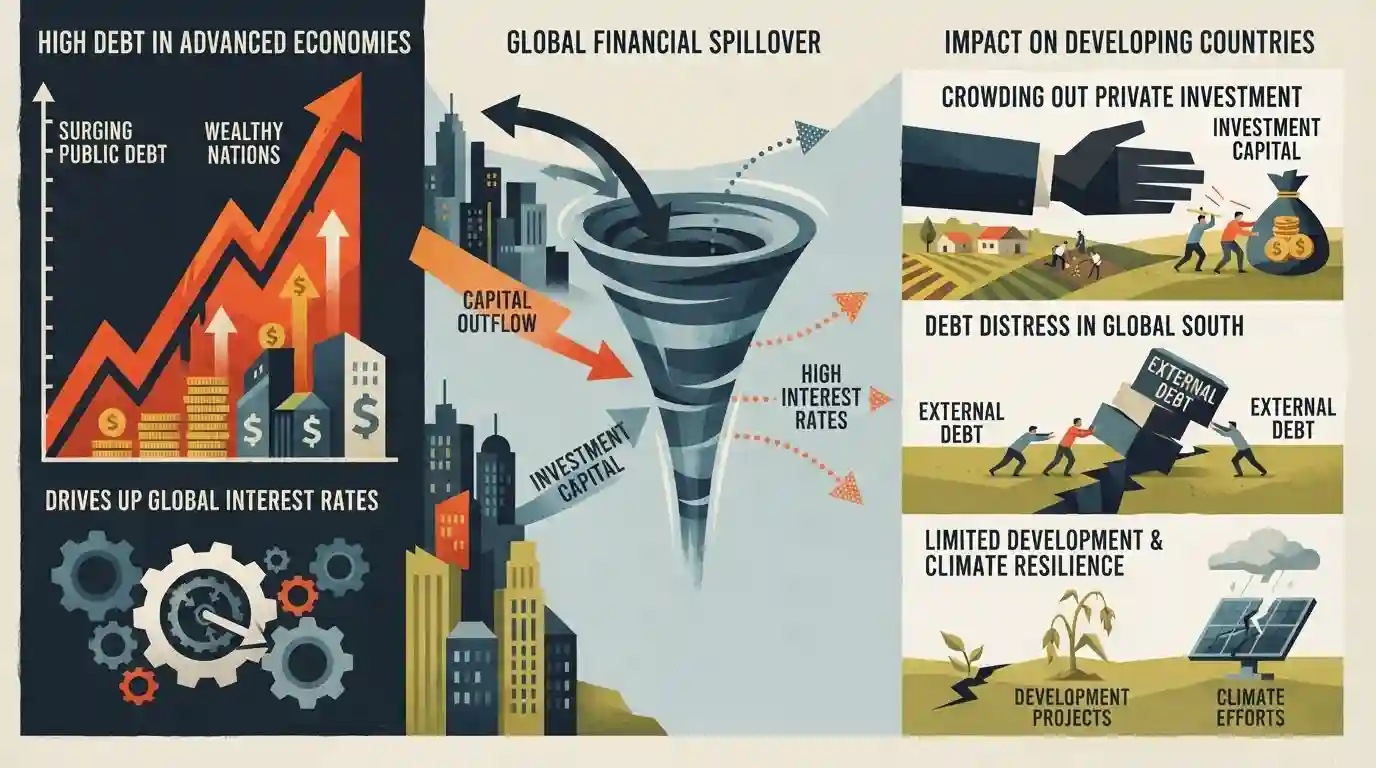
The article discusses the IMF's warning regarding how surging public debt in wealthy advanced economies is adversely impacting poor and developing countries. High debt levels in developed nations drive up global interest rates, crowd out investment capital, and exacerbate debt distress in the Global South, limiting their development and climate resilience efforts.
मुख्य मुद्दे
- The International Monetary Fund (IMF) has warned that high public debt levels in wealthy, advanced economies are creating negative spillovers for developing and low-income nations.
- High borrowing by rich countries crowds out capital, increases global borrowing costs, and drains financial liquidity available for developing nations.
- Developing countries face severe debt distress, constraining their fiscal space to invest in critical social sectors, climate action, and infrastructure development.
- The situation highlights structural flaws in the global financial architecture and debt-resolution mechanisms for emerging and developing economies.
महत्त्वाच्या संज्ञा
International Monetary Fund

An international financial institution consisting of 190 countries, working to foster global monetary cooperation, secure financial stability, facilitate international trade, promote high employment and sustainable economic growth, and reduce poverty around the world.
UPSC context
UPSC Prelims/Mains (GS Paper II/III): Important international institutions, global financial architecture, and international economic issues.
World Bank
An international financial institution that provides loans and grants to the governments of low- and middle-income countries for the purpose of pursuing capital projects and long-term economic development.
UPSC context
UPSC Prelims/Mains (GS Paper II/III): International organizations, global poverty alleviation, and developmental finance.
पूर्वपरीक्षा सापळा
High public debt accumulation and surging borrowing costs are primarily restricted to emerging market structural deficits.
Aspirants often assume IMF debt warnings apply exclusively to emerging market borrowing habits, missing that advanced economy public debt is the primary driver of global interest rate shocks.
संबंधित स्थिर संकल्पना
What are the primary instruments and lending facilities of the International Monetary Fund (IMF)?
- Origin & Mandate: Created at the 1944 Bretton Woods conference to ensure global financial stability and provide short-term balance of payments support.
- Special Drawing Rights: SDR functions as an international reserve asset, allocated to member countries in proportion to their IMF quotas.
- Stand-By Arrangements: Provide emergency financing to countries experiencing serious balance of payments problems, often conditional on structural adjustment programs.
- PRGT Facility: Concessional financing window designed specifically for low-income developing countries with zero to low interest rates.
आंतर-विषय नमुने
Global Debt Spillovers vs Climate Finance
Advanced economy debt spillovers directly compound climate finance shortfalls, pitting IMF fiscal warnings against stalled COP Loss and Damage fund capitalization commitments.
Sovereign Debt Spillovers and RBI Monetary Policy
High US and Western interest rates force RBI to maintain tighter domestic monetary policy, balancing capital flight risks against domestic growth imperatives.

IMF debt spillover warnings will feature in mains questions on global financial architecture reform and developing-world fiscal space.
