IMF Warns of Advanced Economies Debt Spillovers
Source:Indian Express ↗
Why It Matters
It highlights macro-fiscal interdependence in the global economy, explaining how fiscal indiscipline in advanced countries impacts capital flows, borrowing costs, and development financing for emerging markets like India.
Summary
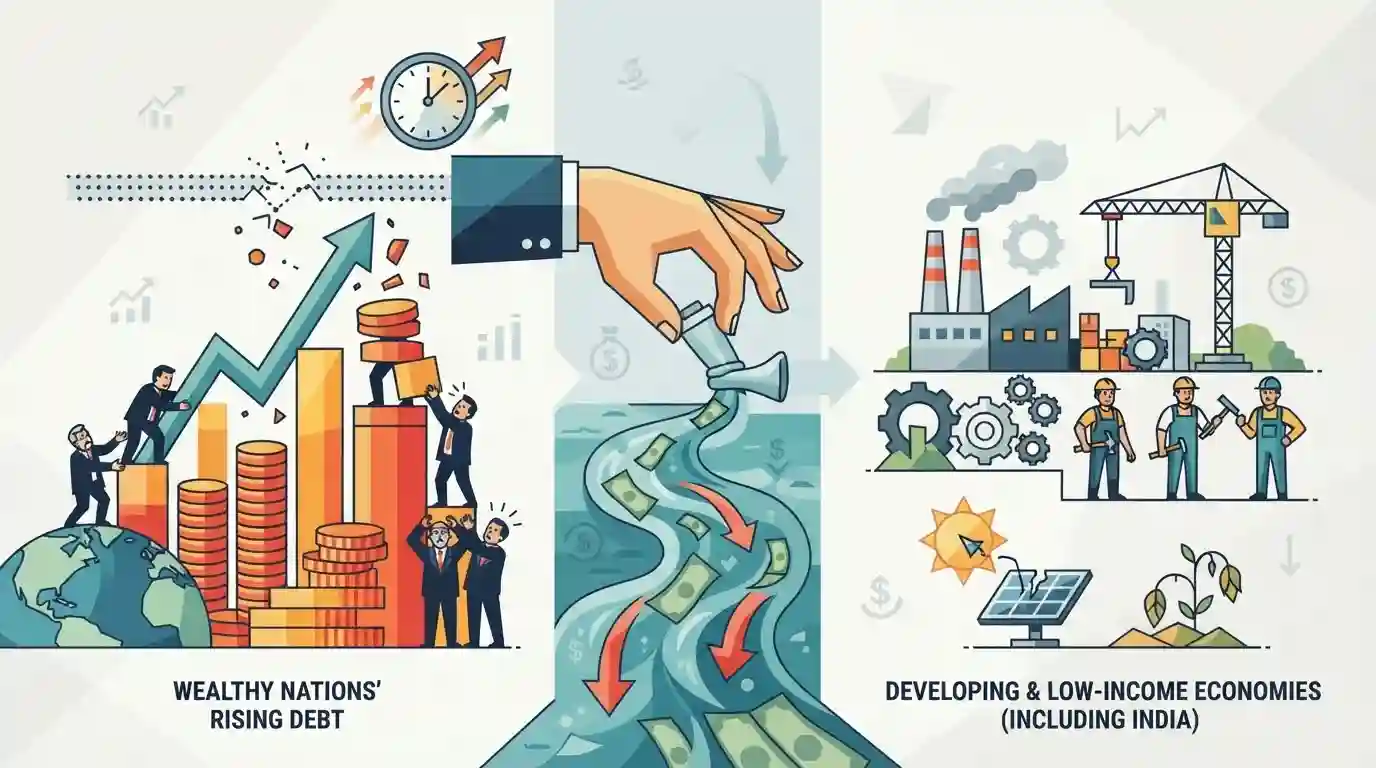
The article discusses the IMF's warning regarding how soaring public debt in wealthy nations creates negative economic spillovers for developing and low-income countries, primarily through higher global interest rates, tighter financial conditions, and reduced capacity for international development and climate finance.
Key Points
- The IMF warned that high public debt in wealthy, advanced economies is having adverse spillover effects on developing and poor countries.
- Excessive borrowing by advanced nations drives up global borrowing costs and interest rates, crowding out private investment and capital flows to emerging markets.
- High sovereign debt burdens limit the fiscal space of wealthy nations to provide meaningful foreign aid or climate finance to developing countries.
- The structural shifts underline the vulnerabilities of global economic governance and the need for prudent fiscal consolidation globally.
Important Terms
International Monetary Fund

An international organization of 190 member countries created to foster global monetary cooperation, secure financial stability, facilitate international trade, promote high employment, and reduce poverty around the world.
UPSC context
Important for GS Paper II (International Institutions) and GS Paper III (Global Economy and Financial Architecture).
Prelims Trap
Advanced economy debt has no direct transmission channel to developing country interest rates aside from bilateral currency fluctuations.
Aspirants often assume global interest rates are solely determined by domestic central bank actions, ignoring how advanced economy sovereign borrowing creates a global supply-demand shock for capital.
Static Concepts Connected
What are the key channels of economic spillovers from advanced economies to developing nations?
- Capital Costs: Global Interest Rates: Excessive sovereign borrowing by advanced nations raises benchmark yields, increasing external debt-servicing costs for emerging economies.
- Aid Reduction: Fiscal Space Compression: Higher debt-servicing burdens in rich nations reduce their capacity to fund Official Development Assistance (ODA) and climate finance.
- Portfolio Flows: Risk Aversion: Tight financial conditions prompt capital flight from emerging markets back to safe-haven advanced economies.
Cross-Topic Patterns
Sovereign Debt vs. Climate Finance Commitments
Surging advanced economy debt crowds out developing nations' capital, directly undermining global climate finance targets negotiated at UNFCCC COPs.
Global Liquidity Squeeze and Emerging Markets
IMF warnings on global liquidity constraints connect advanced economy fiscal deficits to balance of payments crises in emerging markets.

IMF debt spillovers will likely be framed via 'crowding out' mechanisms and fiscal space erosion in low-income nations.
Linked PYQs · 2
Linked PYQs · 2
- 2024MainsGS3
Examine the pattern and trend of public expenditure on social services in the post-reforms period in India. To what extent this has been in consonance with achieving the objective of inclusive growth?
- 2014MainsGS3
Explain how Private Public Partnership arrangements, in long gestation infrastructure projects, can transfer unsustainable liabilities to the future. What arrangements need to be put in place to ensure that successive generations' capacities are not compromised?
