IMF Cuts Global Growth Forecast Due to Trade Protectionism
Source:The Hindu ↗
Why It Matters
A fundamental shift from globalization to protectionist trade policies heavily impacts global macroeconomic stability. For UPSC aspirants, understanding the interplay between US tariff barriers, retaliatory trade policies, and developing economies’ stability is critical for GS3 (Economy) and GS2 (International Relations). It maps directly to frequent mains themes surrounding protectionism and capital flows, while the IMF's World Economic Outlook is a standard Prelims fact.
Summary
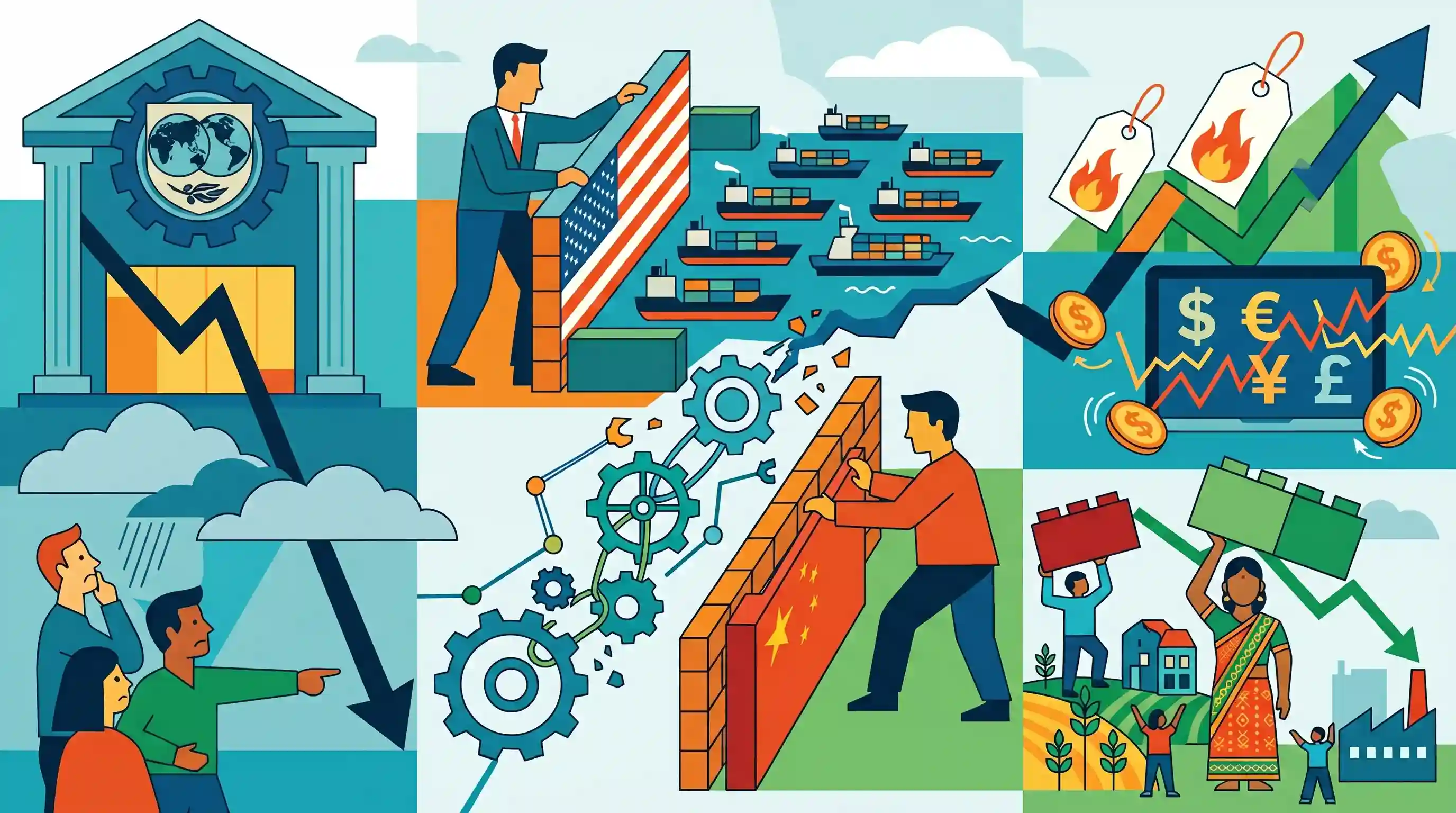
The International Monetary Fund (IMF) has sharply downgraded its global economic growth forecasts in its April 2025 World Economic Outlook, projecting 2025 growth at 2.8% and cautioning of a 30% probability of a global downturn. The revision is primarily driven by sweeping US import tariffs introduced by President Donald Trump, subsequent retaliations by trading partners like China, and the broader shift toward protectionism. The trade war is expected to disrupt the 80-year-old global economic order, heighten inflation, and trigger volatility in exchange rates and capital flows, exerting heavy pressure on emerging markets. India's growth outlook for FY26 has also been trimmed to 6.2% amid the uncertain macroeconomic environment.
Key Points
- The IMF lowered its 2025 global growth forecast to 2.8%, a 0.5% cut, citing the direct impact of Donald Trump's near-universal import tariffs and reciprocal trade retaliations.
- In the April 2025 World Economic Outlook, the IMF noted that the US effective tariff rate is at its highest level in over a century, signaling a fundamental reset of the global economic system away from 80 years of multilateral trade.
- The probability of a global economic downturn has increased from 17% to 30%, with emerging and developing economies facing risks from capital outflows, sharp exchange rate movements, and heavier debt-servicing burdens.
- India's economic growth projection for FY26 was revised down by 0.3 percentage points to 6.2%, reflecting the broader slowdown and heightened global uncertainty.
Important Terms
International Monetary Fund (IMF)

A 190-member international organization that promotes global monetary cooperation, secures financial stability, and facilitates trade. It acts as a lender of last resort for nations facing balance of payment crises.
UPSC context
GS-II/III; tests knowledge of international financial governance, institutional frameworks, and global monetary stability mechanisms.
World Economic Outlook (WEO)
A flagship biannual report published by the IMF staff analyzing global economic developments. It provides GDP growth projections and highlights risks to global macroeconomic stability and financial markets.
UPSC context
GS-III (Economy); essential for tracking global growth trends and identifying India’s economic standing in the international landscape.
Protectionism
Economic policy of shielding domestic industries from foreign competition by restricting imports. Tools include tariffs, quotas, and subsidies intended to protect local jobs and promote self-reliance.
UPSC context
GS-III (Liberalization); tests the ability to analyze global trade shifts and their socio-economic impact on India's exports.
Trade War
An economic conflict where nations retaliate against each other by imposing trade barriers, such as tariffs. These conflicts typically disrupt global supply chains and reduce international trade volumes.
UPSC context
GS-II (International Relations); evaluates understanding of how bilateral conflicts between major powers affect India’s economy and strategic interests.
Emerging Market Economies (EMEs)
Developing nations transitioning toward developed status, characterized by rapid industrialization and high growth potential. They are increasingly integrated into global markets but remain sensitive to external economic shocks.
UPSC context
GS-III (Economic Growth); important for understanding India’s role as a major EME and its vulnerability to global macroeconomic shocks.
Import Tariffs
Taxes or duties levied by a government on imported goods. They increase the cost of foreign products to encourage domestic consumption and protect local producers from cheaper imports.
UPSC context
GS-III (External Sector); tests conceptual clarity on trade barriers, fiscal policy, and their influence on the balance of payments.
Prelims Trap
The World Economic Outlook is a flagship report published by the World Economic Forum to track global growth.
The World Economic Outlook is a flagship report of the IMF, not the WEF or World Bank. UPSC frequently swaps report publishers to trick aspirants.
Static Concepts Connected
How do global trade wars trigger capital flight from Emerging Markets?
- Safe-Haven Flight: Global uncertainty drives foreign portfolio investors to pull funds from emerging markets and park them in safer assets like US Treasuries.
- Currency Depreciation: Massive capital outflows increase the demand for dollars, leading to a sharp depreciation of domestic currencies like the Rupee.
- Higher Debt Burden: A depreciated local currency and stronger dollar make servicing external, dollar-denominated debt significantly more expensive for developing nations.
What are the three main trade remedy measures permitted under WTO rules?
- Anti-dumping Duties: Imposed when a foreign company exports a product at a price lower than its normal value in its home market.
- Countervailing Duties: Tariffs levied to neutralize the adverse effects of trade-distorting subsidies provided by the exporting country's government.
- Safeguard Measures: Temporary emergency actions (tariffs or quotas) applied when a sudden surge in imports threatens serious injury to a domestic industry.
Cross-Topic Patterns
Currency Depreciation & Imported Inflation
Capital outflows weaken the Rupee, while tariff-disrupted supply chains raise global commodity prices. Together, these cause 'imported inflation', creating a tightrope walk for the RBI's monetary policy committee.
Unilateral Tariffs vs WTO MFN Principle
Sweeping US tariffs bypass the WTO's Most-Favored-Nation (MFN) rule, highlighting the ongoing institutional crisis and paralysis of the WTO's dispute settlement mechanism.

A 2026 Prelims question will likely pair US protectionism impacts (capital flight, imported inflation) with IMF report findings.
Linked PYQs · 3
Linked PYQs · 3
- 2025MainsGS3
What are the challenges before the Indian economy when the world is moving away from free trade and multilateralism to protectionism and bilateralism? How can these challenges be met?
- 2018MainsGS3
How would the recent phenomena of protectionism and currency manipulations in world trade affect macroeconomic stability of India?
- 2014PrelimsGS1
Which of the following organizations brings out the publication known as 'World Economic Outlook'?
