IIT Delhi Curriculum Overhaul and Student Well-Being
Source:Indian Express ↗
Why It Matters
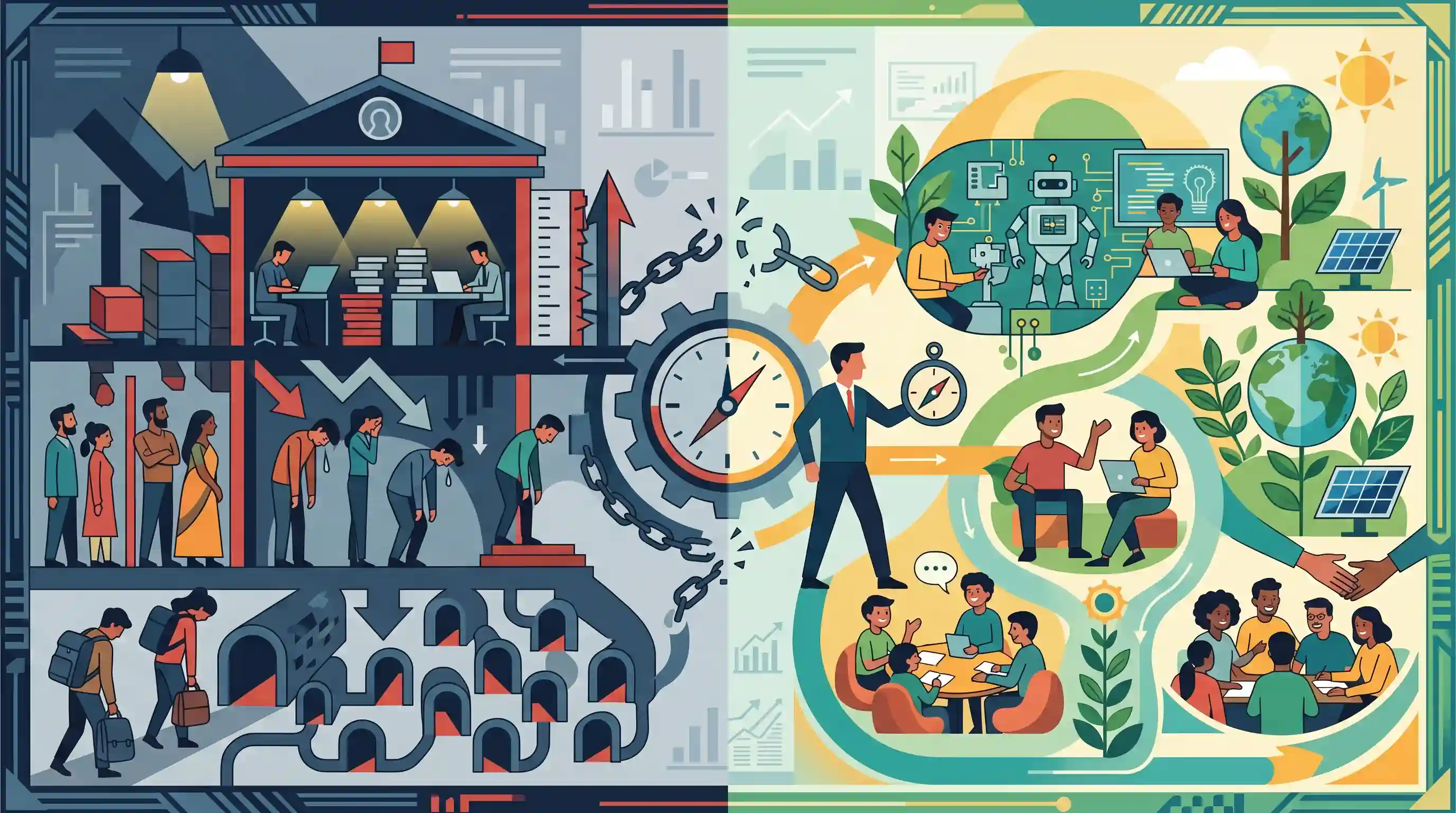
The mental health crisis and social marginalization in premier institutions like IITs highlight systemic flaws in India's higher education system. This curriculum overhaul serves as a significant case study for GS2 (Education, Human Resources) and GS1 (Social Issues, Marginalized Sections), showing how pedagogical reforms can address deeply entrenched academic stress and discrimination.
Summary
IIT Delhi is revamping its undergraduate curriculum for the first time in 12 years, moving away from hyper-competitive academic pressure to prioritize student well-being. The reforms, which include reduced credit requirements, smaller class sizes, and interdisciplinary learning (including AI and sustainability), aim to address a severe mental health crisis that has led to several student suicides. An internal committee identified major stressors such as post-coaching fatigue, unforgiving grading systems, and persistent caste- and gender-based discrimination affecting marginalized and first-generation learners. The changes reflect a crucial shift towards empathy, inclusivity, and holistic education in India's elite institutions.
Key Points
- IIT Delhi has introduced its first major undergraduate curriculum reform in 12 years, shifting the focus from intense academic pressure to holistic student well-being.
- The revamped curriculum reduces total credit loads, halves class sizes, and promotes hands-on, interdisciplinary learning alongside modern modules like AI, ML, and sustainability.
- The reform is partly a response to a mental health crisis; an internal committee highlighted severe stressors including post-coaching burnout, rigid grading, and persistent caste- and gender-based discrimination.
- The move mirrors a broader trend toward inclusivity in elite institutes, such as IIT Madras launching a sports scholarship and the creation of supernumerary quotas for women in UG engineering.
- These initiatives align with the need for empathetic higher education spaces that protect first-generation and marginalized learners while maintaining academic excellence.
Important Terms
IIT Delhi

A premier Institution of National Importance (INI) known for technical excellence. It recently pioneered curriculum reforms prioritizing mental health, AI-integration, and flexible credits to mitigate student stress and suicide rates.
UPSC context
GS Paper 2 (Education/Social Sector). Tests understanding of institutional autonomy and reforms in elite higher education to address socio-academic stressors.
IIT Madras
A leading technical institute that has pioneered mental health initiatives like the 'Kushal' (Be Happy) program and interdisciplinary BS degrees, reflecting a systemic shift across IITs toward holistic student support.
UPSC context
GS Paper 2 (Governance/Education). Relevant for comparative analysis of best practices in student welfare and institutional innovation.
National Education Policy (NEP) 2020
India's landmark education framework aiming to transform learning into a flexible, multidisciplinary, and skill-based system, moving away from rote memorization toward holistic development and global competitiveness.
UPSC context
GS Paper 2 (Governance). A high-yield topic regarding policy implementation, equity, and the transition toward multidisciplinary higher education.
Interdisciplinary Learning
An educational approach that integrates insights from multiple branches (e.g., engineering, humanities, and sustainability) to solve complex real-world problems, as seen in IIT Delhi’s new credit structure.
UPSC context
GS Paper 2 (Education). Relevant for discussions on 21st-century skill development and making higher education relevant to industry and society.
Social Equity in Education
The principle of ensuring fair access and treatment for students from marginalized backgrounds (caste, gender, or first-generation). Reforms aim to dismantle systemic discrimination in elite competitive environments.
UPSC context
GS Paper 1 (Society) & Paper 2 (Social Justice). Tests knowledge of affirmative action and institutional inclusivity beyond just reservations.
Mental Health in Higher Education
The prioritization of students' psychological safety and resilience. In IITs, this involves reducing hyper-competitiveness, unforgiving grading, and academic credit loads to prevent burnout and self-harm.
UPSC context
GS Paper 2 (Health/Education) & Paper 4 (Ethics). Tests ethical responsibilities of institutions toward student life and the 'right to health.'
Prelims Trap
"Supernumerary quotas for women in IITs reduce the number of standard unreserved seats available."
Supernumerary seats are created *over and above* the existing sanctioned intake. They do not decrease the absolute number of seats available to general or male candidates.
Static Concepts Connected
What is a supernumerary quota in Indian educational institutions?
- Definition: Seats created entirely above the standard sanctioned intake capacity of a college or university.
- Objective: To provide targeted affirmative action for specific demographics (e.g., women, foreign nationals) without shrinking the standard seat matrix or violating existing quota limits.
- IIT implementation: Employed to ensure at least 20% female representation in undergraduate engineering programs across IITs.
How does NEP 2020 envision undergraduate curriculum restructuring?
- Holistic framework: Mandates flexible, multidisciplinary undergraduate programs with reduced core rigidity to promote critical thinking, vocational exposure, and student well-being.
- Credit mobility: Establishes the Academic Bank of Credit (ABC) to allow seamless transfer of credits and multiple entry/exit points for students.
Cross-Topic Patterns
Intersection of caste and mental health
Student suicides in premier institutes often link to post-coaching burnout and alienation of first-generation marginalized learners, proving that access via reservation does not guarantee institutional inclusivity or psychological safety.
Demographic dividend via Industry 4.0
Shrinking rigid traditional curricula to make room for AI, ML, and sustainability modules is a structural necessity for upgrading India's workforce to meet Industry 4.0 demands.

Expect a GS2 Mains question linking NEP 2020's multidisciplinary goals with the mental health and inclusivity crisis in elite institutes.
Linked PYQs · 3
Linked PYQs · 3
- 2015MainsGS2
The quality of higher education in India requires major improvements to make it internationally competitive. Do you think that the entry of foreign educational institutions would help improve the quality of higher and technical education in the country? Discuss.
- 2020MainsGS2
National Education Policy 2020 is in conformity with the Sustainable Development Goal-4 (2030). It intends to restructure and reorient education system in India. Critically examine the statement.
- 2024MainsGS1
Despite comprehensive policies for equity and social justice, underprivileged sections are not yet getting the full benefits of affirmative action envisaged by the Constitution. Comment.
