HYDRAA clears massive domestic waste from Hyderabad drains
Source:The Hindu ↗
Why It Matters
The article serves as an excellent practical case study for UPSC Mains on the intersection of urban governance, solid waste management, and disaster management. It demonstrates how micro-level administrative failures (lack of bulky waste disposal options) escalate into macro-level urban disasters (flooding).
Summary
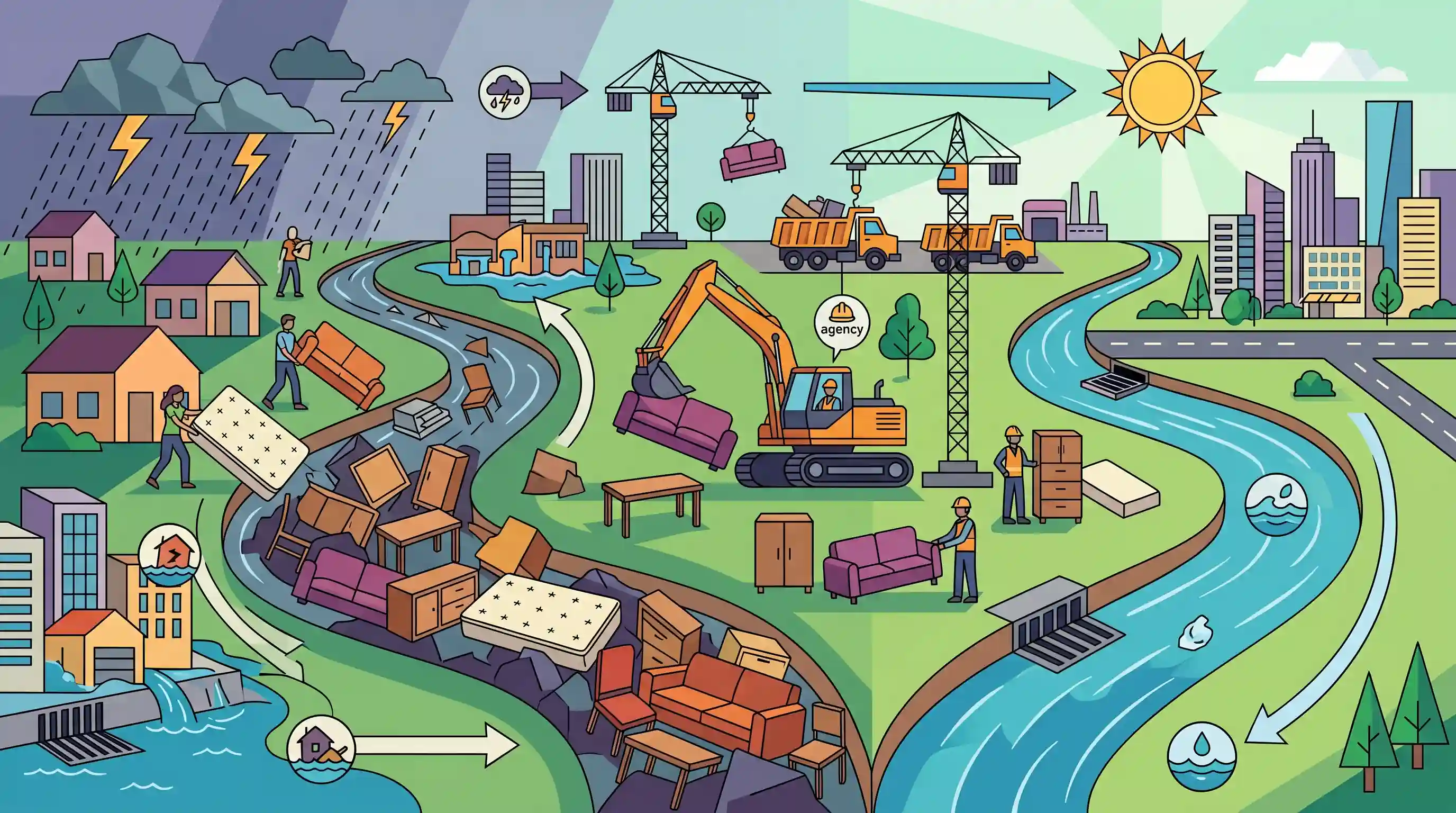
The Hyderabad Disaster Response & Asset Protection Agency (HYDRAA) has launched extensive desilting drives to clear storm water drains and the Musi River of massive amounts of dumped household waste, including furniture and mattresses. This indiscriminate disposal of bulky items clogs urban drainage networks, leading to severe localized flooding. The situation highlights critical gaps in municipal solid waste management, particularly the absence of affordable and systematic disposal mechanisms for heavy domestic waste, forcing citizens into informal or illegal dumping practices that ultimately compromise urban disaster resilience.
Key Points
- HYDRAA and local municipal corporations are conducting extensive desilting drives in Hyderabad, removing huge amounts of bulky household waste from storm water drains and the Musi River.
- The dumping of heavy domestic items like mattresses, chairs, and cables clogs drainage channels, serving as a primary trigger for urban inundation.
- Residents frequently cover open storm drains to avoid the stench, which inadvertently traps debris and makes regular desilting operations much more difficult.
- The crisis underscores severe flaws in urban solid waste management, specifically the lack of an affordable and reliable municipal system for citizens to dispose of bulky domestic items.
Important Terms
HYDRAA (Hyderabad Disaster Response & Asset Protection Agency)

A statutory agency in Telangana (est. 2024) tasked with protecting public assets, removing encroachments from water bodies, and managing urban disaster response across the Hyderabad core urban region.
UPSC context
GS-3: Disaster Management; tests knowledge of institutional frameworks for urban resilience and environmental protection of water bodies.
Greater Hyderabad Municipal Corporation (GHMC)
The urban local body responsible for municipal administration, sanitation, and waste management in Hyderabad; it implements state and national urban policies at the grassroots level.
UPSC context
GS-2: Urban Local Bodies; tests understanding of the 74th Constitutional Amendment and the efficiency of municipal governance.
Swachh Auto Trolleys
Small tipping vehicles deployed for door-to-door waste collection in Hyderabad, typically operating under a driver-cum-owner scheme to ensure source-level segregation and systematic disposal.
UPSC context
GS-3: Environmental Pollution; relevant for sustainable waste collection models and public-private partnerships in urban sanitation.
Desilting
The removal of accumulated sediment, silt, and garbage from drainage networks and rivers to restore their water-carrying capacity and prevent urban flooding during heavy rainfall.
UPSC context
GS-3: Disaster Management; critical for understanding pre-monsoon preparedness and mitigation strategies for recurrent urban flood crises.
Urban Flooding
Inundation of city areas caused by rainfall exceeding drainage capacity, often exacerbated by unplanned urbanization, encroachment of natural sinks, and poor solid waste management.
UPSC context
GS-1/GS-3: Geography/Disaster Management; frequent topic regarding climate change, drainage infrastructure failures, and urban planning.
Solid Waste Management Rules, 2016
A central regulatory framework mandating source segregation of waste into three streams (wet, dry, hazardous) and emphasizing the responsibilities of waste generators and local bodies.
UPSC context
GS-3: Environment; essential for questions on waste-to-wealth, source segregation, and legal obligations in urban waste management.
Prelims Trap
"HYDRAA was established by the NDMA to manage localized urban flooding in South Indian metros."
HYDRAA is a state-level body established specifically by the Telangana government in 2024, not a central initiative or offshoot of the NDMA.
Static Concepts Connected
What are the key geographical characteristics of the Musi River?
- Origin: Originates in the Ananthagiri Hills in the Vikarabad district of Telangana.
- Krishna Basin: It is a major tributary of the Krishna River, joining it near Vadapally in Nalgonda district.
- Urban Geography: Flows directly through Hyderabad, historically dividing the old and new city, acting as its primary natural drainage.
What are the primary anthropogenic causes of urban flooding according to NDMA?
- Drainage Clogging: Indiscriminate disposal of solid waste and construction debris severely chokes stormwater drains.
- Encroachments: Illegal construction over natural drainage channels, wetlands, and lake beds impedes natural water flow.
- Impervious Surfaces: High concretization and paved surfaces severely reduce natural groundwater infiltration during heavy rainfall.
Cross-Topic Patterns
SWM Rules 2016 & Urban Flooding
Lack of bulky waste disposal frameworks in SWM Rules 2016 forces illegal drain dumping, directly connecting civic governance failures to GS3 disaster management crises.
Sponge Cities & Wetland Conservation
Clearing choked rivers like Musi aligns with the Sponge City paradigm, highlighting how urban wetland restoration is the primary defense against localized inundation.

Expect a multi-statement question linking SWM Rules 2016 compliance, state-level urban flood mitigation bodies, and drainage topography.
Linked PYQs · 2
Linked PYQs · 2
- 2024MainsGS3
Flooding in urban areas is an emerging climate-induced disaster. Discuss the causes of this disaster. Mention the features of two such major floods in the last two decades in India. Describe the policies and frameworks in India that aim at tackling such floods.
- 2018MainsGS3
What are the impediments in disposing the huge quantities of discarded solid wastes which are continuously being generated? How do we remove safely the toxic wastes that have been accumulating in our habitable environment?
