Hurricane Melissa Rapid Intensification and Ocean Temperature Warming
Source:The Hindu ↗
Why It Matters
Provides a contemporary case study of how climate change and rising sea surface temperatures directly influence the rapid intensification and sustained power of tropical cyclones, which is highly relevant to GS1 Geography questions on cyclone formation and changing weather patterns.
Summary
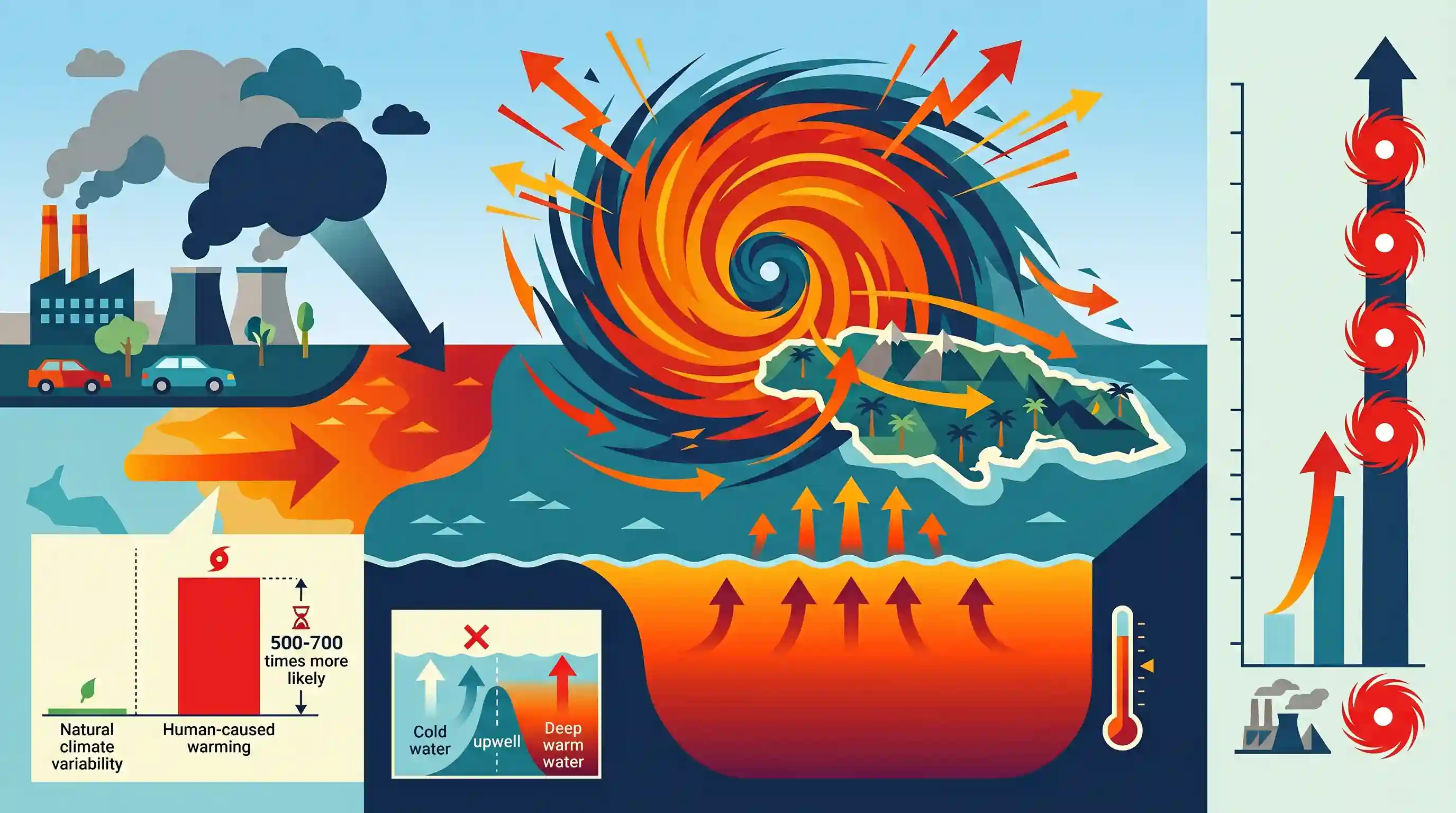
Hurricane Melissa was an exceptionally powerful Atlantic storm that underwent 'extreme rapid intensification' before striking Jamaica. The storm defied typical hurricane dynamics: its structure was not torn apart by the island's mountains, and its lingering offshore did not upwell cold, storm-weakening water. Instead, it was continually fueled by an unusually deep layer of warm ocean water. Scientists noted that the sea surface temperatures beneath the storm were 2°C above average—conditions made 500 to 700 times more likely by human-induced climate change. Melissa's unprecedented strength underscores a growing trend of Category 5 Atlantic hurricanes driven by global ocean warming.
Key Points
- Hurricane Melissa achieved extreme rapid intensification, tying strength records for Atlantic landfalling hurricanes.
- The cyclone's intensity was sustained by an unusually deep layer of warm ocean water, which prevented the typical upwelling of colder, storm-choking water from the ocean depths.
- Melissa defied normal storm dynamics by maintaining its structure despite prolonged proximity to Jamaica's mountainous terrain.
- Sea surface temperatures fueling the storm were 2°C above the long-term average, a condition made 500 to 700 times more likely due to climate change.
- The event highlights a notable increase in the frequency of Category 5 hurricanes in the Atlantic basin since 2016, largely driven by global warming.
Prelims Trap
"Tropical cyclones rely solely on high Sea Surface Temperatures (SST) to sustain rapid intensification."
Aspirants ignore Ocean Heat Content (OHC). If the warm layer is shallow, storm-induced upwelling cools the surface, choking the cyclone. Deep warm layers are essential.
Static Concepts Connected
How does ocean upwelling normally weaken stationary tropical cyclones?
- Wind Churning: Intense cyclonic winds physically churn the upper ocean, drawing colder, deep-ocean water up to the surface.
- Negative Feedback: This upwelled cold water drastically cuts off the storm's primary energy supply (latent heat of condensation), acting as a natural brake on storm intensity.
What is Ocean Heat Content (OHC) and why does it matter for cyclones?
- Energy Depth: OHC measures the total heat energy absorbed and stored by the ocean across a specific depth profile, not just the temperature at the immediate surface.
- Sustained Fuel: A deep warm layer (high OHC) ensures that even when a storm churns the water, it only brings up more warm water, fueling extreme rapid intensification.
Cross-Topic Patterns
Event Attribution & IPCC AR6
UPSC is shifting to specific attribution science, mirroring the IPCC's ability to quantify the exact human footprint on isolated extreme weather anomalies rather than asking generic climate questions.
Arabian Sea parallel warming
The exact mechanism fueling Melissa (high Ocean Heat Content) is simultaneously driving the recent surge in extremely severe, rapidly intensifying cyclones in the Arabian Sea, a rising UPSC theme.

Expect a multi-statement question distinguishing Ocean Heat Content (OHC) from SST in driving rapid cyclone intensification.
Linked PYQs · 2
Linked PYQs · 2
- 2024MainsGS1
What is sea surface temperature rise? How does it affect the formation of tropical cyclones?
- 2022MainsGS3
Discuss global warming and mention its effects on the global climate. Explain the control measures to bring down the level of greenhouse gases which cause global warming, in the light of the Kyoto Protocol, 1997.
