Hungary Guarantees Safe Entry for Putin Despite ICC Arrest Warrant
Source:Indian Express ↗
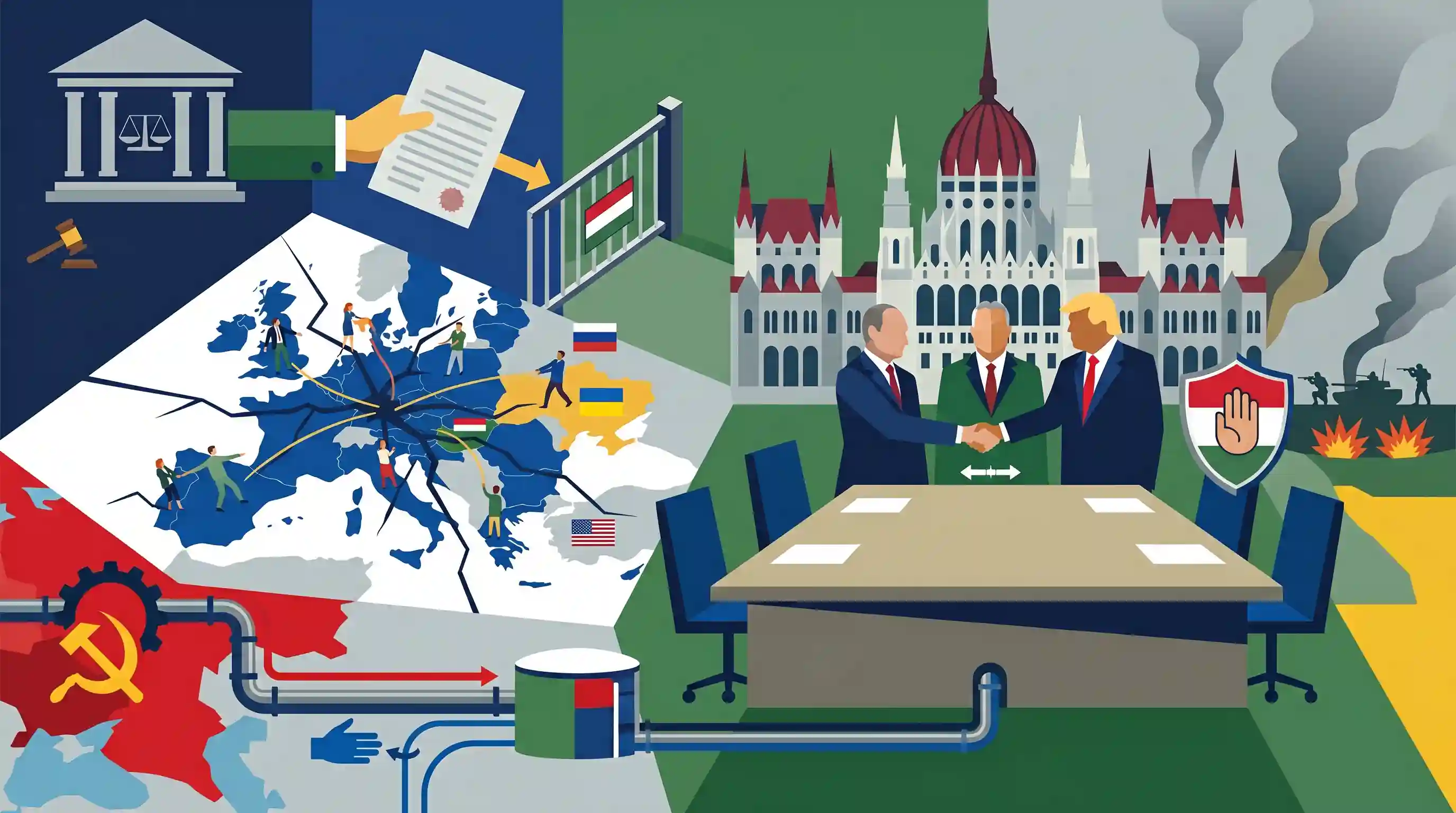
Why It Matters
Demonstrates the clash between sovereign nationalism and international law, providing a live example of challenges to the jurisdiction of bodies like the ICC. It also highlights the fragility of EU consensus on foreign policy and the strategic implications of energy dependence in global conflicts.
Summary
Hungary has announced its readiness to host Russian President Vladimir Putin for a prospective summit with US President Donald Trump in Budapest, promising to ensure his safe entry and exit despite an outstanding International Criminal Court (ICC) arrest warrant. Prime Minister Viktor Orban justifies the move as a necessary step to mediate peace in the ongoing Ukraine war, asserting that Hungary is in the process of withdrawing from the ICC. This decision exposes significant fractures in European unity and underscores the tension between sovereign national interests and international legal frameworks, especially as Budapest remains deeply reliant on Russian energy amid EU efforts to decouple.
Key Points
- Hungary intends to guarantee safe passage for Vladimir Putin to attend a proposed summit with Donald Trump in Budapest, openly defying an active ICC arrest warrant against the Russian President.
- Hungarian officials argue that EU sanctions against Putin involve asset freezes and flight bans, not a travel ban, and assert that Hungary will have exited the ICC before the meeting occurs.
- Prime Minister Viktor Orban frames this move as a critical peace-brokering initiative for the Ukraine conflict, acting as a mediator despite tense relations with Kyiv.
- The development underscores deep intra-EU divisions and highlights Hungary's continued dependence on Russian energy resources, contrary to the broader European consensus.
Important Terms
International Criminal Court (ICC)

The first permanent international tribunal, based in The Hague, established to prosecute individuals for genocide, war crimes, crimes against humanity, and the crime of aggression.
UPSC context
GS Paper 2 (International Institutions). Tests knowledge of global justice, India's non-signatory status, and challenges to state sovereignty.
Rome Statute
The 1998 multilateral treaty that serves as the foundational legal document for the ICC, outlining its jurisdiction, structure, and the legal obligations of its 125+ state parties.
UPSC context
GS Paper 2 (International Treaties). Crucial for understanding the legal framework of international accountability and protocols for state withdrawal (Article 127).
European Union (EU)
A supranational political and economic union of 27 European countries that operates a single market and common policies on trade, agriculture, and regional security.
UPSC context
GS Paper 2 (Regional Groupings). Focuses on India-EU strategic partnerships, trade negotiations (BTIA), and internal challenges to EU unity.
Prelims Trap
Withdrawal from the ICC takes immediate effect, absolving the state of enforcing prior arrest warrants.
Under Article 127 of the Rome Statute, withdrawal takes one year after UN notification, during which existing legal obligations remain fully binding.
Static Concepts Connected
How does the ICC differ from the ICJ?
- Jurisdiction: The ICC prosecutes individuals for international crimes, while the ICJ settles legal disputes between UN member states.
- UN Affiliation: The ICJ is a principal UN organ; the ICC is an independent body established by the Rome Statute.
- Enforcement: The ICC lacks a police force and relies on member states; ICJ judgments are enforced via the UN Security Council.
What is the strategic significance of the Druzhba pipeline?
- Geography: It is one of the world's longest oil pipelines, running from Russia to Central and Eastern Europe.
- Energy Security: Landlocked countries like Hungary and Slovakia rely heavily on its southern branch, complicating EU embargoes on Russian oil.
Cross-Topic Patterns
ICC enforcement vs. Sovereign Immunity
Hungary’s defiance mirrors South Africa’s 2023 BRICS dilemma, showcasing the ICC's structural weakness in executing warrants against heads of state without member cooperation.
EU sanctions vs. Energy Dependency
Hungary’s reliance on the Druzhba pipeline exemplifies how landlocked geography forces localized exemptions in broader economic warfare and EU sanctions regimes.

ICC withdrawal timelines (Art 127) and UN vs non-UN affiliations of global courts are prime candidates for a 2026 Prelims statement.
Linked PYQs · 3
Linked PYQs · 3
- 2025MainsGS2
"With the waning of globalization, post-Cold War world is becoming a site of sovereign nationalism.” Elucidate.
- 2023MainsGS2
‘The expansion and strengthening of NATO and a stronger US-Europe strategic partnership works well for India.’ What is your opinion about this statement ? Give reasons and examples to support your answer.
- 2018PrelimsGS1
"Rule of Law Index" is released by which of the following?
