Hungary defiance of European Union energy sanctions on Russia
Source:The Hindu ↗
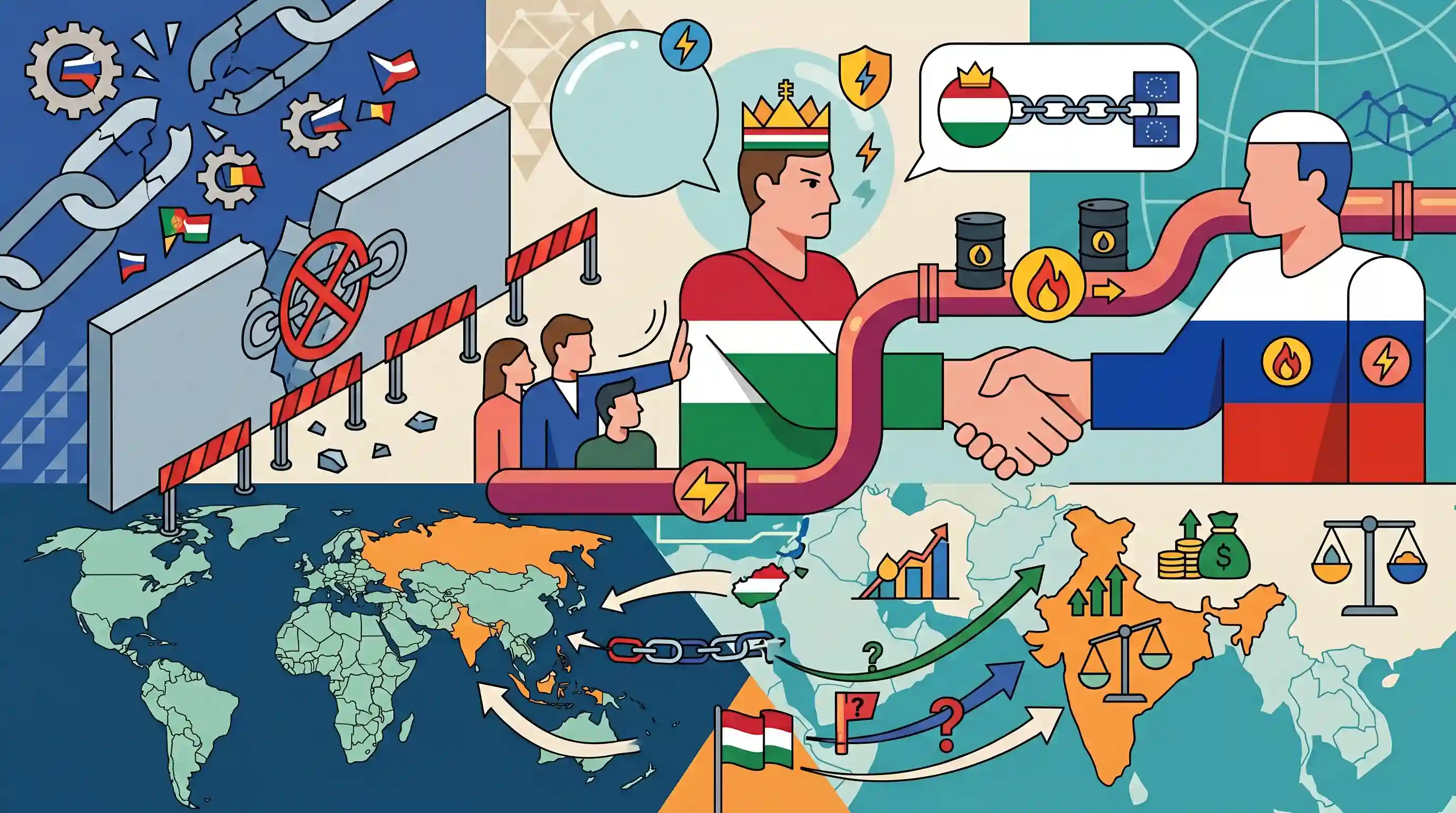
Why It Matters
Highlights the limitations of regional alliances (like the EU) when collective security mandates conflict with an individual member state's core economic interests. It draws clear parallels with India's own strategic autonomy in continuing to purchase Russian oil despite Western pressure in order to prioritize national energy security.
Summary
Hungarian Prime Minister Viktor Orban has openly defied the European Union by pledging to Russian President Vladimir Putin that Hungary will continue purchasing Russian oil and gas. This move highlights internal fractures within the EU regarding its collective stance on isolating Russia over the Ukraine conflict. Heavily dependent on Russian energy, Hungary argues that its national energy security necessitates these imports. Orban also plans to challenge EU mandates aimed at phasing out Russian gas, showcasing a prioritization of sovereign economic interests over regional bloc directives.
Key Points
- Defiance of EU Mandates: Hungarian PM Viktor Orban pledged to continue procuring Russian energy, directly contradicting EU efforts to phase out Russian oil and gas dependencies.
- Energy Security Prioritization: Budapest justifies its continued trade with Moscow as a non-negotiable requirement for its national energy security and economic stability.
- Legal Challenge to EU: Orban intends to take the European Union to court over its decisions aimed at eliminating the bloc's remaining Russian gas imports.
- EU Internal Divisions: The development underscores significant cracks in European unity regarding economic sanctions and diplomatic isolation of Russia amidst the ongoing Ukraine conflict.
- Diplomatic Posturing: Russian President Putin praised Orban's 'balanced position' on the Ukraine crisis, reflecting Russia's strategy of exploiting fractures within Western alliances.
Important Terms
European Union (EU)

A supranational political and economic union of 27 European nations that operates through common institutions and a single market to ensure peace and economic integration.
UPSC context
GS Paper 2: International Relations; tests understanding of regional blocs and their influence on global power dynamics.
Energy Security
A nation's ability to maintain a secure, reliable, affordable, and sustainable supply of energy to meet its developmental and economic needs.
UPSC context
GS Paper 3: Infrastructure and Energy; critical for analyzing national security and sustainable development goals.
Strategic Autonomy
The ability of a state to make independent foreign policy and defense decisions without external pressure or being bound by alliance obligations.
UPSC context
GS Paper 2: International Relations; tests knowledge of India's 'multi-alignment' approach and balancing of global ties.
Sovereignty
The supreme and independent authority of a state to govern its territory and conduct foreign affairs free from external interference.
UPSC context
GS Paper 2: Polity/IR; central to debates on national interest versus regional bloc mandates.
Geopolitics of Energy
The study of how geographic factors, resource distribution, and political power influence international relations and global energy markets.
UPSC context
GS Paper 2: International Relations; analyzes how energy dependence shapes diplomatic alliances and conflicts.
Economic Sanctions
Commercial and financial penalties applied by countries or international organizations against states or individuals to coerce behavior change or penalize norm violations.
UPSC context
GS Paper 2: International Relations; tests understanding of non-military coercive tools and their impact on global trade.
Prelims Trap
EU foreign policy and sanctions against Russia are enforced through a binding Qualified Majority Vote (QMV).
EU Common Foreign and Security Policy, including sanctions, requires unanimity. This allows a single member like Hungary to effectively veto or stall bloc-wide embargoes.
Static Concepts Connected
How are foreign policy and sanctions decided in the EU?
- Unanimity Rule: Decisions under the EU's Common Foreign and Security Policy (CFSP), including the imposition of economic sanctions, generally require unanimous agreement from all member states.
- Veto Leverage: This consensus requirement gives disproportionate leverage to individual dissenting states to delay, dilute, or completely block collective regional actions.
What makes landlocked European nations highly dependent on Russian energy?
- Druzhba Pipeline: A massive Soviet-era pipeline network explicitly built to supply crude oil to landlocked Eastern Bloc allies, creating deep structural dependencies that are difficult to untangle.
- Maritime Limitations: Lacking coastal access, these nations cannot easily replace Russian pipeline supply with sea-borne Liquefied Natural Gas (LNG) or global crude shipments like Western European states.
Cross-Topic Patterns
Energy Security vs Western Sanctions
Hungary's defiance mirrors India's own stance of prioritizing domestic energy security over Western geopolitical isolation of Russia, validating India's "strategic autonomy" narrative in global forums.
Landlocked Geography and Foreign Policy
The physical layout of Soviet-era pipelines like Druzhba forces landlocked nations to maintain ties with Moscow, illustrating how physical geography directly constrains modern foreign policy choices.

Mains 2026 could test how EU internal fractures validate India's stance on strategic autonomy and national energy security over bloc mandates.
Linked PYQs · 3
Linked PYQs · 3
- 2025MainsGS2
"Energy security constitutes the dominant kingpin of India's foreign policy, and is linked with India's overarching influence in Middle Eastern countries.” How would you integrate energy security with India's foreign policy trajectories in the coming years?
- 2017MainsGS2
The question of India's Energy Security constitutes the most important part of India's economic progress. Analyze India's energy policy cooperation with West Asian countries.
- 2012MainsGS2
Does Putin's return as President of Russia mark a shift to a confrontationist stance in international diplomacy towards the West?
