Himachal To Introduce AI Health Insurance Replacing Himcare
Source:hindustantimes ↗
Why It Matters
Crucial for HPAS aspirants to track changes in major state-sponsored social security and health welfare schemes like HIMCARE.
Summary
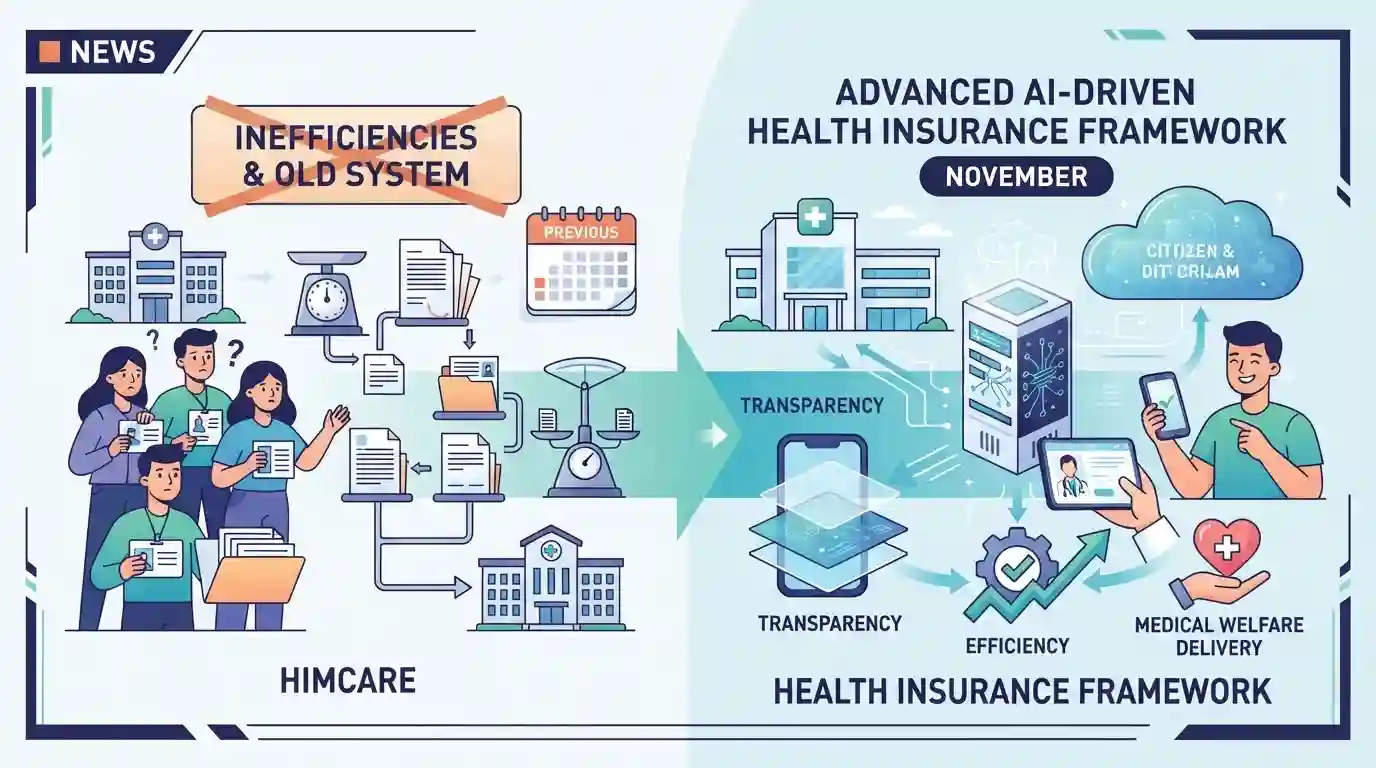
The Himachal Pradesh government is replacing its flagship state-level health insurance scheme, HIMCARE, with an advanced AI-driven health insurance framework starting November to curb inefficiencies, improve transparency, and upgrade medical welfare delivery.
Key Points
- The Himachal Pradesh government is set to replace the existing HIMCARE health insurance scheme in November with an AI-driven health insurance model.
- The transition aims to streamline healthcare delivery, plug leakages, and use artificial intelligence to manage claims, verification, and beneficiary tracking efficiently in the state.
- The new system is designed to address financial sustainability issues and ensure targeted delivery of medical benefits to residents of Himachal Pradesh.
Important Terms
HIMCARE scheme

Himachal Pradesh's flagship state-sponsored health insurance scheme launched in 2019 to provide cashless medical treatment up to ₹5 lakh per family annually, currently being replaced by an AI-driven framework due to leakages and irregularities.
UPSC context
HPAS Paper II (Governance, Polity & Social Justice): Important state welfare initiatives, public health delivery, and administrative reforms in Himachal Pradesh.
Ayushman Bharat
India's flagship national public health insurance scheme providing health coverage of up to ₹5 lakh per family annually for secondary and tertiary care hospitalizations across empanelled public and private hospitals.
UPSC context
UPSC/HPAS Paper II: Social Justice & Welfare Schemes — evaluation of universal health coverage models and federal welfare policies.
Static Concepts Connected
What are the key features and eligibility criteria of the HIMCARE scheme launched in Himachal Pradesh?
- Launch & Objective: Launched in Jan 2019 to provide cashless treatment to families not covered under Ayushman Bharat.
- Coverage Limit: Provided health cover of up to ₹5 lakh per year per family on a floater basis.
- Beneficiary Scope: Targeted non-AB-PMJAY residents, registered journalists, and specified categories with nominal or subsidized registration fees.
Cross-Topic Patterns
AI in State Welfare & Fiscal Federalism
The integration of AI into state welfare schemes intersects with e-governance initiatives and fiscal management challenges under the 15th Finance Commission parameters for Himachal Pradesh.
HIMCARE to Ayushman Bharat Convergence
Shifting from HIMCARE to an enhanced framework mirrors national-level convergence models like Ayushman Bharat PM-JAY, highlighting cooperative federalism in health.

HPAS Mains Paper II often tests state welfare reforms; expect questions on digital governance, AI in public health, and fiscal sustainability.
Linked PYQs · 2
Linked PYQs · 2
- 2020HPAS_PRELIMSGS1
Consider the given four statements and choose the correct answer from the given options. Which of the following statement(s) is / are not correct about the Social Welfare programs of Government of Himachal Pradesh? 1. e-Udyan portal: Where farmers can avail Horticulture farming service benefits while sitting in their home. 2. Vishesh Mahila Uthan Yojna: Scheme formulated for rehabilitation of physically and sexually abused women through technical and vocational training. 3. Medha Protsahan Yojna: Rupees one lakh is provided to the meritorious students to provide guidance at coaching centers. 4. Mukhya Mantri Ek Bigha Scheme: State Government will empower rural women by helping them become self-sufficient and get employment under MGNREGS.
- 2023HPAS_PRELIMSGS1
Match List I with List II : | List-I | List-II | |---|---| | (a) Himachal Pradesh Skill Development Project | (i) 2018 | | (b) Himachal Pradesh Kaushal Vikas Nigam | (ii) 2017 | | (c) Mukhya Mantri Yuva Ajivika Yojana | (iii) 2014 | | (d) Himachal Grhini Suvidha Yojana | (iv) 2019 | Choose the correct answer from the options given below : Code: (a) (b) (c) (d)
