Rural communities in Uttarakhand lead grassroots forest conservation
Source:earthjournalism ↗
Why It Matters
Crucial for understanding grassroots environmental movements, women's leadership in conservation, and community forest governance frameworks in the ecologically sensitive Himalayan state of Uttarakhand.
Summary
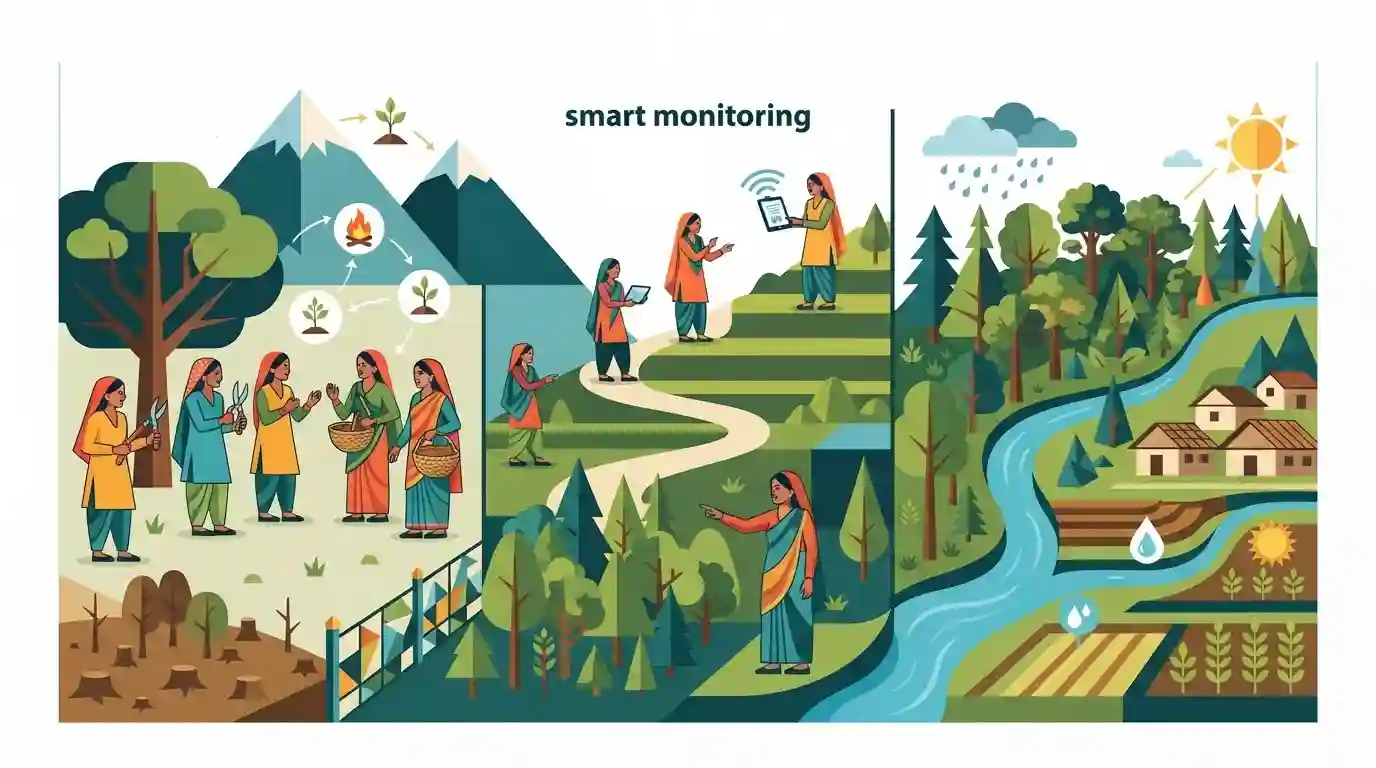
This article explores how women and rural villages across Uttarakhand are taking charge of local forest conservation. By combining traditional community care systems with smart local monitoring, they are successfully defending forests against degradation, managing natural resources sustainably, and building resilience against environmental challenges.
Key Points
- Women and local rural communities in Uttarakhand are leading grassroots initiatives to protect and manage forests using traditional knowledge alongside smart community care practices.
- Community forestry and local governance play a vital role in mitigating climate change impacts, preventing forest fires, and preserving biodiversity in the fragile Himalayan ecosystem.
- The article highlights the intersection of gender empowerment, community-based conservation, and sustainable environmental management in Uttarakhand.
Prelims Trap
Van Panchayats were established as a post-independence initiative by the newly formed Uttarakhand government.
Aspirants often assume Van Panchayats were created post-independence by the Uttarakhand state government, whereas they date back to the British colonial era under Kumaon rules.
Static Concepts Connected
What are Van Panchayats in Uttarakhand and under which historical rules were they constituted?
- Origin Era: Established under the Kumaon Panchayat Forest Rules of 1931 following intense agrarian unrest against colonial forest reservations.
- Legal Mandate: Unique decentralized bodies giving rural communities legal control over demarcated village forests for sustainable fuel, fodder, and timber use.
- Governance Structure: Sarpanch leads an elected committee responsible for resource allocation, rotational grazing, and penalizing illegal felling or encroachment.
Cross-Topic Patterns
Van Panchayats and Grassroots Democracy
Van Panchayat governance models intersect with the 73rd Constitutional Amendment, testing how decentralized rural bodies manage localized ecological resources.
Out-migration and Feminisation of Hill Agriculture
High male out-migration shifts hill agrarian economies entirely to women, transforming gender roles in disaster management and conservation.

Expect a multi-statement question on Van Panchayat powers, evolution under 1931 rules, and women's role in Himalayan fire mitigation.
Linked PYQs · 3
Linked PYQs · 3
- 2024UKPSC_PRELIMSGS1
Which district of Uttarakhand has highest forest cover share percentage to its total geographical area ?
- 2025UKPSC_PRELIMSGS1
Consider the following statements with reference to animal husbandry in Uttarakhand. Select the correct answer from the codes given below : 1. Animal husbandry is a supplementary occupation of agriculture. 2. Sheep rearing in the mountainous areas has been affected by environmental degradation.
- 2025UKPSC_PRELIMSGS1
Consider the following statements and select the correct answer from the options given below : Statement 1 : Uttarakhand is highly vulnerable to climate change. Statement 2 : Climate change is causing water stress and depleting biodiversity in Uttarakhand.
