Mangrove cellular mechanisms for saltwater adaptation and survival
Source:The Hindu ↗
Why It Matters
Understanding the biology of mangroves is essential for UPSC aspirants as it bridges Environment (ecological conservation, coastal defense) and Science & Technology (applications of plant genetics to ensure food security against soil salinity).
Summary
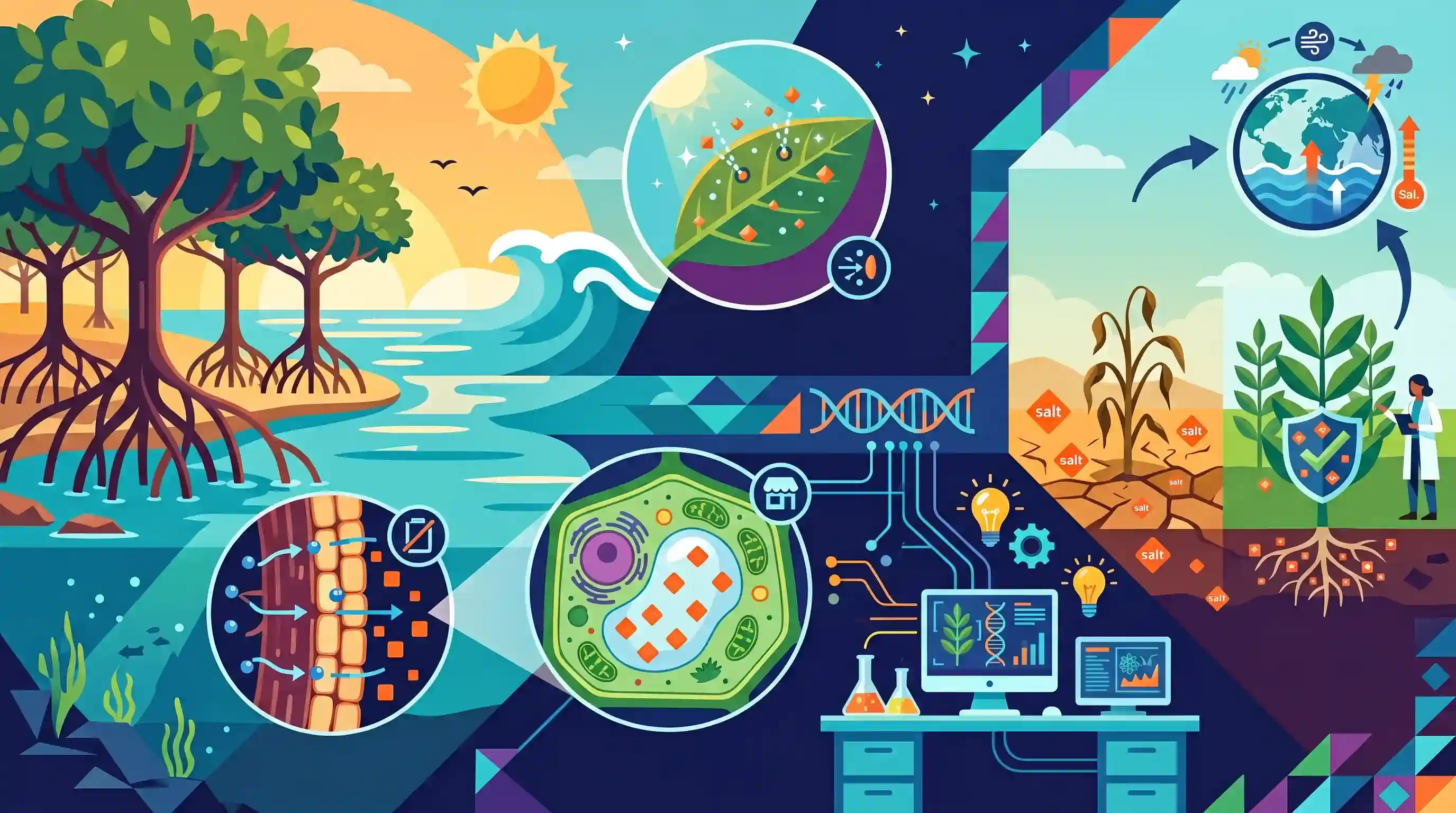
The article delves into the intricate cellular and physiological mechanisms that enable mangroves to survive and thrive in harsh saltwater environments. By employing strategies such as salt exclusion at the roots, salt secretion through leaf glands, and the sequestration of salt within cellular vacuoles, these halophytes prevent desiccation and cellular damage. The research not only deepens the understanding of coastal ecology but also holds significant promise for agricultural science, as the genetic and cellular insights derived from mangroves could pave the way for developing salt-tolerant crops in the face of rising global soil salinity.
Key Points
- Mangroves are specialized halophytes that thrive in intertidal, highly saline environments by employing unique physiological adaptations.
- Plants use three main mechanisms to manage salt: excluding salt at the root level, secreting accumulated salt through specialized leaf glands, or safely storing (sequestering) it inside cellular vacuoles.
- At the cellular level, mangroves rely on specialized proteins, osmotic regulation, and stress-response genes to prevent dehydration and cellular toxicity.
- Unlocking the cellular architecture and genetic pathways of mangroves can help scientists genetically engineer salt-tolerant agricultural crops, a critical need as global soil salinity increases.
- Beyond their unique biology, mangroves play an irreplaceable ecological role by acting as natural buffers against coastal erosion, storm surges, and supporting rich marine biodiversity.
Prelims Trap
"Mangroves resist osmotic stress and prevent water loss primarily by altering their stomatal density."
Unlike typical desert succulents, mangroves do not primarily alter stomatal density to prevent water loss; they rely on thick cell walls and small epidermal cells.
Static Concepts Connected
What are the core physiological adaptations of mangroves?
- Pneumatophores: Aerial, negatively geotropic roots that facilitate gas exchange in oxygen-poor, waterlogged intertidal soils.
- Vivipary: Seeds germinate while still attached to the parent tree, ensuring survival when dropped into unstable, muddy tidal zones.
- Salt regulation: Employing root ultrafiltration (excluding up to 97% salt), secreting salt via leaf glands, and storing it in vacuoles.
What is the function of cellular vacuoles in plant cells?
- Waste sequestration: They safely store nutrients, water, and potentially toxic waste products, such as the excess salt sequestered by halophytes.
- Osmotic regulation: They maintain turgor pressure, which regulates cellular structural integrity and prevents wilting under environmental stress.
Cross-Topic Patterns
Mangrove genes in transgenic agriculture
Genetic traits allowing salt exclusion in halophytes are targets for biotechnology. Expect linkages between mangrove cellular biology and the development of transgenic salt-tolerant rice for coastal areas facing sea-level rise.
Eco-DRR and coastal bio-shields
Mangroves functioning as natural bio-shields that reduce wave energy seamlessly connects GS3 environmental ecology with GS3 disaster management (mitigating coastal erosion and storm surges).

Expect a multi-statement prelims question combining mangrove salt-management mechanisms (vacuoles/glands) with GM salt-tolerant agriculture.
Linked PYQs · 3
Linked PYQs · 3
- 2019MainsGS1
Discuss the causes of depletion of mangroves and explain their importance in maintaining coastal ecology.
- 2021PrelimsGS1
“Leaf litter decomposes faster than in any other biome and as a result the soil surface is often almost bare. Apart from trees, the vegetation is largely composed of plant forms that reach up into the canopy vicariously, by climbing the trees or growing as epiphytes, rooted on the upper branches of trees." This is the most likely description of
- 2025MainsGS3
Seawater intrusion in the coastal aquifers is a major concern in India. What are the causes of seawater intrusion and the remedial measures to combat this hazard?
