Immune system checkpoints and regulatory mechanisms in human health
Source:The Hindu ↗
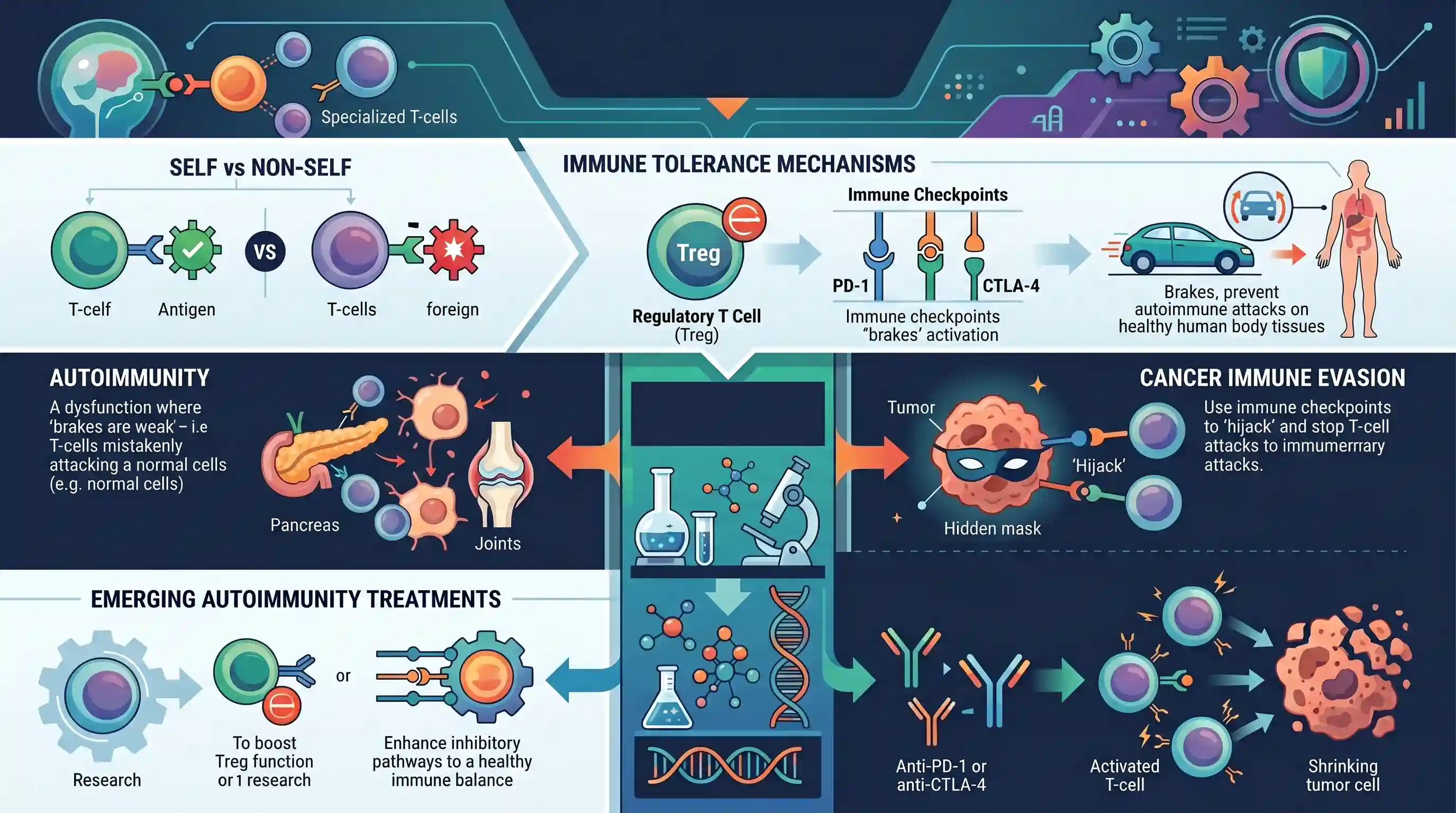
Why It Matters
Understanding immune regulation is essential for grasping the scientific basis of modern medical breakthroughs, such as cancer immunotherapy (Nobel Prize-winning science) and treatments for autoimmune diseases. This topic frequently appears in UPSC Prelims (General Science) and Mains GS3 (Science and Technology developments).
Summary
The article explores the regulatory mechanisms of the human immune system, focusing on how it distinguishes between foreign threats and the body's own tissues. It details the crucial role of regulatory T cells (Tregs) and immune checkpoints—such as PD-1 and CTLA-4—in acting as 'brakes' to prevent autoimmune diseases. It explains that while tumors can hijack these checkpoints to evade immune destruction, modern medical biotechnology has developed checkpoint inhibitors (immunotherapy) that release these brakes, allowing T cells to effectively target cancer. Furthermore, the article highlights ongoing research aimed at boosting these natural inhibitory pathways as a potential treatment for autoimmune disorders.
Key Points
- The immune system relies on a delicate balance to fight off pathogens while avoiding attacks on the body's own tissues, known as self-tolerance.
- Regulatory T cells (Tregs) play a vital role in suppressing overactive immune responses and preventing autoimmune diseases.
- Immune checkpoints (such as PD-1 and CTLA-4 receptors) act as necessary 'brakes' on T cells, ensuring they do not destroy healthy cells during an immune response.
- Cancer cells often exploit these checkpoint pathways to evade immune detection and survive.
- Immunotherapy utilizes checkpoint inhibitors (often monoclonal antibodies) to block these brakes, empowering the immune system to recognize and attack cancer cells.
- Conversely, enhancing these checkpoint pathways or boosting Treg function presents a promising therapeutic avenue for treating autoimmune diseases.
Prelims Trap
"Checkpoint inhibitors are immune therapies primarily used to enhance immune brakes to treat autoimmune diseases."
False. Checkpoint inhibitors *block* the brakes to unleash T-cells against cancer. To treat autoimmune diseases, therapies do the opposite: they aim to *enhance* these checkpoints.
Static Concepts Connected
What is the fundamental difference between B-cells and T-cells?
- B-cells: Produce targeted antibodies that bind to and neutralize extracellular pathogens like circulating viruses and bacteria.
- T-cells: Destroy infected or cancerous cells directly (cytotoxic) and coordinate the overall immune response (helper/regulatory).
What defines an autoimmune disease in human biology?
- Loss of tolerance: Occurs when the adaptive immune system loses 'self-tolerance' and mistakenly attacks the body's own healthy tissues.
- Common examples: Common conditions include Type-1 diabetes, rheumatoid arthritis, lupus, and multiple sclerosis.
- Role of Tregs: Often linked to the failure of Regulatory T-cells (Tregs) to suppress overactive or rogue immune cells.
Cross-Topic Patterns
Cancer Immunotherapy vs CAR-T Therapy
UPSC recently tested CAR-T cell therapy. Checkpoint inhibitors are a parallel immunotherapy that "unmasks" cancer to natural T-cells, rather than genetically modifying the T-cells outside the body.
Monoclonal Antibodies in Therapeutics
Checkpoint inhibitors are often monoclonal antibodies. UPSC frequently tests lab-made antibodies; understanding their role as targeted 'brake-releasers' in cancer therapy connects basic biotechnology to applied medicine.

Match-the-following pairs on modern therapies (CAR-T cells, Checkpoint Inhibitors, Monoclonal Antibodies) are highly probable in 2026.
Linked PYQs · 3
Linked PYQs · 3
- 2022PrelimsGS1
Which one of the following statements best describes the role of B cells and T cells in the human body?
- 2024PrelimsGS1
With reference to monoclonal antibodies, often mentioned in news, consider the following statements : I. They are man-made proteins. II. They stimulate immunological function due to their ability to bind to specific antigens. III. They are used in treating viral infections like that of Nipah virus. Which of the statements given above are correct?
- 2019PrelimsGS1
'RNA interference (RNAi)' technology has gained popularity in the last few years. Why? 1. It is used in developing gene silencing therapies. 2. It can be used in developing therapies for the treatment of cancer. 3. It can be used to develop hormone replacement therapies. 4. It can be used to produce crop plants that are resistant to viral pathogens. Select the correct answer using the code given below.
