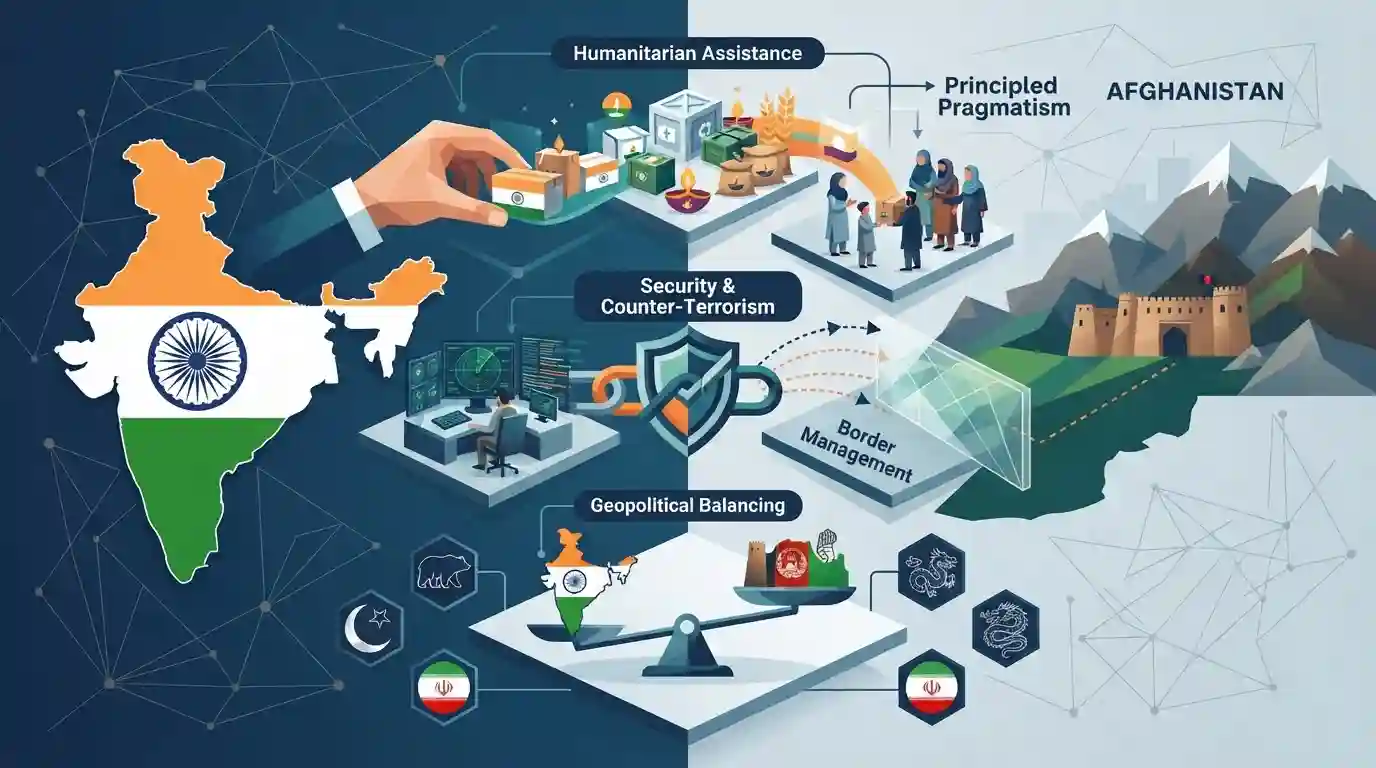
India Principled Pragmatism Approach Toward the Taliban
Source:Indian Express ↗
આ શા માટે મહત્વનું છે
It provides a comprehensive perspective on India's diplomatic maneuvering in its immediate neighborhood, balancing realpolitik with humanitarian values in dealing with a non-democratically recognized de facto regime like the Taliban.
સારાંશ
The article analyses India's evolving approach towards Taliban-controlled Afghanistan, characterizing it as 'principled pragmatism'. It highlights how India balances security imperatives, counter-terrorism concerns, and humanitarian assistance without granting formal diplomatic recognition, navigating a complex geopolitical landscape in South Asia.
મુખ્ય મુદ્દા
- India's diplomatic outreach to Taliban-led Afghanistan represents 'principled pragmatism', balancing security concerns with humanitarian assistance and regional stability.
- New Delhi reopened its technical mission in Kabul, focusing on humanitarian aid (wheat, medical supplies) rather than formal diplomatic recognition.
- Strategic imperatives include countering Pakistan-backed terrorism, safeguarding historical investments in Afghan infrastructure, and addressing security concerns related to regional terror spillover.
- India's engagement reflects the reality of de facto authority in Kabul while maintaining commitments to an inclusive government and women's rights.
મહત્વપૂર્ણ શબ્દો
Principled Pragmatism

An evolving diplomatic approach characterized by cautious engagement and humanitarian assistance without granting formal diplomatic recognition to the Taliban regime in Afghanistan.
UPSC context
Relevant for GS Paper II (International Relations - India's Neighborhood Policy and Strategic Interests). Tests understanding of modern diplomatic balancing acts.
Taliban
An Islamist militant and political movement that seized control of Afghanistan in August 2021, presenting complex security, counter-terrorism, and regional stability challenges for India.
UPSC context
Important for GS Paper II (International Relations, Security Challenges) and GS Paper III (Internal Security). Tests the aspirants' knowledge of regional geopolitics.
Ministry of External Affairs (India)
The central government department in India responsible for executing and managing the nation's foreign policy, diplomatic missions, bilateral relations, and strategic outreach abroad.
UPSC context
Core institutional actor for GS Paper II (International Relations, India's foreign policy structure and diplomatic machinery).
પ્રિલિમ્સ ટ્રેપ
India has granted formal diplomatic recognition to the Taliban-led administration in Kabul by reopening its embassy.
Aspirants often confuse 'functional engagement via a technical team' with 'formal diplomatic recognition' (de jure recognition). India has not granted de jure recognition to the Taliban regime.
સંલગ્ન સ્થિર ખ્યાલો
What is India's historical and contemporary policy framework regarding de facto governments and diplomatic recognition?
- Recognition Norms: De Facto vs De Jure: India generally recognizes states rather than governments, but foreign policy often engages de facto regimes pragmatically when national security or consular interests demand.
- UN Precedents: UN Seat: India historically supported the seating of representatives of de facto authorities only when broad international consensus or domestic stability justified functional contact.
- Treaty Obligations: Treaty Continuity: Recognition of new regimes requires assessing succession to prior bilateral treaties, developmental investments, and security guarantees.
આંતર-વિષય પેટર્ન
Afghanistan + Central Asia Connectivity via Chabahar Port
India's Afghanistan outreach intersects with the Chabahar Port and INSTC, testing transit connectivity across a hostile or unstable regional land bridge.
Principled Pragmatism vs. De Facto Recognition Doctrine
The non-recognition stance mirrors India's historical doctrine of withholding formal recognition from de facto regimes while engaging functionally for security and diaspora welfare.

India's 'principled pragmatism' in Afghanistan vs formal recognition doctrine is prime for a statement-based prelims question.
સંલગ્ન PYQ · 1
સંલગ્ન PYQ · 1
- 2024MainsGS2
Critically analyse India's evolving diplomatic, economic and strategic relations with the Central Asian Republics (CARs) highlighting their increasing significance in regional and global geopolitics.
