E-Governance and State-Citizen Relationship Dynamics
Source:Indian Express ↗
Why It Matters
E-governance is a core syllabus topic under GS Paper II, directly evaluated through questions on transparency, accountability, and citizen-centric service delivery.
Summary
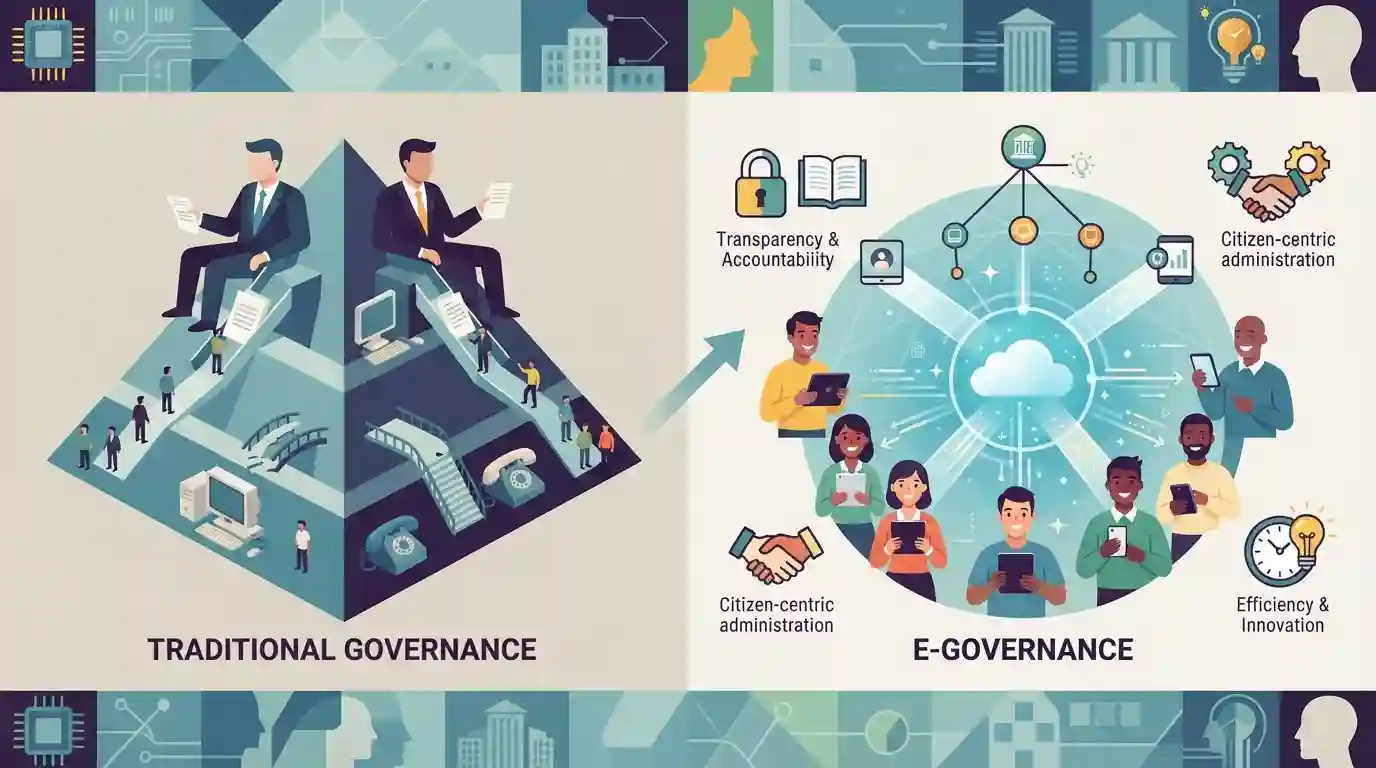
The article examines how e-governance redefines the relationship between the state, technology, and citizens. It highlights the shift toward citizen-centric administration, transparency, and accountability, while addressing key challenges like the digital divide and structural implementation hurdles.
Key Points
- E-governance transforms traditional state-citizen relationships by shifting from paper-based bureaucracy to digital, service-oriented delivery.
- Key pillars include transparency, accountability, citizen-centric administration, and grievance redressal mechanisms.
- Challenges include digital divide, data privacy concerns, digital literacy gaps, and infrastructural hurdles in rural areas.
- Future of e-governance relies on emerging technologies like AI, blockchain, and open data platforms to foster participative governance.
Prelims Trap
computerization of manual processes constitutes full e-governance implementation
Aspirants often assume e-governance is synonymous with mere computerization of paper files. UPSC tests the distinction: true e-governance requires fundamental process re-engineering and user-centric workflow redesign.
Static Concepts Connected
What are the core pillars and evolutionary models of e-governance?
- G2C Model: G2C interaction: Focuses on citizen-centric service delivery, grievance redressal, and transparency (e.g., UMANG, DigiLocker).
- G2B Model: G2B interaction: Streamlines regulatory clearances, tax filings, and business licenses to improve ease of doing business.
- Workflow Re-engineering: Process Re-engineering: Requires redesigning government workflows rather than merely digitizing inefficient paper-based manual files.
Cross-Topic Patterns
E-Governance vs. Data Privacy & Surveillance
E-governance initiatives generate massive citizen data repositories, necessitating robust legal scaffolding like the DPDP Act to prevent state surveillance overreach while ensuring service delivery.
Digital Infrastructure & Cooperative Federalism
Bridging rural-urban connectivity divides is essential for successful e-governance, directly overlapping with fiscal federalism debates over digital infrastructure grants to states.

Expect a Mains GS-2 analytical question on how e-governance shifts focus from mere computerization to workflow re-engineering and data privacy.
Linked PYQs · 3
Linked PYQs · 3
- 2024MainsGS2
e-governance is not just about the routine application of digital technology in service delivery process. It is as much about multifarious interactions for ensuring transparency and accountability. In this context evaluate the role of the 'Interactive Service Model' of e-governance.
- 2023MainsGS2
e-governance, as a critical tool of governance, has ushered in effectiveness, transparency and accountability in governments. What inadequacies hamper the enhancement of these features ?
- 2025MainsGS2
e-governance projects have a built-in bias towards technology and back-end integration than user-centric designs. Examine.
