Digital Governance Models and Citizen State Relations Transformation
Source:Indian Express ↗
हे का महत्त्वाचे आहे
E-governance is a core component of GS Paper 2 (Governance), directly addressing syllabus points on transparency, accountability, citizen-centric administration, and the role of digital technology in modern governance.
सारांश
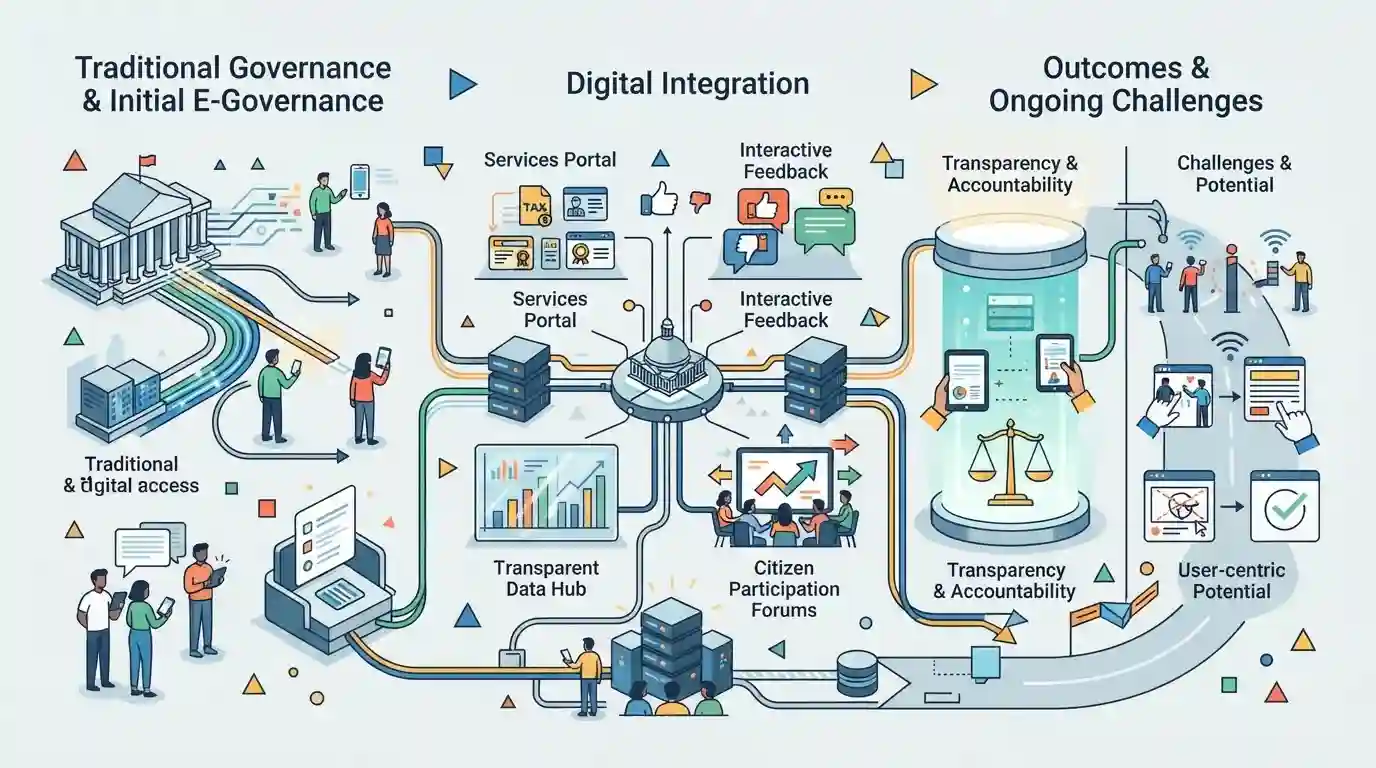
This article examines how e-governance transforms the dynamics between the state, technology, and citizens. It highlights how digital integration moves beyond routine service delivery to foster transparency, accountability, and interactive citizen participation, while addressing challenges like the digital divide and user-centric design.
मुख्य मुद्दे
- E-governance redefines the traditional relationship between the state, technology, and citizens by shifting from mere service delivery to active citizen engagement, empowerment, and participatory governance.
- It enhances transparency, accountability, and administrative efficiency through digital platforms, reducing bureaucratic red tape and corruption.
- Challenges such as the digital divide, data privacy concerns, cybersecurity threats, and lack of digital literacy continue to hinder inclusive e-governance implementation.
- Moving toward user-centric design rather than technology-first models is crucial for ensuring equitable access and bridging last-mile gaps in governance.
पूर्वपरीक्षा सापळा
E-governance is merely the digitization of routine administrative service delivery and paper-based workflows.
E-governance is often incorrectly assumed to be only about digitizing existing paper processes, whereas the core conceptual shift is toward participative democracy and citizen empowerment.
संबंधित स्थिर संकल्पना
What are the four core models of interaction in E-Governance?
- G2C Model: G2C (Government to Citizens): Focuses on delivering public services and information directly to citizens efficiently.
- G2B Model: G2B (Government to Business): Facilitates seamless interactions, licensing, and regulatory compliance for commercial entities.
- G2G Model: G2G (Government to Government): Enables inter-agency communication, data sharing, and streamlined administrative functioning.
- G2E Model: G2E (Government to Employees): Manages internal government personnel records, payroll, and grievance redressal systems.
आंतर-विषय नमुने
E-Governance + RTI Act Transparency Integration
E-governance initiatives intersect with Right to Information frameworks, transforming reactive disclosure into proactive digital transparency and redefining accountability standards.
Digital Divide + Inclusive Growth Linkages
The digital divide directly impacts inclusive growth and rural development, linking technology deployment gaps with persistent socio-economic inequalities.

E-governance models shifting from technology-first to user-centric design will feature in Mains GS-2 questions on administrative reforms.
संबंधित PYQ · 4
संबंधित PYQ · 4
- 2023MainsGS2
e-governance, as a critical tool of governance, has ushered in effectiveness, transparency and accountability in governments. What inadequacies hamper the enhancement of these features ?
- 2024MainsGS2
e-governance is not just about the routine application of digital technology in service delivery process. It is as much about multifarious interactions for ensuring transparency and accountability. In this context evaluate the role of the 'Interactive Service Model' of e-governance.
- 2025MainsGS2
e-governance projects have a built-in bias towards technology and back-end integration than user-centric designs. Examine.
- 2024MainsGS2
The Citizens' charter has been a landmark initiative in ensuring citizen-centric administration. But it is yet to reach its full potential. Identify the factors hindering the realisation of its promise and suggest measures to overcome them.
