US-Russia Diesel Deal and Its Impact on India Energy Security
Source:The Hindu ↗
આ શા માટે મહત્વનું છે
It highlights the interplay between global economic sanctions, energy trade realignments, and India's strategic economic and energy security interests.
સારાંશ
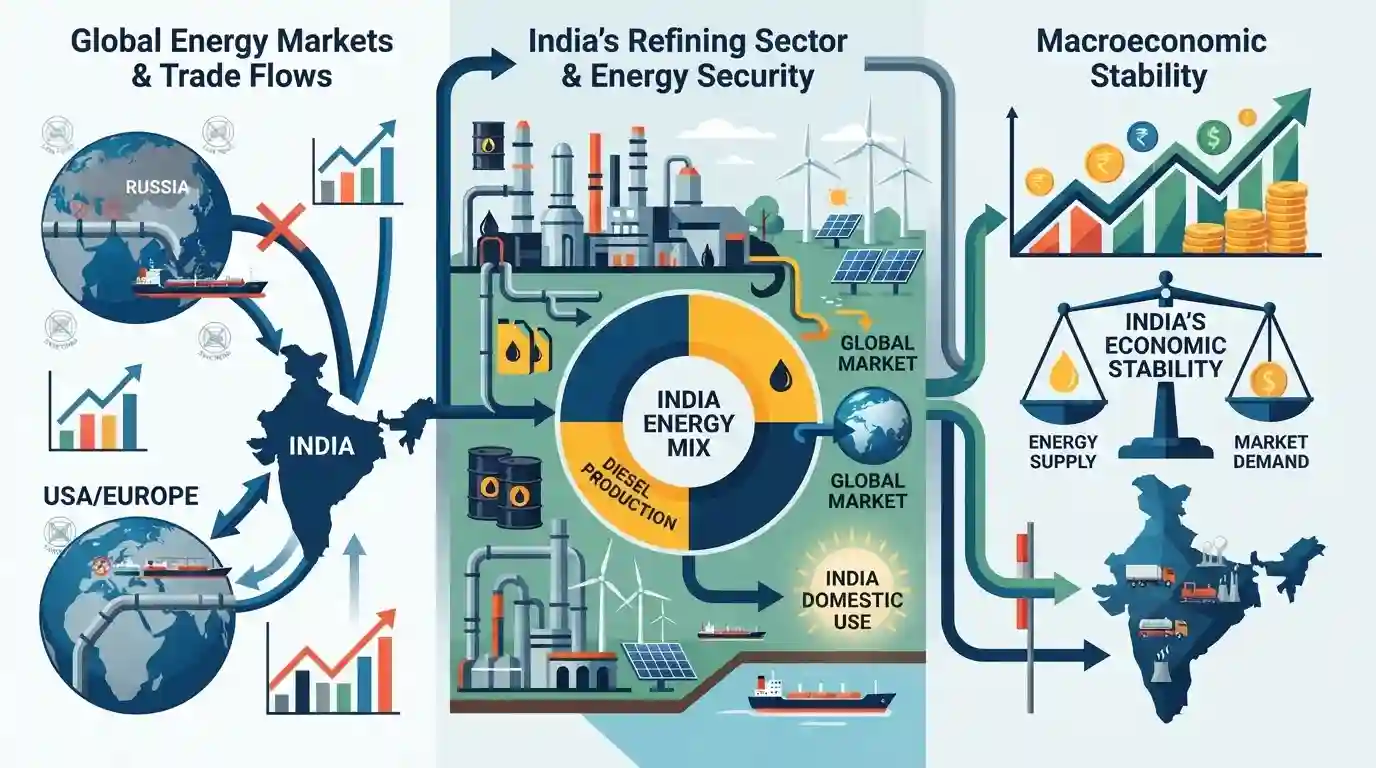
An analysis of how a hypothetical or actual U.S.-Russia diesel deal impacts international energy markets, global trade flows, and subsequently influences India's energy security, refining sector, and macroeconomic stability under ongoing sanctions.
મુખ્ય મુદ્દા
- The U.S.-Russia diesel deal involves dynamics surrounding global petroleum product flows and Western sanctions on Russian energy exports.
- India's position as a major refiner and consumer of petroleum products is influenced by shifts in international supply chains and pricing.
- Geopolitical balancing acts shape India's energy sourcing, balancing Western pressures and traditional trade ties.
- Sanctions compliance and secondary impacts affect global fuel availability, margins, and domestic inflation considerations in India.
મહત્વપૂર્ણ શબ્દો
Western Sanctions on Russia

Economic restrictions and trade embargos imposed by Western nations on Russia to restrict its revenue following geopolitical escalations, shaping global energy trade and supply chains.
UPSC context
UPSC GS Paper II (International Relations) and GS Paper III (Economy - Global Trade & Energy Security). Tests impact of unilateral economic coercion on developing economies.
Indian Refineries
Processing units in India that import crude oil, refine petroleum products, and play a crucial role in domestic fuel supply and global energy exports.
UPSC context
UPSC GS Paper III (Economy - Infrastructure, Energy & Growth). Tests India's refining capacity, energy security, and strategic maneuvering under global supply volatility.
પ્રિલિમ્સ ટ્રેપ
Refined petroleum products derived from Russian crude in third-country refineries are automatically classified as Russian-origin goods under all Western sanction regimes.
Western sanctions on Russian crude and petroleum products apply direct prohibitions on imports, but third-country processing into refined goods like diesel introduces complex rules of origin that change legal status under international trade law.
સંલગ્ન સ્થિર ખ્યાલો
What are the primary instruments of Western economic sanctions on Russian energy exports?
- G7 Price Cap: A price cap on seaborne Russian crude oil imposed by the G7 coalition to limit Russian revenues while keeping global markets supplied.
- Maritime Services Ban: Prohibitions on maritime services, insurance, and financing for tankers carrying Russian oil above the mandated price limit.
- Financial Sanctions: Targeted asset freezes and transaction bans on major Russian financial institutions, energy companies, and state-owned entities.
આંતર-વિષય પેટર્ન
Russian Oil Refined in India + Western Sanctions
India's role as a major refiner purchasing discounted Russian crude to export refined products connects global trade sanctions to domestic macroeconomic stability and current account deficit management.
Strategic Autonomy + Energy Geopolitics
Energy security strategies require constant navigation between Western strategic alignments and traditional defense/energy partners like Russia, testing India's doctrine of strategic autonomy.

Sanction-driven petroleum product flows and refining arbitrage will likely appear in a multi-statement question on energy security.
સંલગ્ન PYQ · 2
સંલગ્ન PYQ · 2
- 2025MainsGS3
What are the challenges before the Indian economy when the world is moving away from free trade and multilateralism to protectionism and bilateralism? How can these challenges be met?
- 2025MainsGS2
"Energy security constitutes the dominant kingpin of India's foreign policy, and is linked with India's overarching influence in Middle Eastern countries.” How would you integrate energy security with India's foreign policy trajectories in the coming years?
